Door Access Control System Singapore for Industrial Factories: Secure Entry Management
Industrial factories across Singapore face increasing pressure to maintain secure entry points while managing the flow of employees, contractors, and visitors throughout their facilities. Unauthorised access poses significant risks to equipment, intellectual property, and worker safety. A robust door access control system has become essential for modern manufacturing and industrial operations seeking to protect their assets and maintain regulatory compliance.
With Singapore’s strong emphasis on workplace safety and operational efficiency, industrial factories require solutions that not only restrict unauthorised entry but also provide detailed access records and integrate seamlessly with existing security infrastructure. This comprehensive guide explores how door access control systems address the unique security challenges faced by industrial facilities in Singapore and why they have become a critical investment for factory managers.
Understanding Door Access Control Systems in Industrial Settings
A door access control system is a technology-driven solution that regulates who can enter specific areas within a facility. Unlike traditional lock-and-key methods, modern access control systems use electronic credentials—such as access cards, keypads, or biometric readers—to grant or deny entry based on pre-configured permissions.
For industrial factories, this means facility managers can:
- Control entry to restricted areas such as production floors, storage rooms, and hazardous material zones
- Create customised access levels based on employee roles and responsibilities
- Generate comprehensive audit trails showing who accessed which areas and when
- Respond quickly to security incidents by reviewing access records
- Reduce the need for physical keys and associated replacement costs
The flexibility and scalability of electronic access control make these systems ideal for factories with multiple buildings, departments, or operational shifts.
Key Security Challenges for Singapore’s Industrial Factories
Unauthorised Access and Theft
Industrial facilities often house valuable equipment, raw materials, and finished products that are attractive targets for theft. Traditional security measures such as padlocks and manual monitoring are labour-intensive and prone to human error. Unauthorised individuals may tailgate through doors or duplicate physical keys, creating blind spots in security coverage.
Compliance and Documentation Requirements
Singapore’s workplace safety regulations require organisations to maintain proper documentation and oversight of facility access. A door access control system creates an automated record that demonstrates compliance with security protocols and helps satisfy regulatory inspection requirements.
Operational Efficiency During Shift Changes
Factories operating across multiple shifts need reliable methods to ensure that only authorised personnel are on-site during their designated working hours. Manual access logs are time-consuming and subject to errors, whereas electronic systems provide real-time verification.
Contractor and Visitor Management
Industrial facilities frequently host contractors, maintenance personnel, and external visitors. Managing temporary access credentials and ensuring these individuals can only enter authorised zones requires a system that can quickly grant and revoke permissions without physical key exchanges.
Benefits of Implementing a Door Access Control System
Enhanced Physical Security
A door access control system acts as the first line of defence against unauthorised entry. By restricting physical access to sensitive areas, factories reduce the risk of theft, sabotage, and workplace incidents. Multi-door systems create layered security, ensuring that even if one entrance is compromised, others remain protected.
Improved Incident Response
When a security breach occurs, access control records provide facility managers with precise information about who accessed specific areas and at what times. This capability is invaluable for internal investigations and can support cooperation with law enforcement if necessary.
Reduced Administrative Burden
Electronic access credentials eliminate the need to physically issue, collect, and replace keys. When an employee leaves the organisation or changes departments, their access permissions can be updated instantly from a centralised management console, rather than requiring physical key reissuance.
Workforce Safety
By controlling who enters hazardous areas—such as sections with heavy machinery or chemical storage—access control systems help prevent untrained or unauthorised individuals from entering dangerous zones. This contributes to a safer working environment and aligns with Singapore’s workplace safety standards.
Scalability and Flexibility
As factories expand or reorganise, access control systems can be easily reconfigured to reflect new departmental structures, add new entry points, or implement different permission levels without significant capital reinvestment.
How Door Access Control Systems Work in Factory Environments
Core Components
A typical door access control system comprises several interconnected elements:
- Access credentials: Cards, key fobs, or biometric identifiers that employees use to request entry
- Readers: Devices installed at doorways that scan credentials and communicate with the control system
- Electronic locks: Door mechanisms that remain locked until the system grants authorisation
- Central controller: The management software that stores permissions, processes requests, and generates reports
- Backup power systems: Battery backups that maintain door locking functionality during power outages
Operational Flow
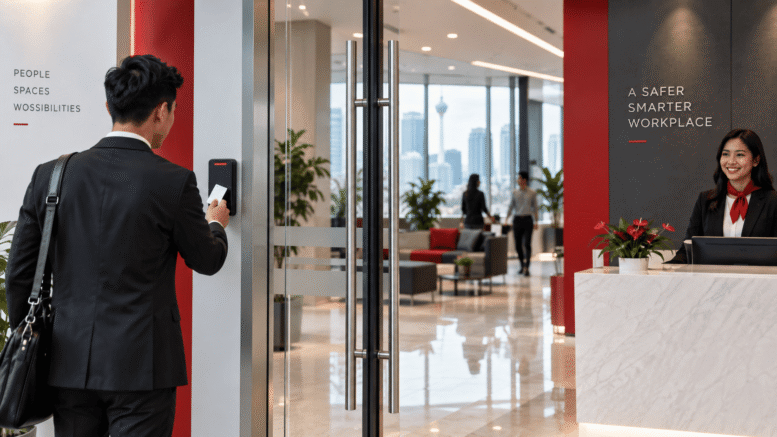
When an employee approaches a controlled door, they present their credential to the reader. The reader transmits this information to the central controller, which checks the employee’s profile against the access policy for that specific door and time. If authorisation is granted, the electronic lock disengages, allowing entry. The entire interaction is logged in the system for audit purposes.
This process occurs in seconds and provides a seamless experience for authorised personnel while maintaining strict security boundaries.
Implementation Considerations for Singapore Factories
Infrastructure Planning
Before implementing a door access control system, factory managers should assess the facility layout, identify all access points requiring control, and evaluate existing electrical infrastructure. Some older factory buildings may require upgrades to power systems or network cabling to support the new system.
Integration with Existing Security
Door access control systems should complement other security measures such as CCTV surveillance, alarm systems, and perimeter fencing. Integrated systems provide comprehensive security visibility and allow security personnel to respond more effectively to incidents.
Credential Management
Factories must establish clear policies for credential issuance, replacement, and revocation. This includes defining how quickly access permissions must be removed when an employee leaves or transfers departments, particularly in roles with access to sensitive areas.
User Training
Employees should receive training on how to use access credentials properly and understand the importance of not sharing credentials with colleagues. Poor user practices can undermine the security benefits of the system.
How Smart Touch Technology Singapore Can Help
Smart Touch Technology Singapore offers comprehensive door access control systems specifically designed to meet the security requirements of industrial facilities. Their solutions provide factory managers with reliable, scalable access control that integrates into existing security frameworks.
With a door access control system from Smart Touch Technology, industrial facilities in Singapore can implement robust entry management across multiple access points, manage credentials centrally, and generate detailed access reports for compliance purposes. The system supports various credential types and can be customised to match the specific operational needs of different factory environments.
Whether you are securing a single facility or managing access across multiple locations, Smart Touch Technology’s door access control systems provide the tools needed to maintain physical security while streamlining administrative processes.
To learn more about how a door access control system can enhance security at your industrial facility, visit https://smartouch.com.sg/door-access-control-system/ to explore Smart Touch Technology’s solutions and contact their team for a consultation.
Conclusion
Door access control systems have become fundamental to industrial security in Singapore, addressing critical challenges around unauthorised access, compliance documentation, and operational efficiency. By replacing traditional key-based systems with electronic, credential-based access control, factories can significantly enhance their security posture while reducing administrative overhead.
The investment in a proper access control system pays dividends through improved incident response capabilities, reduced theft risk, and streamlined personnel management. As Singapore’s industrial sector continues to evolve, access control systems remain one of the most practical and cost-effective security measures available to factory managers.
If your industrial facility in Singapore is looking to strengthen its entry management and protect valuable assets, now is an ideal time to evaluate modern door access control solutions that can scale with your business needs and integrate seamlessly with your existing security infrastructure.
Smart Touch technology pte ltd , www.smartouch.com.sg +65-63964767, sales@smartouch.com.sg , www.smartouch.com.my +607-3889903 sales@smartouch.com.my