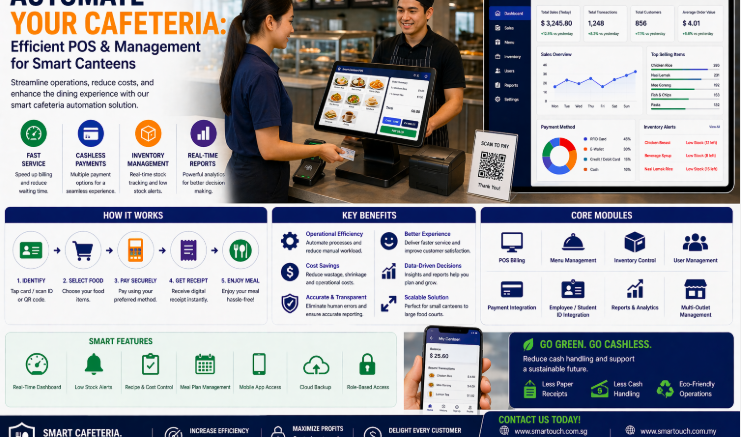
Smart Canteen Management System for Industrial Factories: Faster Cashless Meals
Industrial factories across Singapore face unique operational challenges, and managing employee canteens efficiently is often overlooked despite its significant impact on productivity and worker satisfaction. A well-run canteen keeps employees energised, improves morale, and reduces time lost during meal breaks. However, traditional cash-based canteen systems create bottlenecks, security concerns, and administrative headaches that modern factories can no longer afford.
The shift towards cashless dining in industrial environments is more than a convenience—it’s a business necessity. By implementing a smart canteen management system, factory managers can streamline meal services, reduce queues, enhance food safety tracking, and provide employees with a faster, more secure dining experience. This article explores how modern canteen technology is transforming factory meal services and why Singapore businesses should consider upgrading their approach.
The Challenges of Traditional Factory Canteen Systems
Many industrial factories in Singapore still operate canteens using traditional cash-based methods. While these systems have served their purpose for decades, they come with significant inefficiencies and risks that impact both operations and employee experience.
Long Queues and Wasted Time
When employees must queue to pay cash for meals, valuable break time is consumed waiting rather than eating or resting. This reduces the effectiveness of meal breaks and can lead to fatigue and reduced productivity in the afternoon. In factories running multiple shifts, congested canteens can also create bottlenecks that extend break times beyond schedule, affecting production timelines.
Cash Handling and Security Issues
Managing large volumes of cash in a canteen environment creates security vulnerabilities. Staff must handle, count, and reconcile cash daily, increasing the risk of theft, human error, and discrepancies. This administrative burden diverts resources from food preparation and service quality, and exposes both the business and employees to unnecessary risk.
Poor Tracking and Compliance
Traditional systems make it difficult to track inventory, monitor sales patterns, or ensure compliance with food safety standards. Without digital records, canteen operators lack real-time insights into stock levels, popular menu items, or employee purchasing habits. This can lead to food waste, stockouts, or inconsistent service quality.
Employee Satisfaction Impact
Slow service, unpredictable wait times, and limited payment options frustrate employees and detract from their dining experience. In a competitive job market, even small operational inefficiencies in employee facilities can influence retention and satisfaction scores.
Why Cashless Canteen Systems Matter for Singapore Factories
Singapore’s business landscape increasingly favours digital, contactless solutions. For industrial factories, moving to cashless canteen operations aligns with broader workplace modernisation trends and delivers measurable benefits across multiple operational areas.
Speed and Efficiency
Cashless payment systems eliminate the time spent handling money, waiting for change, and processing transactions manually. Employees can complete purchases in seconds using cards, mobile wallets, or biometric identification. This dramatically reduces queue times and allows more workers to be served during peak meal periods without expanding canteen infrastructure.
Financial Accuracy and Reduced Loss
Digital payment systems automatically record every transaction, eliminating cash handling errors and reducing theft risk. Managers gain accurate, real-time financial data and can reconcile accounts instantly rather than spending time on manual cash counts. This improves financial control and reduces operational costs.
Enhanced Food Safety and Compliance
Digital systems can track food items from receipt through sale, helping canteen operators monitor stock rotation, check expiration dates, and maintain food safety standards more effectively. Transaction records provide audit trails that support compliance with health and safety requirements.
Data-Driven Decision Making
Cashless systems generate detailed data on purchasing patterns, popular menu items, peak service times, and inventory usage. Canteen managers can use this information to optimise menu offerings, reduce waste, manage stock more efficiently, and plan staffing levels based on actual demand patterns.
Key Features of a Smart Canteen Management System
Modern canteen management systems designed for industrial environments offer several integrated features that work together to improve operations and employee experience.
Cashless Payment Processing
Multiple payment methods—including staff cards, mobile wallet integration, and biometric authentication—allow employees to pay quickly and securely. This eliminates cash entirely and removes bottlenecks at payment points.
Real-Time Inventory Management
Automated tracking of food stocks, ingredient levels, and equipment status helps canteen operators know exactly what they have on hand. Alerts notify staff when items are running low, preventing stockouts and reducing waste from overstocking.
Menu and Pricing Control
Managers can update menus and prices instantly across all service points, ensuring consistency and allowing quick responses to ingredient availability or pricing changes. Digital menus can also display nutritional information or allergen warnings.
Transaction and Financial Reporting
Comprehensive reporting tools provide daily, weekly, and monthly financial summaries. Managers can track revenue, identify trends, and generate reconciliation reports automatically, freeing time previously spent on manual accounting.
Employee Account Management
Systems can manage employee meal accounts, pre-loaded balances, or subsidies, allowing employers to offer meal benefits efficiently. Account management integrates with payroll systems, simplifying administration.
How a Smart Canteen System Addresses Factory Operational Needs
Industrial factories have specific requirements that standard retail point-of-sale systems cannot adequately address. A purpose-built smart canteen management system is designed to meet these unique demands.
High-Volume Service During Shift Changes: Factories must serve large numbers of employees quickly as shifts change. Cashless systems with multiple payment terminals can handle peak periods far more efficiently than cash-based operations, reducing congestion and keeping break times to schedule.
Budget Control and Meal Subsidies: Many factories offer meal subsidies or allowances as employee benefits. A smart system automatically deducts subsidies, tracks remaining balances, and simplifies the administration of these benefits across the entire workforce.
Shift-Based Operations: With staff working multiple shifts at different times, canteen systems need to accommodate varying operating hours and serve different groups reliably. Digital systems maintain consistent service and accurate records regardless of staffing schedules.
Integration with HR Systems: Smart canteen systems can connect with employee databases to ensure accurate billing, track meal usage by department, and generate reports that support HR analytics and wellness programmes.
Hygiene and Safety Standards: Contactless payment options and reduced cash handling support higher hygiene standards, an important consideration in any workplace canteen.
Introducing Smart Touch Technology’s Canteen System
Smart Touch Technology Singapore offers a comprehensive canteen management system specifically designed for the unique demands of industrial facilities. The system combines cashless payment processing, inventory management, and real-time reporting in an integrated platform built for high-volume, fast-paced environments.
The Smart Canteen Management System enables factories to eliminate cash handling entirely, reduce service times significantly, and gain complete visibility into canteen operations through detailed digital records. By automating payment processing and transaction tracking, the system frees canteen staff to focus on food quality and service, while giving managers the data they need to optimise operations and control costs.
For employers, the system simplifies the administration of meal subsidies and employee benefits. For employees, it means faster service, multiple convenient payment options, and a more modern, secure dining experience. For factory managers, it delivers operational efficiency, financial accuracy, and the insights needed to run a canteen that genuinely supports productivity and employee satisfaction.
Click here for more product information: https://smartouch.com.sg/canteen-system/
Implementing a Canteen System: Practical Considerations
Moving from a traditional to a smart canteen system requires thoughtful planning, but the transition is straightforward when approached methodically.
Staff Training
Canteen staff need training on the new system, including how to process transactions, manage inventory, and use reporting tools. Most modern systems are designed for ease of use, and training can typically be completed in a few sessions.
Employee Communication
Clear communication with employees about the transition—including how to use new payment methods, how to load balances, and what to expect during the change-over—ensures smooth adoption. Many employees will welcome faster service and more payment options.
Hardware Setup
Depending on canteen layout, multiple payment terminals may be installed to reduce queues. The system should be positioned to work seamlessly with existing canteen infrastructure.
Phased Rollout
Some factories introduce cashless systems gradually, operating both cash and digital payment options for a transition period. This allows employees to adjust at their own pace while demonstrating the benefits of the new system.
Return on Investment and Long-Term Benefits
While implementing a smart canteen system requires an initial investment, the returns are measurable and sustained. Reduced cash handling costs, faster service reducing labour hours, lower food waste from better inventory management, and improved employee satisfaction all contribute to a positive financial outcome.
Beyond immediate cost savings, a modern canteen system signals to employees that the company values their experience and is investing in workplace quality. This can positively influence retention, morale, and workplace culture—benefits that extend far beyond the canteen itself.
Conclusion
For Singapore’s industrial factories, upgrading to a smart canteen management system is a practical step toward modern, efficient operations. By eliminating cash-based processes, reducing service queues, and providing managers with real-time operational data, a cashless canteen system improves employee experience while delivering measurable operational and financial benefits.
The shift to digital canteen management is not about adopting technology for its own sake—it’s about solving real operational problems that affect productivity, safety, and employee satisfaction. As Singapore’s industrial sector continues to modernise, implementing efficient canteen systems has become a straightforward way to enhance workplace operations and demonstrate commitment to employee wellbeing.
If your factory is ready to streamline canteen operations, reduce service times, and gain better control over meal service management, Smart Touch Technology Singapore’s Canteen System offers a proven, purpose-built solution designed specifically for industrial environments.
Smart Touch technology pte ltd , www.smartouch.com.sg +65-63964767, sales@smartouch.com.sg , www.smartouch.com.my +607-3889903 sales@smartouch.com.my