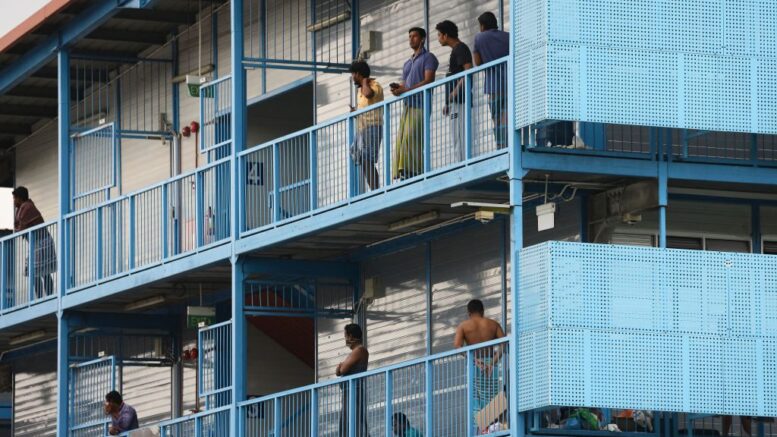
As Singapore continues to strengthen governance over foreign worker accommodation, dormitory operators and employers face growing responsibility to ensure security, accountability, and operational efficiency. Manual attendance logs, access cards, and fragmented records are no longer sufficient to meet modern compliance and management standards. This is where the dormitory fingerprint system in Singapore plays a critical role.
A fingerprint-based dormitory management system offers a secure, contact-controlled, and highly reliable way to manage worker access, attendance, and residency records. In this in-depth article, we explore what a dormitory fingerprint system is, why it is essential in Singapore, how it works, its key benefits, and how a smart digital solution can help dormitory operators and employers manage their workforce more effectively.
What Is a Dormitory Fingerprint System?
A dormitory fingerprint system is a biometric-based solution that uses fingerprint recognition technology to identify individuals accurately. Instead of relying on physical cards, PINs, or manual registers, workers authenticate their identity using their fingerprint to gain access or record attendance.
In Singapore, dormitory fingerprint systems are commonly used for:
- Worker dormitories
- Employee housing facilities
- Construction site accommodations
- Industrial and manufacturing worker quarters
By linking biometric identity to a centralized system, dormitory operators gain real-time visibility over who is entering, exiting, or residing within the premises.
Why Dormitory Fingerprint Systems Are Important in Singapore
Singapore maintains high standards for safety, security, and workforce accountability—especially for large-scale worker dormitories. Operators must be able to:
- Verify resident identities accurately
- Prevent unauthorized access
- Maintain up-to-date occupancy records
- Support audits and inspections efficiently
A dormitory fingerprint system in Singapore directly addresses these needs by ensuring that every access and attendance record is tied to a unique biometric identity.
Unlike cards or tags, fingerprints cannot be shared, lost, or duplicated, making biometric authentication one of the most secure identification methods available today.
Key Benefits of a Dormitory Fingerprint System in Singapore
1. Accurate Identity Verification
Fingerprint authentication ensures that:
- Only registered residents can access the dormitory
- Attendance records reflect actual individuals
- Identity fraud and impersonation are eliminated
This is particularly important in high-occupancy environments where traditional access methods are vulnerable to misuse.
2. Enhanced Dormitory Security
With a fingerprint-based system, unauthorized individuals are automatically denied access. Dormitory operators gain full control over:
- Entry and exit points
- Restricted areas
- Time-based access permissions
This significantly improves overall safety for residents and staff.
3. Real-Time Attendance and Occupancy Tracking
A dormitory fingerprint system records:
- Check-in and check-out times
- Daily attendance
- On-site occupancy status
This real-time data is invaluable during inspections, emergencies, or headcounts, allowing operators to respond quickly and accurately.
4. Reduced Administrative Workload
Manual record-keeping is time-consuming and prone to errors. A fingerprint system automates:
- Attendance tracking
- Resident movement logs
- Report generation
This allows dormitory staff to focus on operations instead of paperwork.
5. Centralized Digital Records
All fingerprint transactions and resident data are stored digitally in a centralized system. Records can be:
- Retrieved instantly
- Filtered by date or individual
- Exported for reporting and audits
This ensures transparency and accountability across operations.
How a Dormitory Fingerprint System Works
Step 1: Resident Registration
Each resident is registered into the system with:
- Personal details
- Fingerprint biometric data
- Assigned dormitory or room information
This creates a unique digital identity for every worker.
Step 2: Fingerprint Authentication
At access points such as:
- Dormitory entrances
- Security gates
- Attendance checkpoints
Residents scan their fingerprint. The system verifies the identity in seconds and grants or denies access accordingly.
Step 3: Automated Attendance Logging
Every successful authentication is logged automatically, capturing:
- Date and time
- Location
- Resident identity
This builds a complete and tamper-proof attendance history.
Step 4: Real-Time Monitoring and Alerts
Administrators can monitor:
- Current occupancy levels
- Abnormal access attempts
- Attendance irregularities
Alerts can be triggered for unauthorized access or unusual patterns.
Step 5: Reporting and Compliance Support
The system generates detailed reports for:
- Attendance summaries
- Occupancy records
- Historical access logs
These reports support internal reviews and regulatory compliance requirements.
Limitations of Traditional Dormitory Management Methods
Dormitories that rely on manual or card-based systems often face:
- Lost or shared access cards
- Inaccurate attendance records
- Delayed reporting
- High administrative overhead
- Security vulnerabilities
As dormitory sizes increase, these issues become operational risks rather than inconveniences.
Smart Touch Dormitory Fingerprint System: A Complete Workforce Solution
To overcome these challenges, our Dorm & Employee Management System provides an integrated fingerprint-based solution designed specifically for dormitories and workforce accommodation in Singapore.
🔗 Learn more about our solution here:
https://smartouch.com.sg/dorm-employee-management-system/
Our system combines biometric authentication, attendance tracking, and centralized management into one powerful platform.
Key Features of Our Dormitory Fingerprint System
✔ Biometric Fingerprint Authentication
Accurate and secure identity verification.
✔ Real-Time Attendance Tracking
Instant visibility of worker presence.
✔ Access Control Integration
Manage entry points and permissions easily.
✔ Centralized Management Dashboard
Monitor dormitory operations from one platform.
✔ Digital Records and Reporting
Support audits and operational reviews.
✔ Scalable Architecture
Suitable for small dormitories or large-scale worker housing.
✔ User-Friendly Operation
Easy adoption for residents and administrators.
Who Should Use a Dormitory Fingerprint System in Singapore?
This solution is ideal for:
- Worker dormitory operators
- Construction companies
- Industrial employers
- Facility management teams
- Large workforce housing providers
Any organization responsible for managing worker accommodation can benefit from improved control, security, and efficiency.
The Future of Dormitory Management in Singapore
As Singapore advances toward smarter workforce management and digital compliance, biometric systems will become a standard requirement rather than an optional upgrade. Fingerprint systems provide the foundation for:
- Integrated workforce analytics
- Enhanced safety protocols
- Faster inspections and audits
- Improved resident accountability
Organizations that adopt biometric dormitory systems early are better prepared for future regulatory and operational demands.
Conclusion: Why Dormitory Fingerprint Systems Matter
A dormitory fingerprint system in Singapore is more than an access control tool—it is a comprehensive management solution that ensures security, accuracy, and operational transparency. By replacing manual and card-based processes with biometric technology, dormitory operators and employers gain real-time insight and control over their workforce accommodation.
Our Dormitory Fingerprint System empowers organizations to manage residents efficiently, protect facilities securely, and operate with confidence in a highly regulated environment.
Smart Touch technology pte ltd , www.smartouch.com.sg +65-63964767, sales@smartouch.com.sg , www.smartouch.com.my +607-3889903 sales@smartouch.com.my
Be the first to comment on "Dormitory Fingerprint System Singapore: Secure, Compliant, and Smart Workforce Management"