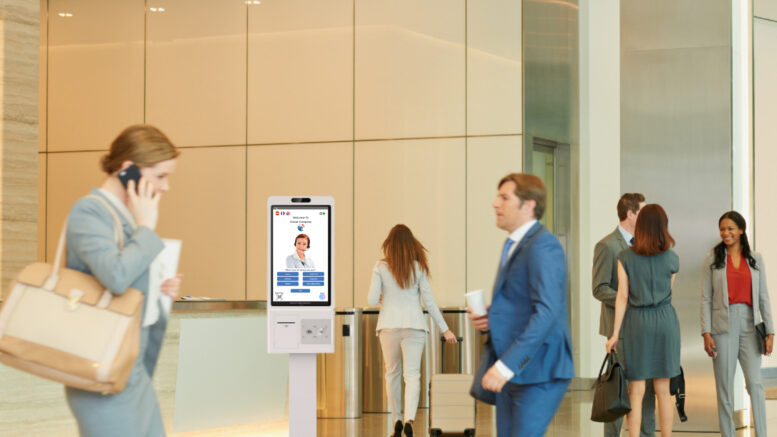
In Singapore, a visitor log is no longer “just a logbook”. It is a living security record, an operational workflow, and—most importantly—personal data. Whether you manage an office tower, factory, school, clinic, condominium, or a mixed-use facility, your visitor registration process touches names, contact numbers, vehicle details, access times, host information, and sometimes identification details. That instantly puts your visitor log system under the scope of Singapore’s Personal Data Protection Act (PDPA), which governs how organisations collect, use, and disclose individuals’ personal data.
So the question becomes: how do we run a visitor log system that is both operationally efficient and PDPA-aligned—without slowing down the entrance experience? The answer is a digital Visitor Management System (VMS) designed to capture only what’s necessary, protect what’s collected, and produce accountability whenever it’s needed.
Smart Touch’s Visitor Management System is positioned as a web-based visitor tracking solution designed to record, manage, and monitor visitors entering and exiting your premises. In this guide, we’ll walk through what PDPA compliance really means for visitor logs in Singapore, what a modern visitor log system should do, and how to structure a visitor journey that is secure, auditable, and welcoming.
Why “Visitor Log System PDPA Singapore” Is a Serious Operational Requirement
A paper logbook feels simple—until you look at it through PDPA and security lenses:
- Visitors can see other visitors’ entries (a common privacy weakness).
- Handwritten records can be incomplete or illegible.
- Books can be misplaced, photographed, or accessed by unauthorised parties.
- Searching for historical logs during an incident can take hours.
- Retention becomes accidental: books get stored “just in case”, creating long-term risk.
PDPA expectations aren’t about making your life harder. They’re about ensuring that when you collect personal data, you do it responsibly—clearly, safely, and only for reasonable purposes.
A digital visitor log system helps you do that by transforming “logging” into a controlled process: structured data capture, a standard notice, time-stamped entries, access permissions, and consistent retention.
PDPA Essentials for Visitor Logs in Singapore (What We Must Get Right)
1) Collect only what we truly need (data minimisation in practice)
A compliant visitor log system starts with a simple principle: collect the minimum personal data needed for security and operational purposes. For many sites, that can mean name, contact number, company, purpose of visit, person to visit, and entry/exit time.
Where identification verification is required, PDPC guidance highlights more privacy-protective approaches—such as recording partial NRIC rather than the full number in many contexts, and using controlled systems instead of open logbooks.
Practical takeaway: a good digital VMS should let us configure fields by site type (office vs. factory vs. residence), and justify every field we ask for.
2) Be careful with NRIC collection (and avoid “default full NRIC”)
NRIC and national identification numbers are high-sensitivity identifiers in Singapore. PDPC’s advisory guidance includes scenarios where an organisation can check identification while recording less sensitive alternatives (for example, partial NRIC) and encourages adopting a visitor management system protected by passwords rather than an open visitor log book.
Practical takeaway: our visitor log system should support:
- Configurable ID handling (e.g., do we need partial NRIC, last characters, or no NRIC at all?)
- Verification workflows without exposing identifiers to other visitors
- Clear retention rules for any identification data collected
3) Protect the data and control internal access
Visitor logs are attractive targets because they reveal who entered, when, and to see whom. A PDPA-aligned visitor log system needs strong operational controls: restricted access, controlled exporting, and accountability for who can view or edit entries.
Even if we do everything else right, weak access controls can turn a compliance effort into a reputational incident. A digital VMS supports the kind of structured, permission-based handling that paper simply cannot.
4) Have a retention plan (and follow it)
One of the most common “silent failures” is keeping visitor logs for too long because nobody owns disposal. PDPC guidance cautions that organisations should not retain personal data indefinitely when there is no business or legal purpose to do so.
Practical takeaway: our visitor log system should be able to:
- Apply retention periods automatically (by site, by visitor type, or by risk level)
- Support secure deletion workflows
- Preserve required records when needed for a legitimate request or investigation
5) Be prepared to respond to access requests
Under PDPA, individuals may request access to their personal data, and organisations should respond as soon as reasonably possible. Guidance notes that if an organisation cannot respond within 30 days, it should inform the individual in writing within 30 days of when it can respond.
Practical takeaway: a digital visitor log system should allow fast search, filtering, and extraction of relevant records—without manually flipping through books or scanning pages.
6) Consider cross-border transfer and hosting realities
If visitor data is stored or processed outside Singapore (for example, overseas servers, group systems, or third-party providers), PDPA’s Transfer Limitation Obligation becomes relevant: organisations must ensure a comparable standard of protection for transferred personal data.
Practical takeaway: when evaluating a visitor management system, we should ask:
- Where is data stored?
- Who can access it?
- What contractual and technical protections exist for cross-border handling?
What a Modern Visitor Log System Should Look Like in Singapore
A compliant visitor log system in Singapore should do more than “capture data”. It should create a secure, consistent visitor journey that reduces risk and improves professionalism.
Here is the operational blueprint we recommend:
Step 1: Pre-define visitor types and required fields
Not all visitors are the same. Contractors, delivery personnel, interview candidates, VIP guests, and maintenance teams each have different risk profiles. A modern VMS should let us set:
- Required vs. optional fields per visitor category
- Different approval flows for higher-risk visits
- Separate retention policies where appropriate
Step 2: Deliver a clear PDPA notice at the point of collection
Visitors should be informed (in plain language) what we collect and why. A digital system makes that consistent—no reliance on printed posters that are missing, outdated, or ignored.
Step 3: Digital check-in with time-stamped records
Smart Touch positions its VMS as a web-based visitor tracking solution designed to record, manage, and monitor visitors entering and exiting premises. A strong system should capture:
- Check-in time, check-out time
- Host/department
- Purpose of visit
- Visitor status (expected, checked-in, overstayed, checked-out)
Time-stamped records are valuable not only for daily operations but also for emergency mustering, incident response, and audit readiness.
Step 4: Controlled visibility and internal accountability
In a well-run facility, not everyone should be able to see all visitor data. Security teams may need operational visibility; reception needs today’s arrivals; HR may need interview guest tracking; tenants may need only their own visitor list. Role-based access turns PDPA principles into daily behaviour.
Step 5: Reporting that supports audits, investigations, and process improvement
A digital visitor log system should help us answer questions like:
- Who was on-site during a specific time window?
- Which vendor teams visited most frequently?
- Where are congestion points at reception?
- Are there recurring overstays that need policy updates?
When reporting is built-in, we reduce manual handling of personal data—fewer exports, fewer screenshots, fewer unsecured spreadsheets.
Why Smart Touch VMS Fits the “Visitor Log System PDPA Singapore” Goal
If your goal is to rank for “visitor log system PDPA Singapore,” your operational goal is likely just as clear: move away from paper, reduce risk, and standardise compliance without sacrificing the visitor experience.
Smart Touch’s VMS is presented as a web-based visitor tracking solution to record, manage, and monitor visitor entry and exit. That positioning aligns directly with what PDPA-friendly visitor logging requires: structure, traceability, and controlled handling of personal data.
A strong fit in the Singapore context typically means the system supports:
- Configurable data fields (collect what’s necessary, avoid over-collection)
- Clear visitor notices at check-in
- Secure internal access (reduce “open logbook” exposure)
- Fast record retrieval for operational needs and PDPA requests
- Retention controls to avoid indefinite storage
- Considerations for identification handling and minimisation, including approaches like partial NRIC where appropriate
- Awareness of transfer/hosting considerations when data moves across borders
When these elements come together, our visitor log stops being a compliance burden and becomes a security and service advantage.
Common PDPA Mistakes in Visitor Logging (and How We Prevent Them)
Mistake 1: Asking for full NRIC by default
Fix: Collect only what’s necessary; support partial NRIC approaches where suitable and defensible.
Mistake 2: Letting visitors see other visitors’ data
Fix: Replace open books with controlled digital workflows.
Mistake 3: Keeping logs forever “just in case”
Fix: Implement a retention schedule and enforce it.
Mistake 4: No plan for access requests
Fix: Use a system that can quickly locate and provide relevant records, and manage response expectations.
Mistake 5: Ignoring cross-border implications
Fix: Assess where data is stored and ensure comparable protection if data is transferred overseas.
The Business Case: PDPA-Compliant Visitor Logs Improve More Than Compliance
When we upgrade to a digital visitor management system, we don’t just “tick a PDPA box.” We also:
- Reduce reception bottlenecks (structured forms, faster check-in)
- Improve professionalism (consistent visitor experience)
- Strengthen incident readiness (fast lookups, accurate timestamps)
- Standardise multi-site operations (one process across locations)
- Reduce manual handling of personal data (fewer privacy weak points)
In Singapore’s high-trust, high-expectation business environment, a secure and compliant visitor log system is part of your brand. It’s the first impression at your front door—and often the first sign that your organisation takes security and privacy seriously.
Ready to Modernise Your Visitor Log System in Singapore?
If you are still using paper logbooks, scattered spreadsheets, or inconsistent tenant-managed sign-in sheets, the risk is not theoretical. The upgrade path is clear:
- Define what data we truly need
- Standardise the visitor journey and notice
- Implement controlled access, retention, and reporting
- Use a purpose-built system to keep compliance sustainable—not stressful
Smart Touch’s Visitor Management System is built around the core needs of recording, managing, and monitoring visitor entry and exit through a web-based tracking approach. For organisations aiming to align visitor logging with PDPA expectations while improving security and operations, a digital VMS is the most practical, scalable step forward.
Smart Touch technology pte ltd , www.smartouch.com.sg +65-63964767, sales@smartouch.com.sg , www.smartouch.com.my +607-3889903 sales@smartouch.com.my