VMS Software vs. Manual Logs: The True Cost for SG Businesses
Many Singapore businesses still rely on paper visitor logbooks at reception, despite the operational and security risks this creates. Comparing VMS software vs manual logs quickly reveals why more organisations are switching to digital visitor management. A logbook can be lost, illegible, or falsified, while a Visitor Management System (VMS) captures accurate, timestamped, and searchable records automatically.
This article breaks down the real cost difference between VMS software and manual visitor logs, and why the switch pays off for SG businesses of almost any size.
The Hidden Costs of Manual Visitor Logs
Manual logbooks seem free at first glance, but they carry hidden costs. Reception staff spend time manually checking IDs and writing entries, visitor data is often illegible or incomplete, and there is no easy way to search historical records during an audit or incident investigation. During a fire evacuation, a paper logbook is also one of the least reliable ways to confirm who is actually in the building.
There are also compliance risks. Many industries in Singapore now require verifiable visitor records for security or safety audits, and a handwritten logbook rarely meets that bar.
What a VMS Actually Replaces
Manual ID Checks
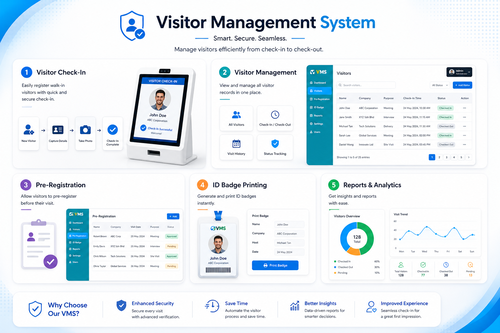
A VMS scans or captures visitor identification digitally, reducing front-desk processing time and human error.
Paper Sign-In Sheets
Digital check-in replaces handwritten entries with structured, searchable records stored securely in the cloud or on-premise server.
Manual Host Notification
Instead of calling or messaging a host manually, a VMS can automatically notify the employee that their visitor has arrived.
Cost Comparison: VMS Software vs Manual Logs
| Factor | Manual Logbook | VMS Software |
|---|---|---|
| Staff Time | High, manual entry per visitor | Low, self-service check-in |
| Data Accuracy | Often illegible or incomplete | Digitally captured and accurate |
| Searchability | Difficult, requires manual review | Instant search and filtering |
| Compliance Readiness | Weak audit trail | Exportable, verifiable records |
| Security | No visitor pre-screening | Watchlist and blacklist checks available |
Key Benefits of Switching to a VMS
- Faster visitor check-in, especially during busy periods or large events.
- Accurate, exportable records for safety and security audits.
- Automatic host notifications reduce front-desk phone calls.
- Better first impression for clients and guests visiting your office.
- Reduced risk of unauthorised individuals entering the premises unchecked.
Best Practices When Adopting a VMS
- Choose a system that matches your visitor volume – small offices and large campuses have different needs.
- Integrate with access control – link visitor badges to turnstiles or door access where possible.
- Set data retention policies – decide how long visitor records are stored in line with PDPA requirements.
- Train reception staff – ensure smooth handling of exceptions, such as visitors without ID.
- Review reports periodically – use visitor data to spot patterns or unusual activity.
Is a VMS Worth It for Small Businesses Too?
Even smaller offices benefit from a VMS. The cost of a basic system is often lower than the ongoing time cost of manual reception work, and the improved professionalism of a digital check-in experience can matter for client-facing businesses. Many providers also offer scalable plans, so businesses only pay for the visitor volume they actually handle.
Key Takeaways
- Manual logbooks carry hidden costs in staff time, data accuracy, and compliance risk.
- A VMS automates check-in, host notification, and record-keeping.
- Digital visitor records are far easier to search and audit than paper logs.
Conclusion
When comparing VMS software vs manual logs, the true cost of paper-based visitor management goes well beyond the price of a logbook. Staff time, data accuracy, and compliance readiness all favour a digital solution. For Singapore businesses looking to modernise their front desk while improving security and record-keeping, a Visitor Management System is a practical, cost-effective upgrade.
Frequently Asked Questions
Is a VMS expensive to implement?
Costs vary by provider and visitor volume, but most businesses recover the cost quickly through reduced admin time and improved compliance readiness.
Can a VMS integrate with our existing access control system?
Yes, most modern VMS platforms can integrate with turnstiles and door access systems to streamline visitor movement.
How long is visitor data stored?
Retention periods are configurable and should align with your organisation’s data policies and PDPA obligations.
Do visitors need to install an app to check in?
No, most VMS platforms allow self-service check-in via a tablet or kiosk at reception, with no app required for visitors.
Can a VMS handle large events with many visitors at once?
Yes, VMS platforms are designed to handle high visitor volumes through self-service kiosks and pre-registration features.
Explore full product details by clicking here: https://smartouch.com.sg/vms-visitor-management-system/
Smart Touch technology pte ltd , www.smartouch.com.sg +65-63964767, sales@smartouch.com.sg , www.smartouch.com.my +607-3889903 sales@smartouch.com.my