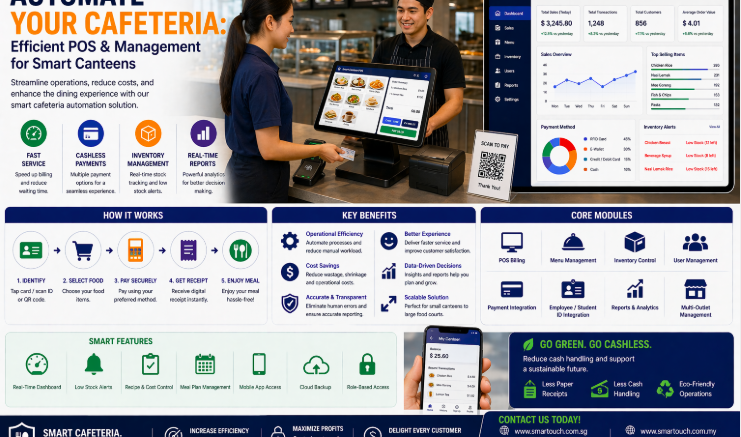
Canteens and cafeterias in Singapore’s factories, dormitories, and corporate campuses handle hundreds or thousands of meals every day. A canteen management face recognition system replaces manual meal coupons and card-based tracking with fast, contactless identity verification, giving operators accurate meal records and tighter cost control.
Subsidised meal programmes are common across manufacturing sites and worker dormitories in Singapore, but without a reliable tracking system, they are vulnerable to abuse, meal sharing, and inaccurate billing. A canteen management face recognition system solves this by tying every meal collection to a verified individual, ensuring subsidies and entitlements are used correctly.
Why Facilities Are Adopting Canteen Face Recognition
Traditional canteen systems rely on physical cards or manual counting, both of which are easy to manipulate. A canteen management face recognition system verifies each diner in real time, eliminating card sharing and giving management accurate, auditable meal data.
Problems With Traditional Canteen Tracking
- Meal cards can be shared between workers, inflating subsidy costs
- Manual headcounts are slow and prone to error during peak hours
- Difficult to reconcile meal records with actual attendance
- No easy way to track dietary restrictions or special meal entitlements
- Limited visibility into peak dining times for kitchen planning
How Face Recognition Improves Canteen Operations
By scanning a diner’s face at the point of collection, the system instantly confirms identity and eligibility, whether that’s a subsidised meal, dietary requirement, or department-based entitlement. This reduces queues while ensuring every meal served is properly accounted for.
Key Features of a Canteen Management Face Recognition System
| Feature | Benefit |
|---|---|
| Contactless facial verification | Fast, hygienic meal collection process |
| Real-time meal tracking | Prevents duplicate or fraudulent meal claims |
| Subsidy and entitlement management | Ensures meal benefits go to the right individuals |
| Integration with attendance systems | Cross-checks meal records against work schedules |
| Cloud reporting dashboard | Clear visibility into meal costs and usage patterns |
| Fast queue processing | Reduces congestion during peak meal times |
Key Benefits for Canteen Operators and Facility Managers
Accurate Subsidy and Cost Control
By verifying every diner, operators can be confident that subsidised or complimentary meals are only claimed by eligible individuals, reducing waste and controlling food costs.
Faster Queue Processing
Facial recognition speeds up meal collection compared to manual card scanning or coupon checks, reducing congestion during busy lunch periods.
Better Data for Kitchen Planning
Real-time meal data helps kitchen staff anticipate demand, reduce food waste, and plan portions more accurately based on actual attendance patterns.
Improved Hygiene
Contactless verification reduces the need for shared cards or physical tokens, supporting better hygiene standards in high-traffic dining areas.
Best Practices for Deploying Canteen Face Recognition
- Register all staff or residents during onboarding to avoid delays at meal times
- Position kiosks to minimise bottlenecks during peak dining hours
- Integrate meal data with attendance or dormitory management systems where relevant
- Set up automated reports for finance and facilities teams
- Regularly review usage data to identify irregularities or process improvements
Choosing the Right System for Your Facility
When evaluating a canteen management face recognition system, consider daily meal volume, integration needs with attendance or dormitory platforms, and the vendor’s experience deploying similar systems in Singapore facilities. A responsive local support team is especially valuable for busy, high-traffic canteens.
Conclusion
A canteen management face recognition system gives Singapore facilities a faster, more accurate, and more hygienic way to manage meal collection than manual cards or coupons. By verifying every diner and generating real-time meal data, operators can control costs, reduce fraud, and improve the overall dining experience. For factories, dormitories, and campuses looking to modernise their canteen operations, face recognition technology offers a practical and high-value upgrade.
Frequently Asked Questions
1. Can the system handle high meal volumes during peak hours?
Yes, facial recognition kiosks are designed to process diners quickly, reducing queues even during the busiest meal periods.
2. Is facial data stored securely?
Reputable systems encrypt facial templates and store them in compliance with Singapore’s Personal Data Protection Act (PDPA) requirements.
3. Can the system manage different meal entitlements for different staff groups?
Yes, canteen management systems can be configured to recognise different subsidy levels, dietary requirements, or department-based entitlements.
4. Does the system integrate with dormitory or attendance management platforms?
Many canteen face recognition systems can integrate with existing attendance or dormitory management software for unified reporting.
5. What happens if a diner’s face cannot be recognised?
Most systems include backup verification methods, such as manual ID checks, to ensure diners are never turned away.
Click here for more product information: https://smartouch.com.sg/canteen-system/
Smart Touch technology pte ltd , www.smartouch.com.sg +65-63964767, sales@smartouch.com.sg , www.smartouch.com.my +607-3889903 sales@smartouch.com.my