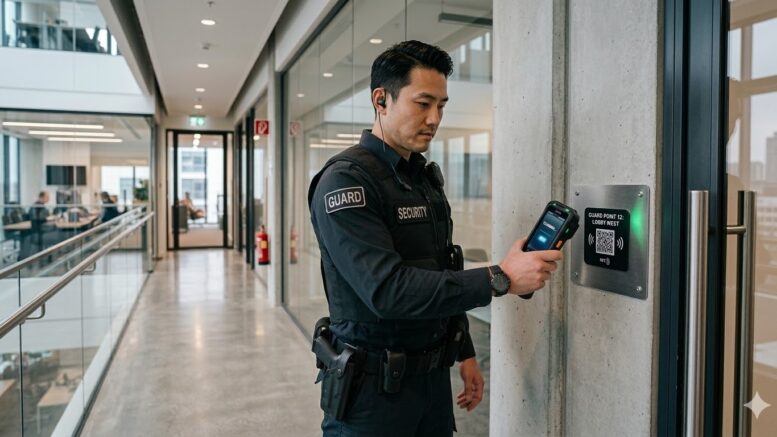
Security agencies and facility managers across Singapore are moving away from paper patrol logs toward digital verification. An NFC checkpoint guard patrol system uses tap-based checkpoints to prove that a security officer physically visited a specific location at a specific time, giving management verifiable, tamper-resistant patrol records. This guide explains how NFC-based patrol systems work and why they are becoming the standard for professional security operations.
What Is an NFC Guard Patrol System?
An NFC guard patrol system places small, passive NFC tags at key checkpoints throughout a property — stairwells, loading docks, perimeter fences, server rooms, and more. Officers carry a handheld NFC reader or smartphone and simply tap each tag during their rounds. The system logs the exact time and location of every tap, creating an accurate, timestamped patrol trail.
Why NFC Instead of QR Codes or Manual Logs
NFC tags are more durable than printed QR codes, which can fade, tear, or be tampered with over time. They also work reliably in low light and don’t require the officer to align a camera precisely, making patrols faster and more consistent — especially important during night shifts or in poorly lit areas.
Key Benefits for Security Operations
| Benefit | Operational Impact |
|---|---|
| Verified checkpoint visits | Proves officers physically completed each round |
| Real-time monitoring | Supervisors can track patrol progress live |
| Incident timestamping | Helps correlate patrol timing with security events |
| Reduced patrol fraud | Eliminates falsified paper logs |
| Durable hardware | NFC tags withstand outdoor exposure long-term |
Accountability Without Micromanagement
Rather than requiring constant supervisor check-ins, an NFC patrol system provides objective proof of coverage automatically. This shifts security management from manual spot-checks to data-driven oversight, freeing supervisors to focus on higher-value tasks like incident response and training.
How to Deploy an NFC Checkpoint System: Step-by-Step
- Map patrol routes. Identify all critical checkpoints across the property that need regular verification.
- Install NFC tags. Mount tamper-resistant tags at each checkpoint location.
- Set up the reader app. Configure officer devices with the patrol app linked to the checkpoint map.
- Define patrol schedules. Set expected timing between checkpoints to flag missed or delayed rounds.
- Enable real-time alerts. Configure notifications for missed checkpoints or unusual patrol gaps.
- Review reporting dashboards. Use patrol history for compliance, client reporting, and performance reviews.
NFC Patrol vs Traditional Paper Logs
| Aspect | Paper Logs | NFC Patrol System |
|---|---|---|
| Verification accuracy | Easily falsified | Tamper-resistant, timestamped |
| Supervisor visibility | Delayed, manual review | Real-time tracking |
| Reporting | Manual compilation | Automated digital reports |
| Durability | Paper degrades over time | NFC tags last for years outdoors |
Best Practices for Guard Patrol Management
Place checkpoints at genuinely high-risk or high-value areas rather than spreading them too thin, and review patrol data weekly to spot patterns — such as consistently rushed rounds — before they become security gaps. Sharing patrol reports with clients also builds trust for security service providers managing external contracts.
Key Takeaways
- NFC checkpoint systems provide verifiable proof of patrol completion.
- Real-time monitoring replaces slow, manual supervision methods.
- NFC tags are more durable and reliable than QR-code alternatives.
- Digital patrol data supports both compliance and client reporting needs.
Conclusion
An NFC checkpoint guard patrol system gives Singapore security teams a reliable, tamper-resistant way to verify that patrols are actually happening as scheduled. By replacing paper logs with real-time digital tracking, security providers gain stronger accountability, faster incident response, and more credible reporting for clients. For any organisation serious about security assurance, upgrading to NFC-based patrol verification is a practical, high-impact step.
Frequently Asked Questions
How does an NFC guard patrol system prevent falsified logs?
Each tap is timestamped and location-verified against the physical NFC tag, making it very difficult to fake a checkpoint visit.
Do officers need special training to use NFC patrol devices?
No, the process is as simple as tapping a smartphone or handheld reader against each checkpoint tag.
Can supervisors see patrol progress in real time?
Yes, most systems offer live dashboards showing which checkpoints have been completed and any missed rounds.
Are NFC tags durable enough for outdoor checkpoints?
Yes, NFC tags used in patrol systems are typically weatherproof and designed to last for years without maintenance.
Can patrol data be used for client reporting?
Yes, digital patrol reports can be exported or shared directly with clients as proof of service delivery.
Need more information about the product? Click here: https://smartouch.com.sg/guard-patrol-system/
Smart Touch technology pte ltd , www.smartouch.com.sg +65-63964767, sales@smartouch.com.sg , www.smartouch.com.my +607-3889903 sales@smartouch.com.my