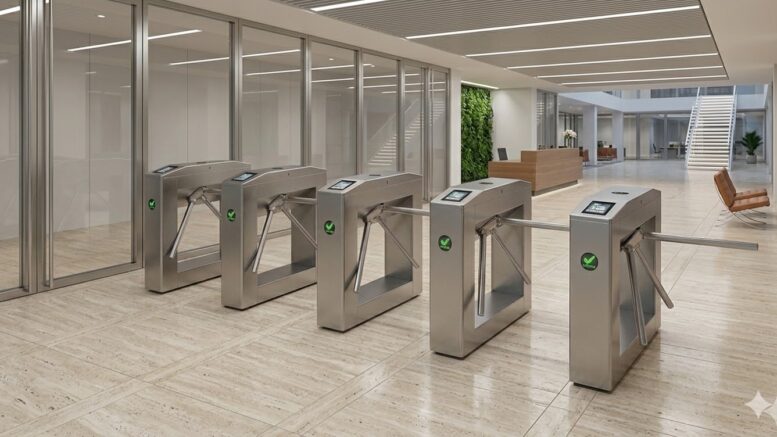
Commercial buildings with multiple tenants, restricted zones, and high daily foot traffic need more than a simple lock-and-key setup to stay secure. An enterprise door access control solution gives building managers centralised, granular control over who can enter which areas and when, while maintaining a full digital audit trail. This guide covers what enterprise-grade access control involves and how to plan a deployment for a commercial building in Singapore.
Why Commercial Buildings Need Enterprise-Grade Access Control
Unlike a single-tenant office, commercial buildings often manage dozens of access zones — lobbies, tenant floors, mechanical rooms, loading docks, and shared facilities — each with different permission requirements. An enterprise door access control solution centralises management of all these zones from a single platform, rather than relying on disconnected, standalone locks.
Multi-Tenant Complexity
Property managers must balance tenant-specific access needs with building-wide security policies. A strong access control platform allows different permission tiers per tenant while still giving building management full oversight and emergency override capability across the entire property.
Key Benefits of Enterprise Door Access Control
| Benefit | Description |
|---|---|
| Centralised management | Control all access points from a single dashboard |
| Granular permissions | Set specific access rights by zone, time, and user group |
| Full audit trail | Every entry attempt is logged for security review |
| Scalability | Easily add new zones or tenants as the building evolves |
| Integration ready | Connects with visitor management, CCTV, and alarm systems |
Beyond Keys: Credential Flexibility
Modern enterprise access control supports multiple credential types — access cards, mobile credentials, PINs, and biometric verification — allowing building managers to match security levels to the sensitivity of each zone, from general lobbies to restricted server rooms.
Step-by-Step: Planning an Access Control Deployment
- Zone mapping. Identify all access points and classify them by security sensitivity.
- Define permission tiers. Determine who needs access to each zone and under what conditions.
- Select credential types. Choose card, mobile, PIN, or biometric options per zone requirement.
- Integrate supporting systems. Link access control with CCTV and visitor management for unified security.
- Set up audit reporting. Configure regular access logs and anomaly alerts for security teams.
- Plan for emergencies. Ensure the system supports rapid lockdown or mass unlock during emergencies.
Standalone Locks vs Enterprise Access Control
| Aspect | Standalone Locks | Enterprise Access Control |
|---|---|---|
| Management | Per-door, manual | Centralised, single dashboard |
| Audit trail | None or limited | Comprehensive digital logs |
| Scalability | Difficult across many doors | Built for large, multi-zone buildings |
| Emergency response | Manual, slower | Centralised lockdown or override |
Best Practices for Ongoing Management
Review access permissions regularly, especially when tenants change or staff roles shift, to avoid outdated access rights accumulating over time. Combining access control with visitor management and CCTV integration also creates a more complete security picture, rather than treating each system in isolation.
Key Takeaways
- Enterprise access control centralises security management across complex commercial buildings.
- Granular, zone-based permissions balance tenant needs with building-wide security.
- Multiple credential types allow flexible security levels per zone.
- Integration with CCTV and visitor management strengthens overall security posture.
Conclusion
An enterprise door access control solution gives commercial building managers the centralised oversight and flexibility needed to secure complex, multi-tenant properties effectively. From granular zone permissions to full audit trails and emergency response capability, enterprise-grade access control turns a fragmented collection of locks into a unified, manageable security system. For any commercial building looking to strengthen security while simplifying management, upgrading to an enterprise access control solution is a clear step forward.
Frequently Asked Questions
What credential types can an enterprise access control system support?
Most systems support access cards, mobile credentials, PIN codes, and biometric verification, often in combination.
Can different tenants have different access permissions?
Yes, enterprise systems allow granular, zone-specific permissions tailored to each tenant’s needs.
How does the system support emergency situations?
Centralised platforms typically support rapid lockdown or mass unlock functions during emergencies.
Does access control integrate with CCTV systems?
Yes, many enterprise solutions integrate with CCTV and visitor management for a unified security view.
Is it difficult to scale the system as a building adds tenants?
No, enterprise access control is designed to scale easily, allowing new zones and users to be added as needed.
Want to know more about this product? Click here: https://smartouch.com.sg/face-and-door-access/
Smart Touch technology pte ltd , www.smartouch.com.sg +65-63964767, sales@smartouch.com.sg , www.smartouch.com.my +607-3889903 sales@smartouch.com.my