Face Recognition Access Control Singapore Guide for Dormitory Operators: Boost Productivity and Control
Managing access to dormitory facilities presents unique challenges for operators in Singapore. With multiple residents, staff members, and visitors moving through different areas throughout the day, traditional lock-and-key systems or basic card access solutions often fall short. Security concerns, administrative overhead, and the need to track occupancy and movement can quickly become complex operational headaches.
Modern face recognition access control systems offer a practical solution to these challenges. By automating entry management and providing real-time visibility into facility usage, dormitory operators can enhance security, streamline operations, and improve the overall resident experience. This guide explores how face recognition technology works, its specific benefits for dormitory operations in Singapore, and how to implement it effectively.
Why Dormitory Operators Need Modern Access Control
Dormitories in Singapore serve students, working professionals, and other residents who require secure but convenient access to their facilities. Unlike traditional office environments, dormitories operate around the clock, with residents coming and going at all hours. This creates specific operational needs:
- 24/7 access requirements without compromising security
- Tracking resident movements for safety and compliance purposes
- Managing visitor access to common areas and individual rooms
- Reducing administrative burden on reception and security staff
- Preventing unauthorised access and potential security breaches
- Maintaining audit trails for incident investigation and reporting
Traditional access methods—such as physical keys or basic proximity cards—create administrative headaches. Lost keys require expensive rekeying, damaged cards need replacement, and there is limited visibility into who accessed which areas and when. For dormitory operators looking to streamline operations while maintaining security standards, a modern access control solution is essential.
Understanding Face Recognition Access Control Technology
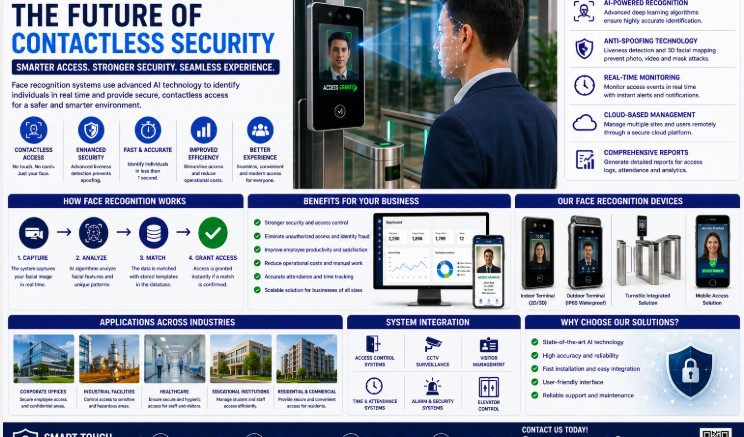
Face recognition access control systems use biometric technology to identify individuals based on their facial features. Instead of relying on cards, keys, or PIN codes, residents simply present their face to a camera at entry points. The system captures the facial data, compares it against an enrolled database, and grants or denies access in real time.
How the Technology Works
Face recognition systems operate through several key steps:
- Enrolment: During setup, residents and staff have their faces scanned and recorded in the system database.
- Capture: When a person approaches an access point, the camera captures their facial image.
- Processing: The system extracts unique facial features and creates a digital template.
- Comparison: This template is compared against the enrolled database.
- Decision: Access is granted or denied based on whether a match is found and the person’s access permissions.
Modern systems process this entire sequence in seconds, making access smooth and convenient for residents while maintaining robust security controls.
Key Advantages for Dormitory Operations
Face recognition technology offers several operational benefits that directly address dormitory management challenges:
Convenience: Residents no longer need to carry key cards or remember PIN codes. A simple approach to a scanner grants access, reducing friction during peak entry times.
Security: Facial biometrics cannot be easily lost, stolen, or shared. Each person can only grant themselves access, eliminating the risk of unauthorised entry through lost credentials.
Visibility and Compliance: Every access event is automatically logged with timestamp and identity information. This creates an auditable record useful for safety investigations and compliance reporting.
Scalability: Adding new residents is straightforward—simply enrol their facial data. Removing access is instantaneous, with no need for physical key recovery.
Reduced Administrative Overhead: Security staff spend less time managing lost cards, resetting PIN codes, or responding to access issues. This frees them to focus on higher-value tasks.
Practical Applications in Singapore Dormitories
Face recognition access control can be deployed across multiple points in a dormitory facility, each addressing specific operational needs:
Main Entrance Control
The primary entry point benefits most from biometric verification. Residents and authorised visitors gain seamless access while unauthorised individuals are denied entry. Staff can receive alerts for any access attempts by non-residents, enabling rapid response to security concerns.
Individual Room Access
Face recognition can secure individual residential units. If a resident loses their key or wishes to grant temporary access to a guest or maintenance worker, the system allows flexible, time-limited permissions without physical key exchange. Access logs show exactly who entered which room and when.
Common Area Management
Dormitories typically include shared facilities such as study rooms, recreational areas, gyms, or laundry facilities. Face recognition ensures only registered residents and guests with appropriate permissions can access these spaces. Operators can restrict access by time of day if needed (for example, closing common areas at night).
Staff Area Security
Administrative offices, maintenance areas, and storage rooms require restricted access. Face recognition prevents unauthorised entry and creates clear accountability for who accessed sensitive areas.
Addressing Common Dormitory Operator Concerns
Privacy and Data Protection
Singapore residents and organisations are increasingly conscious of privacy rights. When implementing face recognition systems, dormitory operators should:
- Ensure the system complies with Singapore’s Personal Data Protection Act (PDPA) requirements
- Clearly communicate to residents that facial biometric data is being collected and explain the purpose
- Implement appropriate data security measures to protect enrolled facial templates
- Establish clear policies about data retention and deletion (particularly when residents move out)
- Provide residents with the ability to understand how their data is used
A well-implemented system actually enhances privacy by replacing vague visitor logs with precise, verifiable access records.
System Reliability
Dormitory operators may worry about system failures affecting resident access. Modern face recognition systems include:
- Backup power supplies to maintain operation during electrical interruptions
- Offline functionality so access continues even if network connectivity is lost
- Fallback access methods (such as PIN codes or emergency override procedures) for exceptional situations
- Regular system monitoring and maintenance to ensure consistent uptime
When properly installed and maintained, these systems achieve very high reliability comparable to traditional access control infrastructure.
Implementation Costs
While face recognition technology represents an investment, dormitory operators should consider the long-term savings:
- Elimination of physical key replacement costs
- Reduction in staff time spent managing lost credentials and access issues
- Prevention of security incidents that could result in liability or resident dissatisfaction
- Improved operational efficiency through automation
For dormitories with significant resident turnover or multiple access points, the return on investment typically materialises within the first year of operation.
How Smart Touch Technology Singapore Can Help
Smart Touch Technology Singapore offers comprehensive face and door access control solutions specifically designed for facility operators managing secure environments. Their systems provide the biometric capabilities and access management functionality that dormitory operators need, combined with the reliability and support required for 24/7 operations.
By partnering with Smart Touch Technology, dormitory operators gain:
- Expert guidance on system design and implementation tailored to their specific facility layout and operational requirements
- Reliable, professionally installed face recognition hardware and software
- Training for staff on system operation and troubleshooting
- Ongoing technical support to ensure consistent system performance
- Access to best practices and industry standards for secure facility management
Whether you are managing a small specialist dormitory or a larger residential complex, Smart Touch Technology’s solutions scale to your needs and integrate smoothly with your existing operations.
Implementation Best Practices for Dormitory Operators
Successfully deploying face recognition access control requires careful planning and execution:
Conduct a Security Audit
Before implementation, assess your current security gaps and operational pain points. Identify which entry points are most critical, where unauthorised access is most likely, and which areas require the tightest control.
Plan Resident Communication
Introduce the new system to residents well in advance. Explain the benefits for their security and convenience, address privacy concerns transparently, and provide clear enrolment instructions. Positive resident buy-in leads to smoother implementation.
Phase the Rollout
Consider implementing face recognition at the main entrance first, then expanding to secondary entry points and common areas. This phased approach allows staff to become familiar with the system and identify any adjustments needed before full-facility deployment.
Establish Clear Policies
Document procedures for granting and revoking access, handling visitor access, managing system maintenance, and responding to access issues. Clear policies ensure consistent operation and provide staff with guidance for common scenarios.
Monitor and Optimise
After deployment, regularly review access logs, identify any patterns or anomalies, and gather feedback from residents and staff. Use this information to optimise system settings and address operational challenges.
Conclusion
Face recognition access control represents a significant advancement in dormitory security and operational management for Singapore facility operators. By automating access decisions, creating comprehensive audit trails, and eliminating traditional credential management headaches, these systems enable dormitory operators to maintain higher security standards while reducing administrative burden and improving the resident experience.
The technology addresses the specific challenges of 24/7 residential facilities: balancing convenience with security, maintaining visibility into facility usage, and scaling access management as residents come and go. For dormitory operators seeking to enhance their security posture and streamline operations, face recognition access control is a practical, proven solution.
Want to know more about this product? Click here to explore Smart Touch Technology Singapore’s face and door access control solutions tailored for dormitory operators.
Smart Touch technology pte ltd , www.smartouch.com.sg +65-63964767, sales@smartouch.com.sg , www.smartouch.com.my +607-3889903 sales@smartouch.com.my