Security operations in Singapore are evolving rapidly. Clients demand higher transparency, quicker response times and clear proof that guards are performing their rounds as required. At the same time, security agencies must manage manpower shortages, compliance requirements and complex service-level agreements (SLAs).
In this landscape, manual guard tour books, paper checklists and ad-hoc reporting are no longer enough. A modern guard patrolling system in Singapore brings structure, automation and real-time visibility to daily patrol operations, giving both security providers and building owners confidence that their sites are being protected properly.
Our Guard Patrol System is designed specifically to help organisations achieve this level of assurance and efficiency. For an overview of our solution, you can visit:
https://smartouch.com.sg/guard-patrol-system/
What Is a Guard Patrolling System in Singapore?
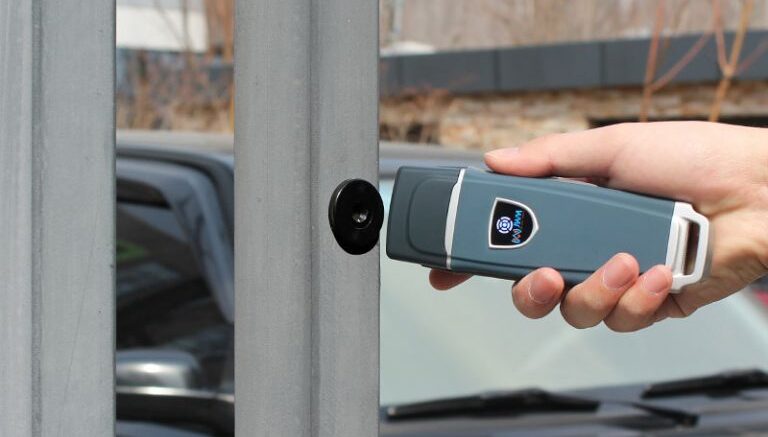
A guard patrolling system (often called a guard tour system) is a combination of hardware and software that tracks and verifies security patrols. Instead of relying on handwritten logbooks or trust alone, the system uses checkpoints and electronic devices to record:
- Which guard performed the patrol
- Which checkpoints were visited
- What time each checkpoint was scanned
- What incidents or observations were reported
These records are sent to a central platform where supervisors, control rooms and clients can review patrol performance, receive alerts and generate reports.
A typical guard patrolling system in Singapore includes:
- Mobile devices or dedicated readers carried by guards
- QR, NFC, RFID or Bluetooth checkpoints installed along the patrol route
- A cloud-based or on-premise management portal
- Real-time notifications and exception alerts
- Reporting tools for audit and compliance purposes
Why a Guard Patrolling System Is Essential in Singapore
1. Stronger accountability and proof of service
Whether you manage commercial buildings, industrial facilities, dormitories, schools or critical infrastructure, you need assurance that guards are performing their rounds correctly. With a guard patrolling system:
- Each patrol is digitally time-stamped
- Missed checkpoints are automatically flagged
- Reports can be generated for any date and time range
This provides clear, objective proof of service for building owners, management councils, facility managers and regulators. Disputes about whether a patrol was conducted become much easier to resolve with factual data.
2. Improved incident response and communication
Traditional logbooks often capture incidents hours after they occur, and information may be incomplete or hard to read. A modern guard patrolling system in Singapore allows guards to:
- Record incidents immediately via mobile app or reader
- Attach photos, notes and predefined incident categories
- Trigger alerts to supervisors or control rooms in real time
This enables faster response, better escalation and more accurate documentation of security events, which is crucial for investigations and reporting.
3. Optimised manpower and route planning
With full visibility on patrol data, supervisors can:
- Identify routes that consistently take too long or too little time
- Adjust checkpoint placement to cover blind spots
- Balance workloads across shifts and sites
- Justify staffing levels based on actual activity data
Instead of making guesses, security managers use real data to optimise their patrol strategies and manpower deployment.
4. Compliance and audit readiness
Many clients, especially in high-risk sectors, require detailed records of security activities. A guard patrolling system:
- Maintains secure, tamper-resistant logs of patrols
- Provides standardised reports for audits and inspections
- Helps demonstrate compliance with internal SOPs and contractual obligations
This reduces the administrative burden on security agencies and facilities teams, while providing the level of documentation that modern contracts demand.
Key Features of Our Guard Patrolling System Singapore
Our Guard Patrol System is designed with the realities of Singapore’s security industry in mind: multiple sites, diverse client demands, strict SLAs and the need for 24/7 operations. Below are key capabilities that organisations typically deploy.
1. Flexible Checkpoint Technology – QR, NFC, RFID and More
Different environments require different types of checkpoints. Our solution supports:
- QR code checkpoints – simple to deploy and easy to replace
- NFC tags – durable and discreet for indoor or sheltered areas
- RFID tags – suitable for industrial or outdoor environments
- Hybrid setups – mixing multiple technologies in one site
This flexibility lets security providers choose the technology that best fits each client and location, while still managing everything from one central system.
2. Mobile App or Dedicated Device for Guards
Depending on operational needs, guards can use either:
- A mobile application installed on approved smartphones, or
- A dedicated handheld reader designed for patrol use
Both capture checkpoint scans, timestamps and incidents. Device options can be selected based on client policy, connectivity constraints or ruggedness requirements.
3. Real-Time Monitoring and Alerts
A central dashboard gives supervisors and control room operators a clear view of ongoing operations:
- Live view of which patrols are ongoing or completed
- Alerts for missed checkpoints or overdue patrols
- Notifications for incident reports submitted from the field
This allows issues to be addressed immediately, rather than discovered only during end-of-shift reviews.
4. GPS and Location Tracking (Where Applicable)
For outdoor patrols or large sites, GPS capabilities can be enabled to:
- Confirm that guards are in the general area of checkpoints
- Review movement paths for investigation or analysis
- Identify potential shortcuts or bypassed routes
When combined with checkpoint scans, GPS data provides a richer picture of patrol behaviour.
5. Incident and Observation Reporting
Our guard patrolling system in Singapore includes structured incident reporting tools. Guards can:
- Select incident types from predefined categories (e.g. door unsecured, suspicious person, equipment fault)
- Add notes detailing what they observed and what actions were taken
- Attach photos or short videos as evidence (where device capabilities and policy allow)
These incident records are stored with patrol data, making it easy to review what occurred at each checkpoint on a given patrol.
6. Comprehensive Reporting and Analytics
Standard and custom reports are available to support different stakeholders:
- Daily patrol summaries by site, route and guard
- Missed and late checkpoint reports for SLA tracking
- Incident statistics filtered by category, time or location
- Performance trends over weeks or months
These reports can be shared with clients as part of monthly reporting, used internally for training and improvement, and stored as evidence for audits.
7. Multi-Site and Multi-Client Management
Security agencies often manage many locations simultaneously. Our system allows:
- Centralised management of routes and checkpoints across multiple sites
- Client-specific reporting and access rights
- Separation of data so each client sees only their own sites and patrols
This makes it easier to scale operations without losing control or clarity.
For a more detailed feature overview, please visit:
https://smartouch.com.sg/guard-patrol-system/
How a Guard Patrolling System Works in Daily Operations
To illustrate how a guard patrolling system in Singapore fits into everyday work, consider a typical workflow:
- Setup and configuration
- Checkpoints are placed at strategic locations such as entrances, stairwells, equipment rooms, rooftop access doors and perimeter zones.
- Routes and patrol schedules are created in the system, specifying which checkpoints must be visited and within what timeframe.
- Guard briefing and device assignment
- Guards receive their devices or have the mobile app installed and registered to their user profiles.
- Supervisors brief them on routes, timing and incident reporting procedures.
- Patrol execution
- At the scheduled time, the guard starts a patrol via the app or device.
- As they move along the route, they scan each checkpoint (QR, NFC, RFID, etc.).
- If they notice any irregularities, they submit incident reports on the spot.
- Real-time monitoring
- Supervisors or control room operators see patrol progress on the dashboard.
- If a checkpoint is missed or there is a delay, the system can trigger alerts.
- End-of-shift review
- At the end of the shift, supervisors review patrol completion status and incidents.
- Any serious issues are escalated to facility management or client representatives.
- Periodic reporting
- Weekly or monthly reports are generated and shared with clients.
- Patterns such as frequent door left open, recurring equipment failures or hotspots of suspicious activity are analysed and addressed.
Benefits for Key Stakeholders
For Security Agencies
- Clear proof of work for every patrol and checkpoint
- Reduced manual paperwork, freeing time for supervision and training
- Better SLA management, with automatic tracking of missed or late patrols
- Stronger customer confidence, leading to improved retention and contract renewals
For Building Owners and Facility Managers
- Transparency into how security services are actually delivered
- Evidence to support investigations, insurance claims or internal reviews
- Insight into risk areas that may need physical improvements (e.g. lighting, locks, CCTV coverage)
- Assurance that patrols are not simply “tick-box” exercises, but actively monitored activities
For Guards and Supervisors
- Structured routes and checkpoints, making expectations clear
- Simplified reporting, eliminating the need for lengthy handwritten notes
- Recognition of performance, as data can highlight guards who consistently perform well
- Better communication, with real-time feedback from supervisors when issues arise
Integration with Other Security and Facility Systems
A guard patrolling system becomes even more powerful when integrated with:
- Access control systems – linking door events with patrol data
- CCTV and video management systems – correlating incidents with recorded footage
- Incident management or helpdesk platforms – ensuring follow-up actions are tracked and completed
- Visitor management systems – aligning patrol focus with visitor flows and high-traffic zones
By connecting these dots, organisations can build a comprehensive, data-driven security ecosystem instead of isolated systems.
Implementation Approach for Guard Patrolling System Singapore
Rolling out a guard patrolling system is not just about installing software; it involves process review and change management. Our typical approach includes:
- Requirements study and site survey
- Understanding current patrol practices, pain points and client requirements
- Mapping critical areas and existing security infrastructure
- System design and route planning
- Defining checkpoints, routes and schedules for each site
- Selecting appropriate checkpoint technologies (QR, NFC, RFID, etc.)
- Hardware deployment and system configuration
- Installing checkpoints and setting up the backend platform
- Creating user accounts, roles and client access profiles
- Training and pilot phase
- Training guards, supervisors and client representatives
- Running a pilot on selected routes or sites to gather feedback
- Full rollout and optimisation
- Extending the system across all planned locations
- Fine-tuning routes, schedules and reports based on real-world usage
- Ongoing support and enhancements
- Providing technical support and system maintenance
- Adding new features or integrations as security needs evolve
Why Choose Our Guard Patrolling System in Singapore
When selecting a guard patrolling platform, organisations look for technology that is robust, user-friendly and backed by reliable support. With our solution, we focus on:
- Local understanding of Singapore’s security industry and client expectations
- Scalable architecture that can support small single-site operations or large multi-site deployments
- Practical design for use by guards on the ground, not just managers in the office
- Strong reporting capabilities to satisfy both internal management and external clients
Combined with our experience in other operational systems such as canteen, dormitory and employee management solutions, we provide an integrated approach to workplace and facility management.
To learn more about our guard patrolling system Singapore solution and how it can support your security operations, please visit:
https://smartouch.com.sg/guard-patrol-system/
Smart Touch technology pte ltd , www.smartouch.com.sg +65-63964767, sales@smartouch.com.sg , www.smartouch.com.my +607-3889903 sales@smartouch.com.my
Be the first to comment on "Guard Patrolling System Singapore – Smarter Security for Modern Facilities"