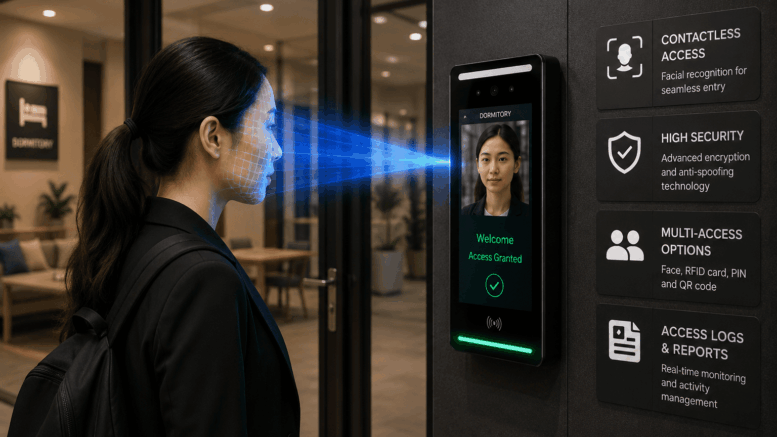
Singapore has long positioned itself at the forefront of smart infrastructure, digital governance, and advanced security systems. In recent years, one technology has stood out as a defining feature of modern building security: biometric face recognition door access systems. From corporate headquarters in the Central Business District to industrial facilities in Tuas and high-end residential developments across the island, facial recognition access control is rapidly becoming the new security standard.
But what exactly is driving this accelerated adoption? Why are businesses and property developers in Singapore shifting away from traditional card-based access systems toward AI-powered facial recognition solutions?
In this in-depth guide, we explore the key factors behind the rapid growth of biometric face recognition door access systems in Singapore and why this trend is set to continue well beyond 2026.
1. Singapore’s Smart Nation Vision Accelerates Adoption
Singapore’s Smart Nation initiative emphasizes digital transformation, automation, and intelligent infrastructure. As buildings become smarter and more interconnected, traditional access control methods such as keycards and PIN codes are increasingly seen as outdated.
Biometric face recognition systems align perfectly with the country’s vision by offering:
- Seamless digital authentication
- Integration with smart building systems
- Real-time centralized management
- Data-driven access monitoring
As organizations modernize their facilities, upgrading access control is a natural first step toward smarter building ecosystems.
2. Rising Security Expectations in Commercial and Industrial Sectors
Security threats are becoming more sophisticated, and businesses in Singapore operate in a highly regulated, security-conscious environment. Traditional card access systems present several vulnerabilities:
- Lost or stolen cards
- Card duplication
- Unauthorized sharing of credentials
- Limited tracking capabilities
Biometric face recognition eliminates these risks. A face cannot be misplaced, borrowed, or easily replicated. Modern systems use deep-learning algorithms and anti-spoofing technology to detect fake photos, videos, or masks.
For high-security industries such as finance, data centers, healthcare, and logistics, enhanced authentication accuracy is no longer optional—it is essential.
3. Demand for Contactless and Hygienic Access
The global health crisis reshaped workplace safety standards. Contactless technology became a priority across all sectors.
Biometric face recognition door access systems offer:
- Fully touchless entry
- Faster authentication (less than 1 second)
- Reduced physical contact with surfaces
- Improved workplace hygiene
In shared environments such as co-working spaces, hospitals, and corporate offices, minimizing contact points has become part of long-term operational planning.
4. Integration with Time Attendance and HR Systems
Another major reason biometric face recognition is growing in Singapore is its seamless integration with time attendance systems.
Modern facial recognition access systems can:
- Automatically record employee attendance
- Generate payroll reports
- Track overtime hours
- Monitor shift schedules
- Provide real-time attendance dashboards
By combining access control and attendance tracking into a single system, businesses reduce administrative workload and improve data accuracy.
For companies managing large workforces, especially in manufacturing and logistics sectors, this dual-function capability significantly improves operational efficiency.
5. Higher Labor Costs Encourage Automation
Singapore’s relatively high labor costs drive companies to invest in automation wherever possible.
Manual security management, card issuance, and lost-card replacement processes require time and administrative resources. With facial recognition systems:
- No cards need to be issued or replaced
- No manual attendance tracking is required
- Security monitoring becomes centralized and automated
- Access permissions can be updated remotely
The long-term cost savings in manpower and administrative effort make biometric access systems a strategic investment rather than just a security upgrade.
6. Improved Accuracy Through AI and Deep Learning
Modern biometric systems are powered by advanced AI algorithms capable of:
- High-speed facial matching
- Low-light recognition using infrared sensors
- Wide-angle face detection
- Anti-spoofing protection
- Multi-factor authentication options
Recognition accuracy rates now exceed 99% in properly configured environments. The speed and reliability of these systems significantly outperform older biometric methods such as fingerprint scanning.
This technological maturity has boosted confidence among Singaporean businesses to deploy face recognition on a larger scale.
7. Centralized Cloud Management for Multi-Location Businesses
Many companies in Singapore operate multiple branches across different districts or even overseas. Cloud-based face recognition systems allow centralized control across all locations.
Administrators can:
- Add or remove users remotely
- Monitor live access logs
- Generate security reports
- Adjust access schedules instantly
- Integrate with visitor management systems
This scalability makes facial recognition especially attractive to corporate groups, property management companies, and multi-site organizations.
8. Enhanced Visitor Management Systems
Beyond employee access, biometric face recognition systems are increasingly used in visitor management.
Visitors can pre-register their facial data securely and enjoy:
- Faster check-in
- Reduced queue times
- Temporary access credentials
- Automated logging of entry and exit
In commercial buildings and business parks, this improves both security and visitor experience.
9. Compliance with Singapore’s Data Protection Framework
Singapore’s Personal Data Protection Act (PDPA) ensures that biometric data must be handled responsibly. Modern facial recognition systems now include:
- Encrypted facial data storage
- Role-based access control
- Secure data transmission protocols
- Customizable data retention policies
With proper implementation and user consent, businesses can deploy biometric systems while remaining compliant with regulatory requirements.
This clarity in compliance standards has reduced hesitation among organizations considering biometric adoption.
10. Growing Acceptance of Biometric Technology in Daily Life
Singapore residents are already familiar with biometric authentication through:
- Smartphone facial recognition
- Automated immigration gates
- Digital identity verification systems
As biometric technology becomes part of everyday life, user acceptance increases. Employees and residents are more comfortable using facial recognition as a secure and convenient authentication method.
This cultural familiarity contributes significantly to the rapid growth of face recognition access systems in workplaces and residential developments.
11. Long-Term Cost Efficiency
Although the initial installation cost of biometric face recognition systems may be higher than traditional card systems, the long-term savings are substantial:
- No recurring card replacement costs
- Reduced security breaches
- Lower administrative overhead
- Fewer maintenance issues related to physical cards
When evaluated over a 3–5 year period, facial recognition systems often prove more cost-effective.
12. Future-Proof Security Infrastructure
Businesses in Singapore prioritize scalable and future-ready solutions. Face recognition systems are designed to integrate with:
- Smart building management systems
- IoT sensors
- AI analytics platforms
- Mobile authentication backups
- Advanced surveillance systems
Investing in biometric access control positions organizations for long-term technological evolution.
The Road Ahead: Biometric Access as the New Standard
Looking ahead, the growth trajectory of biometric face recognition door access systems in Singapore is expected to accelerate further. Advancements in AI, cloud computing, and cybersecurity will continue enhancing system reliability and security.
We are entering an era where physical access will be managed digitally, intelligently, and seamlessly.
For businesses seeking:
- Enhanced security
- Operational efficiency
- Contactless authentication
- Smart infrastructure integration
- Long-term cost optimization
Biometric face recognition door access systems are not just a trend—they are the future of building security in Singapore.
Conclusion
The growth of biometric face recognition door access systems in Singapore is driven by a combination of smart nation initiatives, rising security expectations, automation demands, AI advancements, regulatory clarity, and long-term operational efficiency.
As technology continues to mature, facial recognition access control will become a baseline feature of modern commercial and residential properties.
Organizations that embrace this transformation today are positioning themselves at the forefront of secure, intelligent, and future-ready infrastructure.
If you are looking for a reliable biometric face recognition door access system in Singapore, you can explore our latest solutions here. https://www.smartouch.com.my/door-access-control-system-331/
Smart Touch technology pte ltd , www.smartouch.com.sg +65-63964767, sales@smartouch.com.sg , www.smartouch.com.my +607-3889903 sales@smartouch.com.my