Choosing the Right Face Recognition Access Control Singapore for Contractors
Introduction
Construction sites, facilities management operations, and contractor-heavy workplaces across Singapore face a unique security challenge: managing access for multiple teams, subcontractors, and temporary workers while maintaining strict safety and compliance standards. Traditional access methods such as key cards, PIN codes, and manual sign-in sheets are becoming increasingly inadequate for modern construction and facility environments.
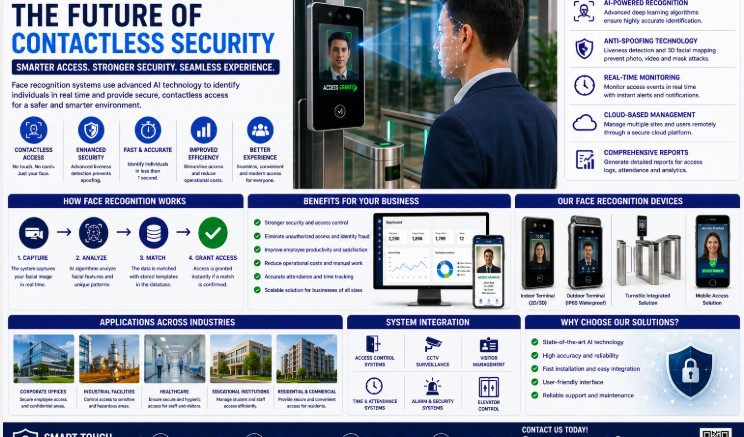
Face recognition access control technology offers a practical solution to these challenges. By leveraging biometric identification, businesses can streamline access management, enhance security, and maintain accurate records of who enters and exits the premises—critical requirements for compliance and liability management in Singapore’s regulated business environment.
For contractors and facility managers, selecting the right face recognition access control system is a significant decision that directly impacts operational efficiency, security posture, and employee satisfaction. This guide explores what you need to consider when choosing a face recognition solution suited to your contracting business.
Why Face Recognition Access Control Matters for Contractors in Singapore
Security and Site Safety
Construction and contracting operations involve valuable equipment, sensitive areas, and multiple teams working simultaneously. Unauthorised access poses risks to both assets and personnel safety. Face recognition systems provide a documented, tamper-proof record of site access—essential information if incidents occur or if you need to verify who was present at a specific time.
Managing Temporary and Multiple Workforces
Unlike traditional office environments with a fixed staff roster, contracting businesses regularly onboard and offboard temporary workers, subcontractors, and specialists. Managing access credentials for this fluid workforce is logistically complex and error-prone with manual systems. Face recognition systems can be quickly updated to grant or revoke access without replacing physical credentials.
Compliance and Documentation
Singapore’s workplace safety regulations and industry standards often require documented proof of site access and movement. Biometric access systems create an automatic audit trail that satisfies compliance requirements and supports incident investigations.
Operational Efficiency
Eliminating lost cards, forgotten PIN codes, and manual sign-in bottlenecks reduces friction at entry points. Workers move through access points faster, improving site flow and reducing time-wasting delays during shift changes or site transitions.
Key Considerations When Choosing Face Recognition Access Control
Recognition Accuracy and Speed
The system must reliably identify authorised personnel under real-world site conditions—varying lighting, weather, safety equipment like helmets and masks, and outdoor environments. Poor recognition accuracy leads to frustration, bottlenecks, and security gaps. Evaluate systems based on their performance in conditions matching your actual work environment.
Integration with Existing Infrastructure
Your access control solution should integrate seamlessly with existing door hardware, security systems, and management software. Incompatibility can lead to expensive retrofitting, downtime, and operational disruption. Confirm integration capabilities before committing to a solution.
Scalability and Flexibility
A contractor’s access control needs change as projects grow, teams expand, or locations multiply. Your system should accommodate growth without requiring complete replacement. This includes the ability to add additional readers, manage multiple sites from a central platform, and adjust access rules as needed.
Ease of User Management
Adding new workers, updating permissions, and removing offboarded staff should be straightforward. Systems requiring complex administrative processes create bottlenecks and increase the likelihood of access control errors. Look for intuitive user interfaces that your team can manage without extensive training.
Data Security and Privacy
Biometric data is sensitive information. Your system must comply with Singapore’s Personal Data Protection Act (PDPA) and implement strong encryption, secure storage, and restricted access to biometric records. Understand the data handling practices of any vendor you consider.
Reliability and Support
Access control systems must function continuously. Consider the vendor’s track record for uptime, the availability of local support, and what happens if the system fails. For critical access points, redundancy and backup systems may be necessary.
Total Cost of Ownership
Look beyond the initial hardware cost. Consider installation, integration, licensing, maintenance, training, and support costs. A cheaper system that requires expensive integration or frequent repairs may cost more over time than a well-supported solution designed for your use case.
Common Challenges in Contractor Access Control
Dealing with Safety Equipment and Protective Gear
Construction workers often wear helmets, safety glasses, masks, and protective equipment that can obstruct facial features. Choose a system specifically tested and optimised to work reliably with the types of protective gear common in your industry.
Managing High-Volume, Transient Workforces
Frequent onboarding of temporary staff and subcontractors creates administrative overhead and security risks if the system cannot accommodate rapid changes. The solution must support bulk enrollment, temporary access grants, and swift credential revocation.
Outdoor and Variable Environmental Conditions
Unlike controlled office environments, many contractor worksites operate outdoors, in partial structures, or in areas with inconsistent lighting and weather. The access control system must function reliably across these challenging conditions.
Maintaining Audit Trails and Compliance Records
Comprehensive logging of access events is essential but can generate large volumes of data. Your system should make it easy to query, filter, and export access records for compliance reviews, incident investigations, and audits.
How Smart Touch Technology’s Face & Door Solution Can Help
Smart Touch Technology Singapore offers a face recognition access control solution designed to address the specific challenges faced by contractors and facility managers. The Face & Door system combines biometric identification with flexible access management, enabling you to:
- Quickly enrol and manage access for temporary workers, subcontractors, and rotating teams
- Control access to multiple doors, zones, or sites from a centralised platform
- Generate comprehensive audit logs and access reports for compliance and safety verification
- Integrate with existing door hardware and security infrastructure
- Support flexible access schedules and time-based permissions suited to shift work and project timelines
The system is designed for practical deployment in real-world contractor environments, providing a balance between sophisticated functionality and straightforward management. Whether you’re managing a single construction site or multiple facilities, the Face & Door solution scales to match your operational needs.
Best Practices for Implementing Face Recognition Access Control
Plan Your Implementation Carefully
Before deployment, map out which doors or zones require access control, how many people need access at different times, and what integration is needed with existing systems. A clear plan prevents costly errors and delays.
Start with Pilot Testing
Consider piloting the system on a subset of entry points or a limited project before full-scale rollout. This allows you to identify integration issues, staff training needs, and operational adjustments in a controlled setting.
Train Your Team Thoroughly
Ensure managers, supervisors, and security staff understand how to use the system, enrol new users, and troubleshoot common issues. Proper training reduces adoption friction and prevents security gaps caused by incorrect usage.
Establish Clear Access Policies
Define who has access to which areas, under what conditions, and for how long. Document these policies and ensure they’re consistently enforced. This clarity prevents unauthorised access and supports compliance.
Monitor and Maintain Regularly
Periodically review access logs, audit permissions, and remove credentials for departed staff. Regular maintenance prevents orphaned accounts and security vulnerabilities from accumulating over time.
Keep Data Secure
Restrict access to the administration interface, change default passwords, and keep the system updated with security patches. Biometric data requires the same protection standards as other sensitive business information.
Making Your Decision
Selecting the right face recognition access control system requires balancing security requirements, operational efficiency, compliance needs, and budget constraints. The best choice depends on your specific context—the size of your workforce, number of locations, types of work environments, and integration requirements.
Take time to evaluate multiple solutions in realistic conditions, involve key stakeholders (security, operations, and administration) in the decision process, and ensure the vendor can provide ongoing support throughout the system’s lifecycle.
Want to know more about this product? Click here to learn how Smart Touch Technology’s Face & Door access control solution can streamline security and access management for your contracting business.
Conclusion
Face recognition access control technology is no longer a luxury—it’s becoming a practical necessity for contractors and facilities managers in Singapore who need reliable, scalable, and compliant access management solutions. By carefully evaluating your needs and selecting a system aligned with your operational environment, you can significantly improve security, efficiency, and compliance.
The right solution balances advanced functionality with practical usability, integrates seamlessly with your existing infrastructure, and provides the support you need for successful implementation and ongoing operation. As you evaluate options, prioritise accuracy, reliability, ease of use, and vendor support alongside cost considerations.
Smart Touch technology pte ltd , www.smartouch.com.sg +65-63964767, sales@smartouch.com.sg , www.smartouch.com.my +607-3889903 sales@smartouch.com.my