Visitor Management System Singapore Guide for Enterprise Workplaces: Lower Operational Costs
Enterprise workplaces in Singapore face increasing pressure to balance security, compliance, and operational efficiency. One area where many organisations struggle is visitor management—the process of registering, tracking, and managing people who enter their premises.
Manual visitor management processes are time-consuming, error-prone, and costly. They require dedicated staff, create bottlenecks at entry points, and generate physical paperwork that clutters desks and storage areas. For large enterprises with multiple office locations or high visitor volumes, these inefficiencies quickly add up to significant operational costs.
A modern visitor management system offers a practical solution. By automating the visitor registration and tracking process, enterprise workplaces can reduce operational expenses while improving security and compliance simultaneously. This guide explores how a visitor management system works, why it matters for Singapore businesses, and how it can help your enterprise reduce costs and streamline operations.
Understanding Visitor Management in Enterprise Workplaces
Visitor management refers to the systematic process of controlling and monitoring who enters and exits your workplace. In enterprise environments, this typically involves:
- Registering visitors upon arrival
- Verifying visitor identity and purpose
- Issuing temporary access credentials or badges
- Recording visitor movements through the building
- Managing check-out procedures
- Maintaining records for compliance and security purposes
In many Singapore enterprises, these tasks are still handled manually—visitors complete paper forms, receptionists manually enter information into spreadsheets, and printed badges are issued by hand. While this approach works at small scale, it becomes increasingly problematic as organisations grow.
The Hidden Costs of Manual Visitor Management
Enterprise workplaces often underestimate the true cost of manual visitor management. These expenses extend far beyond the obvious reception staff salaries.
Staff Time and Labour Costs
Reception teams spend considerable time on repetitive administrative tasks—greeting visitors, completing forms, issuing badges, and updating records. For enterprises with dozens or hundreds of daily visitors, this represents significant labour cost. Staff could be deployed to higher-value activities instead of performing data entry and basic administrative work.
Printing, Stationery, and Storage
Paper-based systems require continuous printing of forms, badges, and visitor logs. Over a year, the cumulative cost of paper, ink, badges, and the physical storage required for filing cabinets and document retention can be substantial—particularly for large enterprises with multiple office locations.
Compliance and Risk Management
Manual records are difficult to audit and verify. When regulatory authorities or insurance providers request visitor logs, enterprises may struggle to locate complete, legible, and accurately maintained records. Non-compliance or inadequate documentation can result in penalties, failed audits, or increased insurance premiums.
Security Vulnerabilities
Paper forms provide no real-time visibility into who is in the building. If an emergency occurs, evacuation procedures may be delayed because staff cannot quickly identify who should have been present. Similarly, tailgating—where unauthorised individuals follow legitimate visitors through secure doors—is difficult to prevent with manual systems.
Lost Productivity
Visitors and employees both experience delays when check-in processes are slow. Employees may wait at reception for visitors to complete paperwork. These small delays compound across an enterprise with consistent visitor traffic.
How a Visitor Management System Works
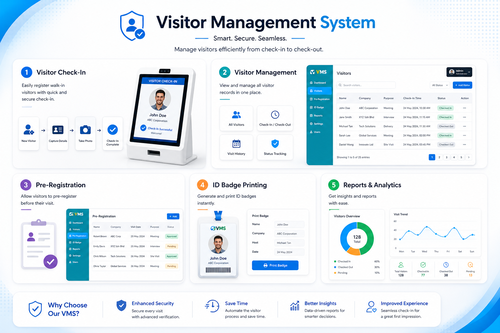
A web-based visitor management system streamlines the entire visitor lifecycle through automation and digital workflows.
Pre-Arrival Registration
Visitors can complete registration online before arriving at your premises. This eliminates wait times at reception and allows your team to prepare for visitor arrivals in advance. Host employees receive notifications of incoming visitors and can confirm or decline the visit before the visitor arrives.
Streamlined Check-In
Upon arrival, visitors complete their information through a simple digital interface rather than filling out paper forms. The system captures essential details efficiently, reducing the burden on reception staff.
Digital Badging and Access Control
The system issues temporary digital or printed badges automatically, with host information, visitor purpose, and time restrictions clearly displayed. Integration with physical access control systems can restrict where visitors can go, enhancing security.
Real-Time Occupancy Visibility
Managers and security teams have real-time visibility into who is currently in the building. This improves emergency response capabilities and provides accountability throughout the day.
Automated Check-Out and Reporting
Check-out is simplified, and the system automatically generates compliance-ready reports. This eliminates manual record-keeping and ensures accurate documentation for audit purposes.
Cost Reduction Benefits for Enterprise Workplaces
Implementing a visitor management system delivers measurable cost reductions across several areas:
Reduced Labour Requirements
Automation eliminates routine administrative tasks, allowing reception and security staff to focus on genuine customer service and security monitoring. You may be able to manage the same or greater visitor volumes with fewer dedicated personnel.
Elimination of Physical Materials
Digital systems eliminate or significantly reduce the need for printed forms, physical badges, and document storage. This reduces ongoing stationery costs and frees up physical office space.
Improved Compliance and Audit Readiness
Digital records are automatically maintained, searchable, and audit-ready. You reduce the risk of compliance failures and avoid costly remediation or penalties. Should you face an audit, you can instantly produce complete, accurate visitor records.
Enhanced Security Reduces Incident Costs
Better security and access control reduce the risk of unauthorised access, theft, or security breaches. Preventing even one significant security incident can offset the cost of a visitor management system many times over.
Faster Visitor Processing
Reduced check-in times mean visitors and employees spend less time waiting. This improves the visitor experience and reduces the indirect productivity loss from delays at reception.
Visitor Management System Considerations for Singapore Enterprises
When selecting a visitor management solution for a Singapore enterprise, consider the following factors:
Data Protection and Privacy
Ensure the system complies with Singapore’s Personal Data Protection Act (PDPA). The system should securely store visitor information and provide transparent data handling practices. Data retention policies should align with your organisation’s privacy obligations.
Local Regulatory Requirements
Depending on your industry, you may need to maintain visitor records for specific compliance purposes. The system should support your regulatory requirements and generate necessary reports for authorities or auditors as needed.
Integration with Existing Systems
The visitor management system should integrate with your existing access control systems, security infrastructure, and building management tools. This ensures seamless operation and avoids creating parallel, disconnected systems.
Scalability for Multiple Locations
If your enterprise operates multiple office locations across Singapore or regionally, the system should scale efficiently across all sites while maintaining centralised oversight and reporting.
User Experience
The system should be intuitive for both visitors and staff. Complex systems create resistance to adoption and reduce the expected benefits.
How Smart Touch Technology Can Help
Smart Touch Technology Singapore offers a web-based visitor management system designed specifically for enterprise workplaces. The solution automates the visitor registration and tracking process, helping organisations reduce operational costs while improving security and compliance.
By replacing manual paper-based processes with digital workflows, the Smart Touch visitor management system eliminates administrative burden on reception teams, reduces stationery costs, and provides real-time visibility into building occupancy. The system generates compliance-ready reports automatically, reducing the time and effort required for audits or regulatory compliance activities.
For enterprise organisations in Singapore managing significant visitor volumes across one or multiple locations, the system delivers measurable cost savings while strengthening security and operational efficiency.
Explore full product details by clicking here: https://smartouch.com.sg/vms-visitor-management-system/
Conclusion
Manual visitor management processes drain resources and create unnecessary operational costs for enterprise workplaces. From labour expenses and stationery to compliance risks and security vulnerabilities, the hidden costs of paper-based systems accumulate quickly.
A modern visitor management system addresses these challenges by automating registration, streamlining check-in procedures, and providing real-time visibility into building occupancy. Enterprise organisations in Singapore can expect measurable reductions in operational costs, improved security posture, and better compliance readiness.
If your enterprise workplace is managing visitor operations manually, now is the time to evaluate digital solutions that can deliver tangible cost savings and operational improvements. The right visitor management system pays for itself through reduced labour requirements, eliminated stationery costs, and avoided compliance risks.
Smart Touch technology pte ltd , www.smartouch.com.sg +65-63964767, sales@smartouch.com.sg , www.smartouch.com.my +607-3889903 sales@smartouch.com.my