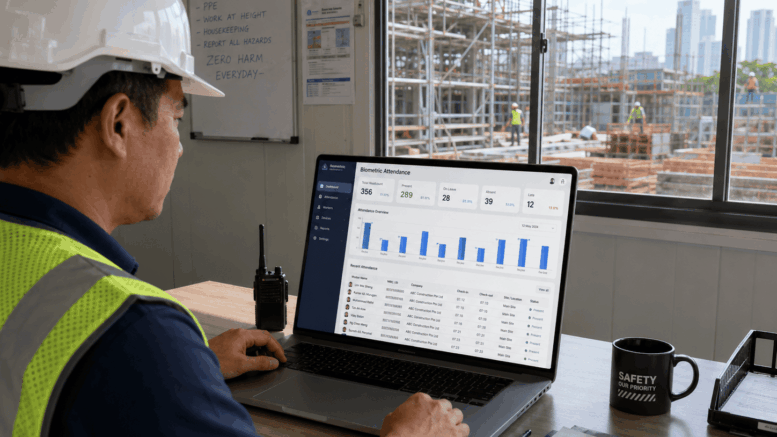
Construction Biometric Authentication System Cost and Features for Industrial Factories
Industrial factories in Singapore operate in an increasingly complex environment where security, workforce management, and operational efficiency are critical to success. One of the most significant challenges facing factory managers today is maintaining strict control over site access and labour management while ensuring compliance with safety and employment regulations.
Biometric authentication systems have emerged as a modern solution to these challenges, offering factories a way to streamline access control, track attendance accurately, and enhance overall security. Understanding the cost implications and key features of construction biometric authentication systems can help Singapore industrial facility managers make informed decisions about implementing such technology.
This article explores the essential aspects of biometric authentication systems designed specifically for construction and industrial factory environments, highlighting how these systems address real operational challenges.
Understanding Biometric Authentication Systems in Industrial Settings
A biometric authentication system uses unique physical or behavioural characteristics—such as fingerprints, facial recognition, or iris scanning—to verify and identify individuals. In industrial factory environments, these systems serve multiple critical functions beyond simple access control.
Core Functions in Construction and Factory Operations
Biometric systems in industrial settings typically handle:
- Access control to restricted factory areas and construction sites
- Accurate time and attendance tracking for payroll purposes
- Enhanced security by preventing unauthorised entry
- Real-time monitoring of personnel movement within facilities
- Compliance documentation for safety and regulatory requirements
- Integration with existing factory management systems
These functions are particularly important in Singapore’s manufacturing and construction sectors, where workplace safety standards and employment regulations demand precise record-keeping and controlled site access.
Key Features of Industrial Biometric Authentication Systems
Advanced Identification Technology
Modern biometric systems offer multiple identification methods to suit different industrial environments. Fingerprint recognition remains popular due to its reliability and cost-effectiveness, while facial recognition provides a contactless alternative that is increasingly favoured in post-pandemic workplaces. Some systems support multiple biometric methods, allowing flexibility in how workers authenticate their identity.
Real-Time Data Processing
Contemporary biometric systems process authentication instantly, eliminating bottlenecks at entry and exit points. This real-time capability is essential for factories with large workforces or multiple entry points, where delays in access authentication could impact productivity.
Integration Capabilities
A comprehensive biometric system should integrate seamlessly with existing factory management software, including human resources information systems, payroll platforms, and security systems. This integration ensures that attendance data flows automatically into payroll systems, reducing manual data entry errors and administrative overhead.
Comprehensive Reporting and Analytics
Industrial biometric systems generate detailed reports on attendance patterns, access logs, and security incidents. These reports provide valuable insights for management decisions and are essential for regulatory compliance demonstrations.
Durability and Environmental Resilience
Factory environments are demanding. Effective biometric systems for construction and industrial use must withstand dust, moisture, temperature fluctuations, and physical wear. Hardware designed specifically for industrial settings ensures reliable operation even in challenging conditions.
Cost Considerations for Industrial Biometric Systems
Initial Investment Factors
The upfront cost of implementing a biometric authentication system depends on several variables:
- System Scale: The number of biometric terminals required across your facility
- Technology Type: Fingerprint systems typically cost less than facial recognition systems
- Installation Complexity: Retrofitting existing facilities may involve additional cabling and infrastructure work
- Software Licensing: Centralised management software and cloud-based access may involve ongoing licensing fees
- Integration Requirements: Connecting to existing payroll and HR systems may require customisation
Operational Cost Benefits
While initial investment is a consideration, biometric systems often generate cost savings through operational efficiencies:
- Reduction in manual attendance tracking and data entry labour
- Decreased buddy punching and attendance fraud
- Faster payroll processing with accurate, automated attendance data
- Improved security reducing potential losses from unauthorised access
- Better workforce planning based on reliable attendance analytics
Singapore factories often recover their biometric system investment within one to two years through these operational savings, depending on facility size and existing manual processes.
Addressing Common Industrial Factory Challenges
Accuracy and Reliability
Construction and factory environments present unique challenges for biometric identification. Workers may have dirty hands, wear gloves, or work in dim lighting conditions. Systems designed for industrial use incorporate advanced algorithms and environmental sensors to maintain accuracy despite these challenges.
Workforce Diversity and Accessibility
Industrial factories employ workers with diverse needs. Effective biometric systems offer alternative authentication methods to accommodate individuals with injuries, disabilities, or other circumstances that might affect standard biometric capture. This inclusive approach ensures all employees can authenticate quickly and reliably.
Scalability for Growing Operations
As Singapore factories expand, their access control needs grow. Modern biometric systems are designed for scalability, allowing organisations to add additional terminals and integrate additional facilities without replacing core infrastructure.
Data Security and Privacy Compliance
Biometric data is sensitive personal information. Systems implemented in Singapore must comply with the Personal Data Protection Act (PDPA) and other relevant regulations. This means systems must include robust data encryption, access controls, and clear data handling policies. When evaluating systems, ensure the provider demonstrates compliance with Singapore’s data protection requirements.
How Smart Touch Technology Supports Industrial Factory Operations
Smart Touch Technology Singapore offers the Biometric Authentication System (BAS), designed specifically to address the unique demands of construction and industrial factory environments across Singapore.
The BAS provides factories with a comprehensive solution that combines reliable biometric identification with flexible system architecture. Whether your facility requires fingerprint recognition, facial authentication, or integrated multi-modal biometric verification, the system scales to match your operational needs.
For Singapore industrial operators seeking to streamline access control, improve attendance accuracy, and enhance site security, the system provides an integrated platform that connects authentication data with existing factory management systems. This integration eliminates manual processes and ensures payroll accuracy while generating compliance documentation for regulatory requirements.
The BAS approach prioritises reliability in demanding industrial environments, with hardware designed to withstand factory conditions and software that delivers real-time performance regardless of facility size or complexity.
Getting Started with Biometric Authentication
Implementing a biometric system in your factory begins with a clear understanding of your specific operational requirements. Different facilities have different needs depending on workforce size, facility layout, existing systems, and security priorities.
Learn more about this product—click here: https://smartouch.com.sg/bas/
Conclusion
Biometric authentication systems represent a modern, efficient approach to access control and workforce management in Singapore’s industrial and construction sectors. By understanding the key features available and considering both initial costs and long-term operational benefits, factory managers can make informed decisions about implementing this technology.
The right biometric system should balance cost-effectiveness with reliability, integrate seamlessly with existing operations, and address the specific challenges of industrial factory environments. As Singapore’s manufacturing sector continues to evolve and workplace security becomes increasingly important, biometric authentication systems offer a practical investment in operational efficiency and security.
Whether you’re looking to reduce administrative overhead, improve attendance accuracy, or enhance facility security, exploring biometric authentication options tailored to industrial environments is a worthwhile consideration for your Singapore factory operation.
Smart Touch technology pte ltd , www.smartouch.com.sg +65-63964767, sales@smartouch.com.sg , www.smartouch.com.my +607-3889903 sales@smartouch.com.my