Compare Dormitory Management System Singapore Options for Regional Operations in Singapore
Introduction
Managing a dormitory facility in Singapore presents unique operational challenges. Whether you oversee student housing, worker accommodation, or corporate residential facilities, the day-to-day administration demands efficient systems, reliable communication, and robust record-keeping. For organisations operating multiple dormitory sites or planning regional expansion across Singapore, selecting the right management system becomes crucial to success.
Dormitory management systems have evolved significantly over recent years. Modern solutions now integrate employee scheduling, visitor management, maintenance tracking, and occupancy monitoring into unified platforms. For Singapore-based organisations managing regional operations, this technological shift offers real opportunities to streamline workflows, improve safety compliance, and enhance the resident experience.
This article explores the key considerations when comparing dormitory management system options for regional operations in Singapore, and how the right solution can support your organisation’s growth and efficiency objectives.
Understanding Dormitory Management Challenges in Singapore
Dormitory facilities in Singapore serve diverse purposes. Educational institutions operate student housing. Manufacturing and construction companies maintain worker accommodation. Healthcare and hospitality businesses house temporary staff. Regardless of the facility type, common management challenges emerge across all sectors.
Key Operational Challenges
- Occupancy tracking: Monitoring which rooms are occupied, vacant, or under maintenance requires accurate, up-to-date records accessible across multiple locations.
- Staff coordination: Managing cleaners, maintenance personnel, security staff, and administrative workers across multiple dormitory sites demands effective scheduling and communication systems.
- Visitor management: Controlling access, recording visitor details, and maintaining security protocols becomes complex when managing regional facilities.
- Maintenance requests: Tracking repair needs, work orders, and completion status across dispersed locations prevents issues from falling through gaps.
- Compliance documentation: Singapore’s employment and safety regulations require proper record-keeping, incident reporting, and regulatory compliance documentation.
- Communication gaps: Without integrated systems, information silos between different dormitory sites create inefficiencies and coordination problems.
Organisations managing regional dormitory operations face compounded complexity. Coordinating policies, standards, and procedures across multiple sites while maintaining individual site flexibility requires thoughtful system design and clear operational protocols.
Why Dormitory Management Systems Matter for Regional Operations
Dormitory management systems serve as the operational backbone for regional facilities. These platforms centralise information, automate routine tasks, and provide visibility across all managed properties simultaneously.
Benefits of Integrated Management Systems
A comprehensive dormitory management system enables organisations to:
- Maintain consistent standards and procedures across all regional sites.
- Access real-time data on occupancy, staffing, and facility status from any location.
- Reduce administrative overhead by automating routine record-keeping and reporting.
- Improve response times to maintenance issues and resident concerns.
- Enhance security through controlled access management and visitor tracking.
- Simplify compliance documentation for regulatory requirements.
- Enable data-driven decision-making through consolidated reporting and analytics.
For regional operations specifically, the ability to manage multiple sites from a central administrative point becomes invaluable. Rather than maintaining separate spreadsheets and communication channels for each dormitory location, integrated systems provide a single source of truth for all operational data.
Key Considerations When Comparing Dormitory Management Options
When evaluating different dormitory management systems for regional operations, several critical factors deserve careful assessment.
Scalability Across Multiple Sites
The system must accommodate growth. As your organisation operates additional dormitory facilities, can the platform scale efficiently? Look for systems designed to support multiple locations with centralised administration while allowing site-specific customisation where needed.
User Interface and Ease of Implementation
Staff at different sites will interact with the system daily. A complex, difficult-to-use platform creates resistance and reduces adoption rates. Systems with intuitive interfaces, clear navigation, and minimal training requirements typically see faster implementation and better long-term utilisation.
Integration with Existing Systems
Most organisations already use other software solutions for human resources, payroll, or facility management. Does the dormitory management system integrate effectively with your existing technology stack? Seamless integration reduces manual data entry, minimises errors, and improves overall operational efficiency.
Reporting and Analytics Capabilities
Regional operations require comprehensive visibility. Evaluate the system’s reporting features. Can you generate occupancy reports, staff productivity metrics, maintenance tracking summaries, and compliance documentation from a single platform? Advanced analytics help identify trends and opportunities for improvement.
Security and Data Protection
Dormitory management systems contain sensitive information about residents, staff schedules, and facility operations. Singapore’s data protection regulations require careful handling of personal information. Ensure any system you consider meets robust security standards and complies with Singapore’s Personal Data Protection Act (PDPA) and other relevant regulations.
Customer Support and Maintenance
When issues arise—particularly across multiple sites—responsive customer support becomes critical. Assess the vendor’s support availability, response times, and track record for system maintenance and updates.
Common Dormitory Management Features to Compare
Occupancy and Room Management
Core functionality should include room status tracking, occupancy records, maintenance schedules, and turnover management. The system should clearly show which rooms are occupied, vacant, under cleaning, or marked for repair across all regional sites.
Employee and Staff Scheduling
Managing cleaning staff, maintenance personnel, security officers, and administrative employees across multiple dormitory locations requires flexible scheduling tools. Look for systems that streamline shift creation, handle swap requests, track attendance, and highlight staffing gaps.
Visitor and Access Management
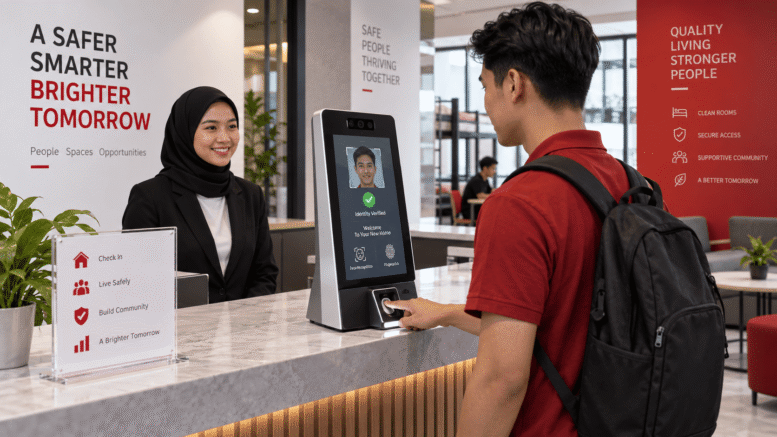
Security-conscious organisations need systems that log visitor arrivals and departures, manage access permissions, and track who entered facilities and when. This becomes increasingly important for dormitories housing sensitive worker populations or high-value residents.
Maintenance and Work Order Tracking
A maintenance module should allow residents or staff to submit repair requests, track work order status, assign tasks to maintenance personnel, and document completion. For regional operations, centralised tracking prevents duplicate work and ensures nothing is overlooked.
Billing and Financial Management
Some dormitory facilities charge residents for accommodation. Integrated billing systems can calculate fees, track payments, generate invoices, and manage financial records across multiple properties from a single platform.
Reporting and Compliance Documentation
Comprehensive reporting tools generate occupancy summaries, staff performance metrics, maintenance logs, visitor records, and compliance documentation needed for regulatory requirements and internal audits.
How Smart Touch Technology’s Dormitory Management System Addresses Regional Operations
Smart Touch Technology offers a dormitory management system specifically designed to support regional operations in Singapore. The platform integrates employee management, facility tracking, and operational coordination into a single, unified solution.
For organisations managing multiple dormitory sites, Smart Touch Technology’s system provides:
- Centralised administration: Manage all regional dormitory facilities from a single dashboard while maintaining site-specific flexibility.
- Employee management integration: Coordinate staffing across multiple locations with built-in scheduling, attendance tracking, and performance management capabilities.
- Operational efficiency: Streamline daily workflows through automated task assignment, status tracking, and communication tools.
- Regional scalability: Add new dormitory sites to the system as your regional operations expand without requiring separate platforms or complex integrations.
The system’s focus on employee management combined with dormitory operations makes it particularly suitable for organisations managing worker housing or staff accommodation facilities across multiple Singapore locations.
Implementing a Dormitory Management System: Best Practices
Define Clear Objectives
Before selecting a system, articulate specific goals. Do you primarily need occupancy tracking? Better staff coordination? Improved maintenance responsiveness? Clearer compliance documentation? Different organisations prioritise different features. Understanding your core objectives helps narrow the options and ensures the selected system addresses your most pressing challenges.
Engage Stakeholders from All Sites
For regional operations, involve representatives from each dormitory location in the selection and implementation process. They understand site-specific challenges and can provide valuable input on system requirements. Their early involvement also improves buy-in during implementation.
Plan for Training and Change Management
New systems require staff training. Allocate sufficient time and resources for comprehensive training across all regional sites. Strong change management practices, including clear communication about why the system is being implemented and how it benefits daily work, improve adoption rates and reduce resistance.
Start with a Pilot Implementation
Consider implementing the system at one or two dormitory sites first, rather than all sites simultaneously. This approach allows you to refine processes, troubleshoot issues, and develop best practices before rolling out to remaining locations.
Establish Standard Operating Procedures
Document how the system will be used consistently across all regional sites. Clear procedures reduce confusion, improve data quality, and ensure all facilities operate with aligned standards while allowing necessary site-specific flexibility.
Regulatory Compliance Considerations for Singapore Dormitories
Singapore’s regulatory environment requires careful attention to employment, safety, and data protection requirements. While specific regulations vary depending on the dormitory type and resident population, several general considerations apply:
- Employment documentation: Maintain proper records of staff employment terms, working hours, and performance as required by Singapore’s Ministry of Manpower.
- Safety and security: Document safety protocols, incident reporting, and security measures as required by relevant regulations.
- Data protection: Handle resident and staff personal information in compliance with the Personal Data Protection Act (PDPA) and related regulations.
- Accommodation standards: Maintain documentation demonstrating compliance with applicable accommodation standards and regulations.
A well-designed dormitory management system supports regulatory compliance by maintaining comprehensive records, automating compliance documentation, and providing audit trails. However, organisations should verify that any system considered meets specific Singapore regulatory requirements relevant to their dormitory type.
Making Your Comparison and Selection Decision
When comparing different dormitory management system options, develop a structured evaluation approach:
- List all required features and functions for your regional operations.
- Identify “must-have” features versus “nice-to-have” enhancements.
- Request demonstrations from shortlisted vendors focused on your priority requirements.
- Ask for references from similar organisations operating regional dormitory facilities.
- Evaluate implementation timelines, costs, and ongoing support commitments.
- Assess the vendor’s stability, track record, and investment in ongoing product development.
The goal is finding a system that genuinely addresses your operational challenges, integrates with your existing technology environment, and can grow with your regional operations over time.
Conclusion
Effective dormitory management in Singapore increasingly depends on selecting the right system to support regional operations. The challenges of coordinating multiple facilities, managing dispersed staff, maintaining compliance, and serving diverse resident populations all become more manageable with an integrated, well-designed management platform.
By carefully comparing available options against your specific operational requirements, engaging stakeholders from all regional sites, and implementing thoughtful change management practices, you can select a system that streamlines workflows, improves efficiency, and supports your organisation’s growth objectives.
Smart Touch Technology’s dormitory management system offers a comprehensive solution specifically designed for regional operations in Singapore, combining employee management, facility tracking, and operational coordination in a single platform.
Want to know more about this product? Click here: https://smartouch.com.sg/dorm-employee-management-system/
Smart Touch technology pte ltd , www.smartouch.com.sg +65-63964767, sales@smartouch.com.sg , www.smartouch.com.my +607-3889903 sales@smartouch.com.my