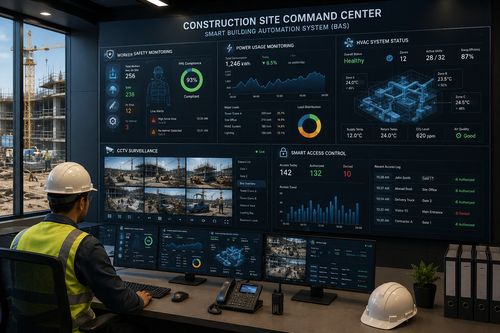
Construction Biometric Authentication System Cost and Features for Medical Facilities in Singapore
Medical facilities across Singapore are increasingly recognising the need for robust security measures to protect sensitive patient data, control access to restricted areas, and maintain operational integrity. As healthcare organisations expand and evolve, the challenge of managing staff access, visitor management, and equipment security becomes more complex. One proven solution gaining traction in the healthcare sector is the implementation of biometric authentication systems specifically designed for construction and deployment within medical environments.
A Construction Biometric Authentication System (BAS) offers medical facilities a modern approach to access control that combines reliability, security, and operational efficiency. Unlike traditional card-based or PIN systems, biometric authentication uses unique physical characteristics such as fingerprints or facial recognition to verify identity, making it significantly more difficult to circumvent or misuse.
For medical facilities in Singapore, understanding the costs, features, and practical applications of these systems is essential for making informed decisions about security infrastructure investments.
Why Medical Facilities Need Advanced Access Control Systems
Medical facilities handle some of the most sensitive information and valuable assets in any organisation. Patient records, medications, medical equipment, and research data all require strict protection under Singapore’s Personal Data Protection Act (PDPA) and other healthcare regulations.
Traditional access control methods—such as key cards, PIN codes, or physical keys—present several security vulnerabilities:
- Cards can be lost, stolen, or shared between staff members
- PIN codes may be guessed, observed, or forgotten
- Physical keys cannot easily track who accessed which area or when
- No audit trail for compliance and investigation purposes
- Manual verification is time-consuming and prone to human error
Biometric authentication eliminates these vulnerabilities by making access dependent on something inherent to the individual—their unique biological characteristics. This creates a more secure, verifiable, and auditable access control environment.
Understanding Biometric Authentication Systems for Medical Facilities
What Is a Construction Biometric Authentication System?
A Construction Biometric Authentication System is an integrated access control solution built to deploy within healthcare facilities. It combines biometric sensors, processing units, and management software to control who can enter specific areas, access equipment, or handle restricted materials within a medical environment.
These systems are specifically engineered to work reliably in the challenging conditions often found in healthcare settings, including varying lighting, humidity, temperature fluctuations, and high-traffic periods.
Core Components of a BAS
A comprehensive biometric authentication system typically includes:
- Biometric readers – Devices that capture and verify fingerprints, facial features, or other biometric data
- Access control hardware – Door locks, turnstiles, or gates that physically control access
- Central management software – A platform to enrol users, set permissions, monitor access, and generate reports
- Network infrastructure – Secure connections between readers, controllers, and the central system
- Database and storage – Secure storage of biometric templates and access logs
Key Features of Biometric Authentication Systems for Healthcare
High Security and Accuracy
Biometric systems offer significantly higher security than traditional methods. Fingerprints and facial patterns are unique to each individual and extremely difficult to replicate or forge. False acceptance rates (where the system incorrectly grants access to an unauthorised person) are typically very low, providing medical facilities with genuine security assurance.
Complete Audit Trails
Every access event is recorded with a timestamp and the individual’s identity. This creates a comprehensive audit trail essential for compliance with healthcare regulations, incident investigations, and security reviews. Medical facilities can quickly determine who accessed a particular area at a specific time.
Scalability and Flexibility
Biometric systems can be deployed across multiple entry points, departments, and facilities. They can be configured with varying permission levels—for example, junior staff might access general areas whilst only senior medical personnel can enter pharmacies or secure storage areas.
Integration Capabilities
Modern biometric authentication systems can integrate with other facility management systems, including CCTV, alarm systems, and visitor management platforms, creating a cohesive security ecosystem.
User-Friendly Operation
Staff members simply need to present their biometric data at a reader—no cards to carry, no PIN codes to remember, and no delays from lost or forgotten credentials. This reduces friction in daily operations whilst maintaining security.
Cost Considerations for Medical Facilities
Initial Investment
The cost of implementing a biometric authentication system varies based on several factors:
- Number of access points requiring biometric readers
- Size and complexity of the facility
- Type of biometric technology chosen (fingerprint, facial recognition, or multi-modal)
- Integration requirements with existing security infrastructure
- Installation and configuration complexity
- Training and change management requirements
Medical facilities should view this as an investment in security, compliance, and operational efficiency rather than a pure cost. The return on investment typically comes through reduced security incidents, faster access control, and streamlined compliance reporting.
Operational Costs
Ongoing costs include system maintenance, software licensing, database management, and periodic hardware upgrades. However, these are often lower than the cumulative costs of managing physical keys, replacing lost cards, and administering manual access control processes.
Cost-Benefit Analysis
When evaluating costs, medical facilities should consider:
- Reduced security incidents and potential data breaches
- Time saved on access credential management
- Improved compliance with healthcare regulations
- Enhanced staff productivity through faster entry
- Simplified visitor management and temporary access
- Better incident investigation capabilities
Implementation Considerations for Singapore Medical Facilities
Regulatory Compliance
Medical facilities in Singapore must ensure that biometric systems comply with relevant regulations, including the Personal Data Protection Act (PDPA) regarding the collection and storage of biometric data. It is advisable to consult with your legal and compliance teams to ensure your chosen system meets all applicable requirements.
Staff Training and Adoption
Successful implementation requires comprehensive staff training. Medical personnel need to understand how to use the biometric readers, what to do if access is denied, and how the system supports their daily work. Change management is crucial for smooth adoption.
Data Security and Privacy
Biometric templates and access logs contain sensitive personal data. Ensure that the system includes robust encryption, secure storage, access controls for the management platform, and procedures for data retention and deletion.
System Redundancy and Reliability
In a healthcare environment, access control system failures can disrupt patient care. Choose systems with redundancy features, backup power supplies, and offline operation capabilities to ensure continuous operation during network outages or power failures.
How Smart Touch Technology Singapore Can Help
Smart Touch Technology Singapore specialises in providing biometric authentication solutions designed for organisations across various sectors, including healthcare facilities. Our Construction Biometric Authentication System is engineered to meet the specific security and operational requirements of medical environments.
Our BAS offers medical facilities a comprehensive, integrated approach to access control that combines advanced biometric technology with practical reliability and user-friendly operation. Whether you’re managing a single clinic or a multi-building medical complex, our system can be configured to match your specific security needs and facility layout.
By working with Smart Touch Technology Singapore, you gain access to solutions that have been designed with healthcare organisations in mind, supported by technical expertise and ongoing service to ensure your security infrastructure operates effectively.
Learn more about this product—click here.
Conclusion
Biometric authentication systems represent a significant advancement in healthcare facility security. By replacing traditional access control methods with biometric technology, medical facilities in Singapore can enhance security, improve operational efficiency, and maintain better compliance with regulatory requirements.
The investment in a Construction Biometric Authentication System is an investment in protecting patient data, securing medical assets, and enabling your staff to work more efficiently. With careful consideration of your facility’s specific needs, costs, and implementation requirements, a biometric authentication system can become a cornerstone of your security infrastructure.
Smart Touch Technology Singapore offers comprehensive biometric authentication solutions designed to address the real-world security challenges faced by medical facilities. If you’re considering biometric access control for your medical facility, our team can help you evaluate your options and implement a solution that works for your organisation.
Smart Touch technology pte ltd , www.smartouch.com.sg +65-63964767, sales@smartouch.com.sg , www.smartouch.com.my +607-3889903 sales@smartouch.com.my