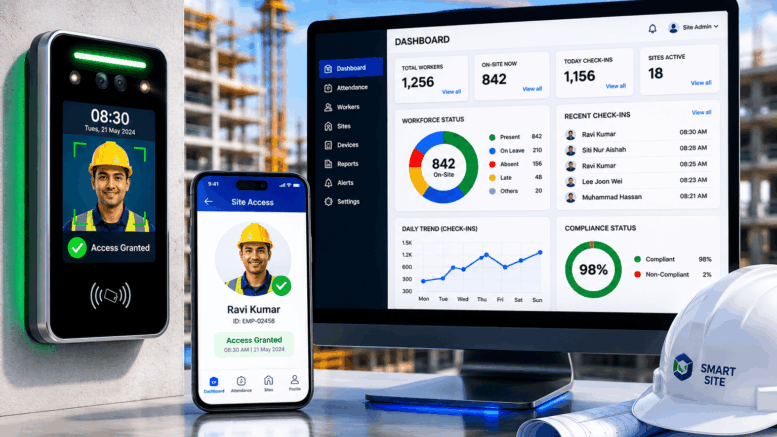
EPSS Biometric Attendance System Installation Guide for Transport Operators
Introduction
Managing workforce attendance across multiple locations presents significant operational challenges for transport companies in Singapore. Whether you operate a fleet of buses, taxis, or logistics vehicles, tracking employee movements and ensuring accurate time records is critical for payroll accuracy, compliance, and operational efficiency.
Traditional manual attendance systems are prone to errors and time theft, whilst spreadsheet-based solutions lack real-time visibility and integration with other business systems. For transport operators juggling driver schedules, vehicle maintenance logs, and regulatory requirements, a modern biometric attendance system is no longer a luxury—it’s a necessity.
The BCA EPSS (Employee Personnel Security System) biometric attendance system is specifically designed to address these challenges. This guide will walk you through the installation process and help you understand how this solution can streamline attendance tracking and improve operational oversight for transport businesses in Singapore.
Why Transport Operators Need Reliable Attendance Systems
Operational Challenges in Transport Management
Transport operators face unique attendance management challenges that differ from traditional office environments. Drivers and depot staff work across multiple shifts, routes, and locations. Coordinating when and where employees are supposed to be working requires more than a simple manual sign-in sheet.
Without proper systems in place, common issues arise:
- Inaccurate or manipulated time records affecting payroll
- Difficulty tracking employee location during work hours
- Delayed identification of staffing shortages affecting service delivery
- Compliance gaps when managing working hours and overtime
- Poor data for performance analysis and scheduling optimisation
Regulatory and Compliance Considerations
Singapore’s Ministry of Manpower (MOM) and employment legislation require employers to maintain accurate records of working hours for all employees. Transport operators must ensure their attendance systems provide reliable documentation for inspections and audits.
Additionally, transport operators may need to comply with additional safety and security requirements. Biometric systems provide auditable records that demonstrate compliance with employment obligations and help protect the business in case of disputes.
Understanding the BCA EPSS Biometric Attendance System
What Is the BCA EPSS?
The BCA EPSS is a comprehensive biometric attendance and personnel management system designed for organisations that need reliable, real-time tracking of employee attendance across multiple locations. Rather than relying on manual processes or easily falsified punch cards, the system uses biometric verification to ensure accurate, tamper-proof records.
For transport operators, this means drivers and staff clock in using fingerprint or other biometric verification, creating an instant, verified record of their arrival and departure times.
Key Advantages for Transport Operators
Implementing a biometric attendance system offers several specific benefits for transport companies:
- Accuracy: Eliminates manual entry errors and prevents buddy punching
- Real-time visibility: Managers can monitor staff presence across multiple depots or locations instantly
- Streamlined payroll: Automated attendance data integrates with payroll systems, reducing administrative overhead
- Compliance documentation: Creates auditable records meeting MOM requirements for working hours documentation
- Scheduling optimisation: Historical data helps improve driver scheduling and resource allocation
- Security: Biometric verification ensures only authorised personnel access sensitive areas or assets
Planning Your EPSS Installation
Pre-Installation Assessment
Before installing the BCA EPSS system, conduct a thorough assessment of your current operational setup:
- How many locations require biometric terminals (depots, service centres, headquarters)?
- How many employees need to be enrolled in the system?
- What is your current payroll and HR software infrastructure?
- Are there specific compliance or security requirements unique to your business?
- What are your peak times for staff check-in and check-out?
This assessment ensures the system is configured appropriately for your operational scale and requirements.
Determining Terminal Placement
For transport operators, strategic placement of biometric terminals is crucial. Consider positioning terminals at:
- Depot entrances where drivers begin their shifts
- Administrative areas for office staff
- Vehicle maintenance areas if applicable
- High-security zones requiring access control
Ensure terminals are positioned in accessible, well-lit areas and protected from harsh weather if installed in outdoor loading zones.
Installation Process for BCA EPSS
Hardware Setup
The physical installation of biometric terminals involves several steps:
1. Selecting appropriate terminal locations – Identify wall or pedestal mounting points that are accessible to all employees but secure from tampering or environmental damage.
2. Installing power supply and connectivity – Terminals require stable power connections and network connectivity for real-time data synchronisation. Ensure adequate cabling infrastructure or plan for wireless connectivity options.
3. Mounting and securing equipment – Terminals should be installed at appropriate height (typically 1.2–1.5 metres) for comfortable biometric capture and secured to prevent theft or relocation.
4. Testing communication – Once installed, test that all terminals communicate reliably with the central system and that data synchronisation occurs without interruption.
Software Configuration and Employee Enrollment
After hardware installation, the system requires software setup and employee data entry:
Creating the employee database: Import or manually enter employee details including names, employee IDs, departments, and assigned locations. For transport operators, ensure driver information includes their typical routes or assigned depots.
Biometric enrollment: Each employee must visit a terminal to register their biometric data (typically fingerprint). This process usually takes a few minutes per person. For larger fleets, schedule enrollment sessions to avoid disruption to operations.
Setting attendance rules: Configure the system to recognise normal working hours, shift patterns, and overtime thresholds specific to your transport operation. Different drivers may have different schedules, so flexibility in rule configuration is important.
Integration with existing systems: Connect the EPSS to your payroll, HR management, or scheduling software to ensure attendance data flows seamlessly into your existing workflows.
Testing and Validation
Before full deployment, conduct thorough testing:
- Test biometric capture across different lighting conditions and times of day
- Verify data is accurately recorded and synchronised to the central system
- Confirm payroll integration produces correct calculations
- Test system response during peak arrival and departure times
- Validate that data backups are functioning correctly
Training Your Team
Staff Training Requirements
Successful EPSS implementation depends on proper training. Your transport staff needs to understand:
- How to use the biometric terminals correctly
- What to do if their biometric data isn’t recognised
- How to access their attendance records
- Troubleshooting steps for common issues
Conduct training sessions during quiet periods or before the system goes live to minimise disruption to operations.
Management Training
Your management and administrative team should understand how to:
- View real-time attendance dashboards and reports
- Investigate attendance discrepancies
- Approve overtime or exceptional absences
- Generate payroll reports from attendance data
- Perform system maintenance and troubleshooting
How BCA EPSS Addresses Transport Operator Challenges
The BCA EPSS directly solves the attendance management challenges specific to transport companies:
Eliminating time and attendance fraud: Biometric verification means only the intended employee can clock in, eliminating proxy punching and time theft that’s particularly common in transport operations with multiple shifts and locations.
Supporting complex shift management: Transport operations involve varying shift patterns, early starts, late finishes, and route-based assignments. EPSS can be configured to handle these complexities and automatically flag irregularities.
Enabling data-driven scheduling: By capturing accurate attendance data, EPSS provides insights into actual versus planned staffing levels, helping operators optimise driver scheduling and identify recurring staffing gaps.
Simplifying compliance: The system creates permanent, auditable records of working hours that satisfy MOM requirements and support compliance during inspections.
For a complete breakdown of features and modules available in the BCA EPSS solution, visit our product page here: https://smartouch.com.sg/bca-bas-epss-solution/
Post-Installation Support and Maintenance
Ongoing System Maintenance
After installation, regular maintenance ensures continued reliability:
- Monitor terminal health and connectivity status
- Keep biometric sensor optics clean for reliable capture
- Perform regular data backups
- Review system logs for errors or anomalies
- Update system software when patches or enhancements become available
Handling Common Issues
Even well-installed systems occasionally experience issues. Common problems and solutions include:
Poor biometric capture: If employees struggle to register or clock in, the issue is often environmental (inadequate lighting, dirty sensors) or user technique. Retrain users and ensure terminals are in optimal conditions.
Network connectivity problems: If terminals lose connection to the central system, attendance records may not synchronise. Verify network infrastructure and consider redundancy for mission-critical locations.
Data synchronisation delays: For large fleets, high-volume attendance events can temporarily delay data processing. Configure the system to queue records locally on terminals if central connectivity is temporarily interrupted.
Conclusion
Implementing the BCA EPSS biometric attendance system represents a significant step forward in operational management for Singapore transport operators. By moving from manual or unreliable attendance tracking to an automated, biometric-verified system, you gain accuracy, real-time visibility, and compliance assurance.
The installation process—whilst requiring planning and coordination—is straightforward when approached systematically. From assessing your operational needs through hardware installation, software configuration, employee training, and ongoing support, the journey to reliable attendance management is well-established.
Transport operators who implement robust attendance systems typically experience improved payroll accuracy, better resource scheduling, and reduced administrative overhead. The investment in proper installation and training pays dividends through more efficient operations and stronger compliance posture.
If your transport business is ready to modernise attendance management, the BCA EPSS provides a reliable, scalable solution designed for the complexity of transport operations in Singapore.
Smart Touch technology pte ltd , www.smartouch.com.sg +65-63964767, sales@smartouch.com.sg , www.smartouch.com.my +607-3889903 sales@smartouch.com.my