Guard Patrol System Singapore Solutions for Professional Security Firms: 2026 Buyer’s Guide
In Singapore’s competitive security landscape, professional security firms face mounting pressure to deliver reliable, efficient, and accountable patrol services. Whether you manage a team of guards protecting commercial properties, residential estates, or industrial facilities, the challenge remains constant: how do you ensure your patrol personnel are following assigned routes, responding promptly to incidents, and maintaining the highest standards of service quality?
A modern guard patrol system has become essential infrastructure for security firms operating in Singapore. This technology bridges the gap between traditional manual patrols and advanced digital oversight, providing real-time visibility, documented evidence, and measurable performance metrics that clients demand. As we move into 2026, understanding the capabilities and benefits of contemporary patrol systems is crucial for firms looking to remain competitive and compliant.
Why Guard Patrol Systems Matter in Singapore’s Security Industry
Singapore’s regulatory environment and client expectations have evolved significantly. Property managers, facility owners, and corporate clients no longer accept vague assurances about patrol coverage. They want proof—documented evidence that security patrols are being executed as contracted, that response times meet agreed standards, and that their premises receive consistent monitoring.
For security firms themselves, patrol systems offer multiple advantages beyond client satisfaction:
- Accountability and transparency in guard deployment and performance
- Reduction in disputes over service delivery and contract compliance
- Improved operational efficiency through optimised route planning
- Enhanced incident documentation for legal and insurance purposes
- Real-time alerts when guards deviate from assigned routes or miss scheduled checkpoints
These benefits translate directly into competitive advantage, reduced liability exposure, and improved client retention—factors that matter significantly in Singapore’s dynamic security market.
Understanding Guard Patrol System Functionality
Core Components of Modern Patrol Systems
A comprehensive guard patrol system typically integrates several key components working together to create a complete oversight solution. Understanding these elements helps you evaluate whether a system meets your firm’s specific needs.
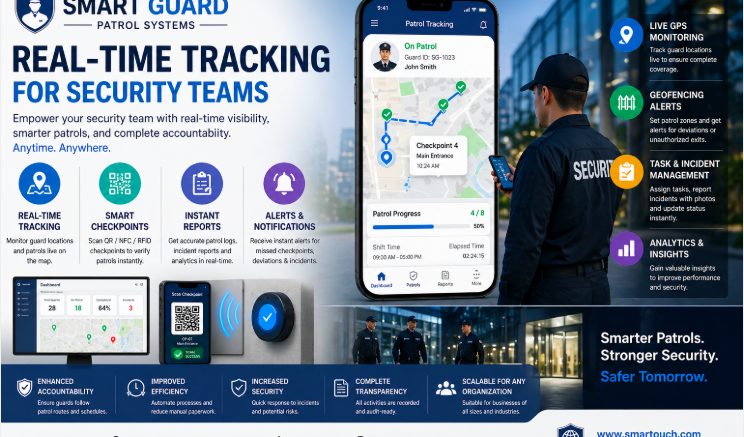
Mobile and Device-Based Tracking: Guards carry mobile devices or dedicated equipment that records their location and activities throughout their shift. This real-time data flows to a central monitoring platform, allowing managers to see where each patrol officer is at any moment.
Checkpoint Verification: The system requires guards to check in at designated patrol points using various verification methods. This ensures patrols actually visit assigned locations rather than simply claiming to have done so.
Digital Incident Reporting: When guards encounter issues—unusual activity, maintenance problems, security concerns—they can immediately document incidents directly within the system, creating timestamped records that are automatically accessible to management.
Route Management: The system maintains detailed records of planned patrol routes, actual routes taken, and deviations. This data helps identify patterns, optimise coverage, and ensure compliance with client specifications.
Performance Analytics: Comprehensive dashboards and reports provide insights into patrol coverage, response times, guard performance, and other metrics that matter to clients and internal management.
How Guards and Managers Interact With the System
The user experience differs between field guards and office-based management, with each group having distinct responsibilities within the patrol system.
For patrol personnel, the system is relatively straightforward. Guards use mobile devices to check in at patrol points, report observations or incidents, and document their activities throughout their shift. The interface needs to be quick and efficient so it doesn’t impede their actual security duties. Most systems are designed to require minimal training and operate reliably even in challenging site conditions.
For managers and supervisors, the system provides oversight dashboards where they can monitor real-time patrol locations, review incident reports, analyse performance metrics, and generate compliance documentation. This information supports decision-making about resource allocation, guard training, and client reporting.
Key Benefits for Singapore Security Firms
Client Satisfaction and Contract Compliance
Singapore’s corporate clients expect demonstrable proof of service delivery. A guard patrol system provides objective evidence that contracted patrols are occurring as specified. When a client asks, “Can you prove your guards visited our premises at 2 AM?” you can provide timestamped location data, checkpoint confirmations, and incident reports. This level of transparency builds trust and differentiates your firm from competitors.
For clients concerned about specific areas or time periods, patrol systems allow you to demonstrate focused attention on their priorities and to investigate any gaps or issues with supporting data.
Guard Performance Management
A patrol system creates an objective record of each guard’s activities and performance. This data supports constructive performance conversations, identifies training needs, and recognises high performers. Guards also benefit from this transparency—those performing well have documented evidence of their contributions, and objective performance data reduces subjective conflicts.
Operational Efficiency
Route data and checkpoint information help identify inefficiencies. Perhaps certain patrol routes can be optimised, or certain times consistently show delays. These insights allow managers to refine deployment, reduce unnecessary travel time, and ensure patrol personnel spend more time on actual security duties rather than commuting between checkpoints.
Incident Investigation and Legal Protection
When incidents occur—theft, property damage, unauthorised access—having timestamped patrol data, location records, and incident documentation is invaluable. This information supports investigations, helps clarify facts for clients, and provides legal protection if disputes arise. The documented record demonstrates the security measures in place and the response taken.
Compliance and Risk Reduction
Various regulations and insurance requirements in Singapore emphasise documented security practices and accountability. A guard patrol system helps meet these compliance expectations and provides evidence of professional security operations, which can positively influence insurance assessments and regulatory audits.
Common Challenges in Guard Patrol Operations
Ensuring Consistent Coverage
One of the most common issues security firms face is inconsistent patrol coverage. Without oversight, guards may take shortcuts, spend excessive time in comfortable areas, or miss assigned checkpoints. Clients quickly notice gaps in coverage, leading to complaints and contract disputes.
Managing Multiple Sites and Guard Teams
For firms managing security across multiple locations, coordinating patrol schedules, ensuring appropriate coverage allocation, and monitoring consistency across all sites becomes increasingly complex. Without a centralised system, this coordination burden falls on managers who must rely on manual reporting.
Documenting Incidents and Responses
When guards rely on memory or paper-based incident reports, details become fuzzy, timing becomes unclear, and important information gets lost. This creates problems when clients ask questions or when incidents require investigation.
Demonstrating Value to Cost-Conscious Clients
Clients often question the value of security services because the absence of incidents can make security seem invisible. Having documented patrol data, checkpoint confirmations, and detailed incident reports helps justify security costs by demonstrating active, consistent monitoring.
How Smart Touch Guard Patrol System Addresses These Challenges
Smart Touch Technology’s guard patrol system is specifically designed to address the operational and accountability challenges faced by professional security firms in Singapore. The system provides comprehensive oversight of patrol activities while remaining practical for guards working in the field.
The platform enables real-time monitoring of patrol personnel across multiple locations, allowing managers to see exactly where guards are and verify that they’re following assigned routes and visiting designated checkpoints. When guards check in at patrol points or report incidents, that activity is immediately recorded with precise timestamps and location data.
For incident management, the system allows guards to document observations, concerns, or security events directly within the platform. This creates permanent, timestamped records that are immediately accessible to management, eliminating the delays and information loss associated with manual reporting.
The reporting capabilities help security firms generate the documentation that clients need to verify service delivery. Rather than providing vague assurances, firms can present detailed patrol records, coverage maps, and incident documentation that demonstrate active security operations.
Smart Touch’s system is built for the Singapore market, understanding the local regulatory environment and the specific needs of Singapore-based security operations. The user interface is designed for practical field use, and the platform scales to manage security operations across multiple sites and guard teams.
Need more information about the product? Click here to learn more about Smart Touch’s guard patrol system and how it can enhance your firm’s operational efficiency and client satisfaction.
Selecting the Right Guard Patrol System for Your Firm
Assessing Your Operational Needs
Before implementing any system, clarify what specific challenges you’re trying to address. Are you primarily concerned about coverage verification? Incident documentation? Multi-site coordination? Different priorities may influence which features are most important for your situation.
Considering Scalability
Choose a system that can grow with your firm. If you currently manage 10 guards across 3 sites but plan to expand, ensure the system can accommodate growth without requiring a complete overhaul.
Evaluating User-Friendliness
The system must work reliably for guards in the field, often in less-than-ideal conditions. Interface design, battery efficiency, and offline functionality matter significantly for real-world deployment. If the system is cumbersome or unreliable, guards will resist using it properly.
Assessing Reporting and Integration Capabilities
Consider how easily the system generates reports for clients and management. Can it integrate with your existing administrative systems? Does it provide the specific metrics and documentation your clients expect?
Implementation Considerations
Successfully implementing a guard patrol system requires more than just deploying technology. Security firms need to invest in guard training to ensure personnel understand how to use the system correctly. Clear communication about why the system is being introduced—emphasising its benefits for guards and clients alike—helps gain acceptance among patrol staff.
Developing clear protocols about when and how to check in at patrol points, how to report incidents, and what data should be recorded ensures the system delivers consistent, valuable information. Without clear protocols, different guards may use the system inconsistently, reducing its value.
Gradual rollout across your firm, starting with one team or location, allows you to identify issues and refine processes before full deployment. This approach typically results in smoother implementation and better outcomes.
The Future of Guard Patrol Management in Singapore
As Singapore’s security industry continues to professionalise, clients increasingly expect security firms to demonstrate their capabilities through data and documentation rather than simply asserting their competence. Guard patrol systems have become fundamental infrastructure for security firms that want to compete effectively and maintain high client satisfaction.
For firms still relying primarily on manual patrol management, implementing a modern system represents a significant opportunity to improve efficiency, reduce liability exposure, and strengthen client relationships. The investment in appropriate technology typically pays dividends through improved operational performance and enhanced competitive positioning.
Conclusion
Guard patrol systems have evolved from optional enhancements to essential tools for professional security firms operating in Singapore. By providing real-time monitoring, documenting patrol activities, recording incidents, and generating comprehensive reports, these systems address fundamental operational and accountability challenges that security firms face.
The benefits extend to multiple stakeholders: clients gain verifiable proof of security service delivery, guards benefit from objective performance documentation and operational support, and security firms improve efficiency while reducing liability exposure. In Singapore’s competitive security market, firms that effectively leverage patrol system technology are better positioned to satisfy demanding clients and maintain operational excellence.
Whether you’re currently using manual patrol management or looking to upgrade an existing system, carefully evaluating your firm’s specific needs and selecting a solution designed for Singapore’s operating environment will help ensure successful implementation and meaningful operational improvements.
Smart Touch technology pte ltd , www.smartouch.com.sg +65-63964767, sales@smartouch.com.sg , www.smartouch.com.my +607-3889903 sales@smartouch.com.my