Compare Smart Canteen System Singapore Options for Worker Housing Operators in Singapore
Introduction: Why Canteen Management Matters for Worker Housing Operators
Worker housing facilities in Singapore serve as more than just accommodation—they represent a complete living environment where meals, comfort, and convenience directly impact resident satisfaction and well-being. For operators managing worker housing, the canteen is often a central hub of daily life, serving hundreds of residents multiple times throughout the day.
Managing a canteen efficiently, however, presents significant operational challenges. From tracking food inventory and managing meal credits to ensuring food safety compliance and minimising food waste, canteen operations require careful coordination across multiple areas. Many housing operators still rely on manual systems or outdated processes that consume time, increase errors, and create friction for both staff and residents.
This article explores how modern smart canteen systems can transform canteen operations for worker housing operators in Singapore, improving efficiency, resident experience, and operational transparency.
The Challenges of Traditional Canteen Operations in Worker Housing
Manual Processes and Administrative Burden
Traditional canteen management often depends on paper-based records, manual tallying of sales, and spreadsheet management. Staff must manually record meal transactions, calculate meal credits, and reconcile accounts at the end of each period. This approach is time-consuming, prone to human error, and makes it difficult to generate real-time insights into canteen performance.
Inventory and Food Waste Management
Without proper tracking systems, it is challenging to maintain accurate inventory levels. Operators may over-purchase items that spoil, or under-purchase popular items, leading to resident dissatisfaction. Food waste management becomes reactive rather than data-driven, affecting both costs and sustainability objectives.
Payment Processing and Resident Satisfaction
Traditional cash-based or manual credit systems create queues, slow down meal service, and increase the risk of payment disputes. Residents expect faster, more convenient payment options, and operators struggle to provide this without investing in separate payment infrastructure.
Compliance and Record-Keeping
Food safety regulations and worker housing standards require accurate records of food handling, meal provision, and financial transactions. Manual systems make it difficult to maintain audit trails, verify compliance, and respond quickly to regulatory inquiries.
What Is a Smart Canteen System?
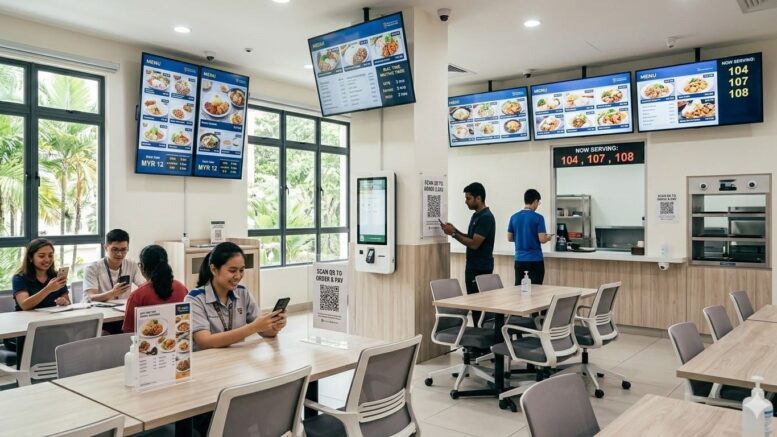
A smart canteen system is a comprehensive digital solution that automates and streamlines all aspects of canteen operations. Rather than relying on manual processes, a smart canteen system integrates point-of-sale functionality, inventory management, financial tracking, and reporting into a single, interconnected platform.
For worker housing operators, a smart canteen system typically includes:
- Digital payment processing and meal credit management
- Real-time transaction recording and reporting
- Inventory tracking and stock management
- Resident meal history and account management
- Sales analytics and performance metrics
- Integration with canteen staff workflows
The result is a canteen operation that runs more smoothly, generates accurate financial and operational data, and provides residents with a more convenient experience.
Key Benefits of Implementing a Smart Canteen System
Operational Efficiency
By automating routine tasks such as transaction recording, inventory updates, and financial reconciliation, a smart canteen system frees up staff time for more valuable activities. Meal service becomes faster, queues reduce, and the overall flow through the canteen improves.
Accurate Financial Management
Real-time transaction records eliminate discrepancies between cash handed and records kept. Operators can track revenue, identify underperforming menu items, and make data-driven decisions about pricing and offerings. At the end of each month or accounting period, reconciliation becomes straightforward rather than laborious.
Improved Inventory Control
A smart system tracks what is sold, what is in stock, and what needs to be reordered. This data-driven approach reduces overstocking, minimises food waste, and helps operators maintain consistent menu offerings. Better inventory management also translates to cost savings.
Enhanced Resident Experience
Residents benefit from faster payment processing, clearer meal credit tracking, and the convenience of digital payment methods. They can check their account balances and meal history, reducing confusion and disputes.
Better Compliance and Reporting
Automated record-keeping creates an audit trail that satisfies regulatory requirements and simplifies compliance checks. Operators can quickly generate reports for management review or external audits.
Data-Driven Decision Making
Analytics from a smart canteen system reveal trends in meal preferences, peak service times, and financial performance. Operators can use these insights to optimise menus, adjust staffing levels, and plan for future improvements.
Key Considerations When Choosing a Smart Canteen System
Ease of Use
Canteen staff may not be highly technical. The system should have an intuitive interface that requires minimal training and can be adopted quickly by existing staff members.
Scalability
Consider whether the system can grow with your operation. If your worker housing facility expands or you manage multiple canteens, the system should handle increased volume and complexity without requiring a complete overhaul.
Integration Capabilities
The canteen system should integrate with other systems you may use for accounting, payroll, or general management. Seamless integration reduces manual data entry and minimises errors.
Payment Options
Look for systems that support multiple payment methods—card payments, mobile payments, and meal credit systems—to give residents flexibility and reduce transaction times.
Reporting and Analytics
Verify that the system can generate the reports you need for financial management, compliance, and operational decision-making. Real-time dashboards can help you monitor canteen performance at a glance.
Support and Training
Choose a provider that offers comprehensive onboarding, training for staff, and responsive technical support. Good support minimises disruption during implementation and ensures the system continues to run smoothly.
Cost Structure
Understand the pricing model—whether it is a one-time purchase, subscription-based, or involves per-transaction fees. Calculate the total cost of ownership and ensure it aligns with your budget and expected return on investment.
How Smart Touch Technology Can Help
Smart Touch Technology Singapore offers a comprehensive canteen system designed specifically for operations like worker housing facilities. Our smart canteen solution is built to handle the unique demands of high-volume meal operations while simplifying management for operators.
The Smart Touch canteen system provides operators with an integrated platform for transaction processing, inventory management, and financial reporting. Staff can process meals quickly and accurately, residents enjoy convenient payment options, and operators gain visibility into canteen performance through real-time reporting and analytics.
Whether you are managing a single canteen or coordinating multiple food service locations, the Smart Touch canteen system scales to meet your needs while maintaining ease of use for both staff and residents.
Click here for more product information: https://smartouch.com.sg/canteen-system/
Getting Started with a Smart Canteen System
Assess Your Current Operations
Before selecting a system, evaluate your current canteen workflows, pain points, and objectives. Understanding what you need to improve—whether that is speed, accuracy, cost control, or resident satisfaction—will guide your selection process.
Define Your Requirements
List the features and capabilities that are essential for your operation. Consider factors such as the number of daily transactions, the variety of meal options you offer, payment methods you want to support, and reporting needs.
Evaluate Options
Compare systems based on functionality, ease of use, integration capabilities, support, and cost. Request demonstrations from vendors to see how their systems work in practice.
Plan Implementation
Choose a vendor that can guide you through implementation. Plan for staff training, data migration if applicable, and a transition period where both old and new systems may run in parallel.
Monitor and Optimise
After implementation, use the data and insights generated by your smart canteen system to continuously improve operations. Adjust menus based on popularity, refine staffing schedules, and identify cost-saving opportunities.
Conclusion
For worker housing operators in Singapore, implementing a smart canteen system is a strategic investment that pays dividends across multiple areas of operations. By automating manual processes, improving inventory control, enhancing financial accuracy, and providing residents with a better experience, a smart canteen system transforms how you manage food service.
The key is to choose a system that fits your specific needs, offers strong support, and can grow with your operation. Smart Touch Technology Singapore’s canteen system is designed to deliver these benefits, helping operators streamline canteen operations and focus on what matters most—serving residents well and running an efficient facility.
If you are considering implementing a smart canteen system for your worker housing operation, we encourage you to explore what is available and speak with vendors who understand the unique challenges of worker housing canteens. The right system can significantly improve your operational efficiency and resident satisfaction.
Smart Touch technology pte ltd , www.smartouch.com.sg +65-63964767, sales@smartouch.com.sg , www.smartouch.com.my +607-3889903 sales@smartouch.com.my