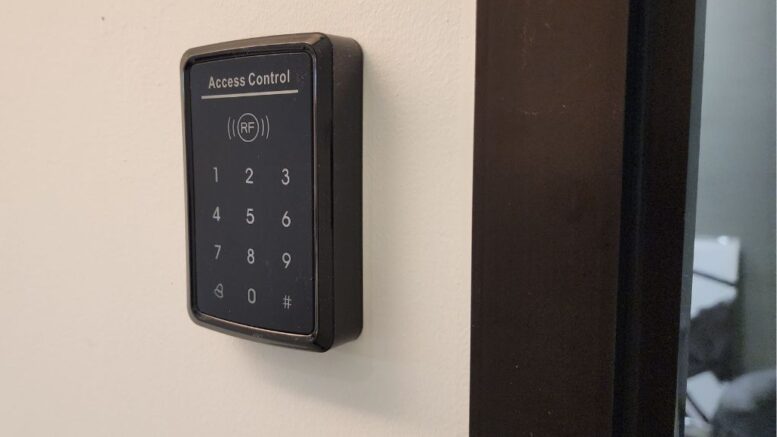
In Singapore’s fast-moving commercial environment, business security is no longer limited to locks, keys, and a reception desk. Offices, warehouses, factories, schools, clinics, co-working spaces, and mixed-use commercial buildings now face a more complex set of security demands. Companies need to protect staff, visitors, assets, confidential information, and restricted areas while still keeping day-to-day entry smooth and professional. That is why secure door access control systems for businesses in Singapore have become a core part of modern workplace infrastructure.
A door access control system is a security solution that determines who can enter, where they can go, and when access is allowed. Instead of relying only on physical keys, businesses can use cards, PINs, mobile credentials, fingerprints, facial recognition, or a combination of methods to control entry. In a Singapore context, the best systems are not just secure. They also need to fit local privacy obligations, operational needs, and building-safety considerations. The Personal Data Protection Act establishes Singapore’s general data protection law for the collection, use, and disclosure of personal data, which matters directly when access systems handle names, identifiers, visitor logs, or biometric information.
This guide explains how modern door access control works, why it matters for Singapore businesses, what technologies are available, what local compliance issues to consider, and how to choose the right system for a future-ready workplace.
What Is a Door Access Control System?
A door access control system is a combination of hardware, software, credentials, and security rules used to regulate entry into a premises or restricted area. Instead of opening every door with a mechanical key, the system checks whether the person requesting entry has valid authorization. If approved, the door unlocks. If not, the door remains secured and the event can be logged for review.
In practical business use, access control is commonly installed at office entrances, reception turnstiles, server rooms, finance departments, laboratories, warehouses, stock rooms, management offices, and shared commercial facilities. A modern system can also track entry history, assign different access levels, issue temporary permissions to contractors or visitors, and integrate with CCTV, visitor management, alarms, and attendance platforms.
For Singapore businesses, this matters because a well-designed access system improves both security and operational control. It reduces the risk of lost keys, limits unauthorized movement, and creates a clear audit trail of who entered and when.
Why Singapore Businesses Need Modern Access Control
Businesses in Singapore operate in a highly connected, compliance-aware environment. Office buildings often have shared lobbies, multiple tenants, and mixed traffic involving staff, visitors, vendors, and service personnel. Companies also handle increasing volumes of sensitive digital and physical assets. In that environment, traditional lock-and-key setups are often too limited.
A modern door access control system helps businesses:
- protect employees and visitors,
- restrict sensitive areas,
- manage staff movement more effectively,
- improve accountability through access logs,
- simplify credential issuance and revocation,
- support visitor and contractor workflows,
- and strengthen response readiness during incidents.
Singapore’s Guidelines for Enhancing Building Security in Singapore describe building security as a combination of procedures, physical protection concepts, and security technology that building owners can incorporate into their security plans. That fits access control directly: it is not just a door device, but part of a larger building-security strategy.
Access control also supports broader workplace preparedness. Singapore’s workplace emergency guidance emphasizes the need for organizations to prepare their workforce, understand evacuation routes, and coordinate with building management. In real operations, a properly integrated access system can support muster reporting, emergency unlocking logic, and faster accountability during an incident.
How Modern Door Access Control Systems Work
A secure door access control system usually follows a simple process. First, a person presents a credential, such as an access card, PIN, mobile app credential, fingerprint, or face. The reader sends the request to the control system. The system checks whether that person has permission for that specific door at that specific time. If the rule is satisfied, the door unlocks for a short period. The event is then recorded in the software log.
Behind that simple action is a much more powerful structure. Administrators can create access groups, set schedules, assign temporary permissions, review audit trails, and respond quickly when a card is lost or when an employee leaves the organization. Instead of replacing physical keys one by one, permissions can be changed centrally.
That is why access control has become essential for modern businesses in Singapore. It creates flexibility without sacrificing security.
The Main Types of Access Credentials
Card and Fob Access
Card-based access remains one of the most common systems in offices and commercial buildings. Employees tap a card or fob on a reader to unlock a door. This option is familiar, fast, and relatively easy to administer. It is especially suitable for organizations that want dependable day-to-day control without requiring users to learn a new process.
The limitation is that cards can be lost, shared, copied, or misused if policies are weak. That is why many businesses now pair card access with anti-passback rules, photo records, or additional verification at higher-security doors.
PIN Access
PIN-based systems ask the user to enter a code on a keypad. This can work well for small offices or back-of-house zones, but it is less secure when used on its own because codes may be shared or observed. PIN access is generally more useful as a second factor than as the only security layer.
Mobile Credentials
Many businesses are moving toward mobile-based access, where a smartphone acts as the entry credential. This reduces dependence on physical cards and can be easier to administer remotely. Mobile credentials can also support temporary permissions for contractors and visitors.
For flexible workplaces in Singapore, this is attractive because it matches hybrid work patterns and reduces the operational burden of issuing and recovering physical cards.
Biometric Access
Biometric systems use physical characteristics such as fingerprints or facial features to authenticate identity. These can offer stronger assurance because the credential is tied to the person rather than to an item they carry. PDPC’s guide on biometric data specifically notes that biometric recognition systems, including facial and fingerprint recognition, are being deployed in commercial security applications for ingress to and egress from premises.
Biometrics are powerful, but in Singapore they must be implemented carefully because biometric data is sensitive personal data in practice. Organizations need clear purpose limitation, security safeguards, and strong internal handling controls. The PDPC’s guidance was issued specifically because it observed incidents involving mishandling of biometric data and wanted organizations to ensure responsible use.
Why Biometric and Face-Based Access Is Growing
Biometric access is growing because businesses want more secure and convenient authentication. A card can be borrowed. A PIN can be shared. A biometric trait is harder to transfer. Facial recognition also enables a touchless experience, which is useful at busy entrances and for premium office environments.
However, Singapore businesses should not treat biometrics as a shortcut. The responsible-use guidance from PDPC makes clear that when organizations collect, use, or disclose biometric data for security applications, they need to safeguard that data appropriately. The same guide is aimed at building owners, MCSTs, and security service providers, which shows how relevant it is to commercial access control design.
A good approach is to use biometrics only where the security benefit is clear, avoid excessive collection, limit retention, protect templates properly, and document the business purpose.
Important Privacy Considerations in Singapore
One of the biggest mistakes companies make is treating access control purely as a hardware purchase. In reality, a business access system often processes personal data, and in Singapore that means PDPA considerations must be built into the project from the beginning. PDPC’s advisory guidelines explain that the PDPA governs the collection, use, and disclosure of personal data by organizations.
This becomes especially important in three areas: visitor registration, employee authentication, and biometrics.
First, businesses should avoid collecting more data than necessary. If a building or workplace uses visitor access procedures, the organization should think carefully before collecting NRIC numbers. PDPC’s guidance says organizations must be able to justify why collection of full NRIC numbers is necessary, and its related materials encourage alternatives where possible.
Second, organizations should not use NRIC numbers as authentication credentials. In January 2026, PDPC announced that private organizations have until 31 December 2026 to phase out the use of full or partial NRIC numbers for authentication, and from 1 January 2027 it will step up enforcement action. PDPC and CSA also issued a joint advisory against using NRIC numbers for authentication.
Third, if biometric access is used, businesses should ensure there is a strong security and governance framework around that data. This includes limiting access to templates, securing storage and transmission, and defining retention and deletion practices.
Fire Safety and Emergency Egress Must Not Be Overlooked
A secure access control system should never create unsafe emergency conditions. In Singapore, fire-safety compliance is a serious design requirement, and businesses should make sure door security measures align with applicable SCDF fire-safety expectations. SCDF’s Fire Code is the key reference for designing fire-safe buildings, and its resources stress staying informed about codes and regulations.
For businesses, the practical lesson is simple: access-controlled doors, magnetic locks, fail-safe hardware, exit release devices, and emergency override functions must be planned correctly. A door that is secure during normal operations must still allow safe egress during emergencies according to the applicable design and fire-safety requirements. This is especially important in office floors, industrial sites, commercial units, and tenant spaces within larger developments.
Key Features Businesses Should Look For
The best secure door access control systems for Singapore businesses should do more than unlock doors. They should offer:
Flexible credential support. Cards, PINs, mobile access, and optional biometrics allow the business to choose a security level that fits each area.
Role-based permissions. Employees in finance, IT, operations, management, and support should not all require the same access rights.
Time-based access rules. The system should support office-hour restrictions, after-hours permissions, and contractor schedules.
Centralized management. Multi-site businesses in Singapore benefit from one platform for multiple offices or branches.
Audit trails and reporting. Access history is vital for investigations, compliance checks, and internal accountability.
Integration capability. Access control works best when integrated with visitor management, CCTV, alarms, and intercom systems.
Data protection controls. The software and deployment model should support secure administration, controlled data access, and retention settings aligned with PDPA principles.
Emergency logic. Doors should operate correctly during alarms, evacuation, and power failure conditions, subject to the building’s approved design and applicable code requirements.
Access Control and Visitor Management: A Stronger Combination
For many Singapore businesses, the strongest setup combines door access control with a visitor management system. Instead of letting visitors wander in after a handwritten logbook entry, the company can pre-register guests, notify hosts, issue temporary credentials, and limit visitors to specific doors or time windows.
This creates several benefits. It improves the visitor experience, reduces reception bottlenecks, and strengthens accountability. It also helps avoid unnecessary collection of sensitive identity data when a more proportionate method will do. In a business environment where data protection and professionalism both matter, this combination is especially valuable.
How to Choose the Right System for Your Business
The right access control system depends on the business environment. A small office may only need a few doors with card or mobile access. A larger enterprise may require multi-site control, elevator integration, visitor workflows, biometric options, and detailed reporting. A warehouse or industrial premises may prioritize rugged readers, zone-based permissions, and contractor access. A clinic or data-sensitive office may require stricter identity assurance and better audit visibility.
Businesses in Singapore should evaluate systems using five practical questions:
Will this system support our security needs today and two to five years from now?
Does it align with our privacy responsibilities if we process employee, visitor, or biometric data?
Can it integrate with our other systems?
Will it support safe emergency operation?
Can our team manage it efficiently without excessive manual work?
The strongest answer is usually not the cheapest system on paper, but the one that balances security, usability, compliance, and long-term flexibility.
Final Thoughts
A modern door access control system is one of the smartest security investments a business in Singapore can make. It gives organizations better control over who enters, when they enter, and where they can go. It helps replace outdated key-based practices with structured, auditable, and scalable security workflows. And when designed properly, it supports not just protection, but also professionalism, operational efficiency, and resilience.
For Singapore businesses, the modern standard is clear: choose an access control system that is secure, easy to manage, privacy-aware, and compatible with emergency and building-safety requirements. That means looking beyond the door reader itself and thinking about the full environment: staff, visitors, data, building design, and future growth. When those pieces come together, access control becomes more than a security device. It becomes an essential part of a smarter and safer business.
Explore the Solution: https://smartouch.com.sg/face-and-door-access/
Smart Touch technology pte ltd , www.smartouch.com.sg +65-63964767, sales@smartouch.com.sg , www.smartouch.com.my +607-3889903 sales@smartouch.com.my