Introduction: Rethinking Security in the Modern Era
In 2026, security is no longer just about locking doors—it’s about intelligent control, real-time monitoring, and seamless integration. As businesses evolve, so do the threats they face. This has led to a growing shift from traditional access systems to more advanced solutions like Building Automation Systems (BAS).
But the key question remains: Which is more secure—BAS or traditional access control systems?
In this comprehensive guide, we explore the differences, advantages, and security implications of both systems to help you make the right decision for your organization.
What Is a Traditional Access Control System?
Traditional access systems are standalone security solutions that control entry using basic authentication methods such as:
- Physical keys
- PIN codes
- RFID or access cards
These systems typically operate independently and are limited in terms of integration and real-time monitoring.
Key Characteristics
- Localized control (per door or entry point)
- Limited or no real-time data
- Minimal integration with other systems
- Manual updates and management
While these systems have been widely used for decades, they are increasingly becoming outdated in modern environments.
What Is a Building Automation System (BAS)?
A Building Automation System (BAS) is an integrated platform that connects multiple building systems into a centralized control environment. This includes:
- Access control systems
- CCTV surveillance
- HVAC systems
- Lighting controls
- Fire and alarm systems
BAS uses smart technology, IoT devices, and cloud-based platforms to provide real-time monitoring and automation across the entire facility.
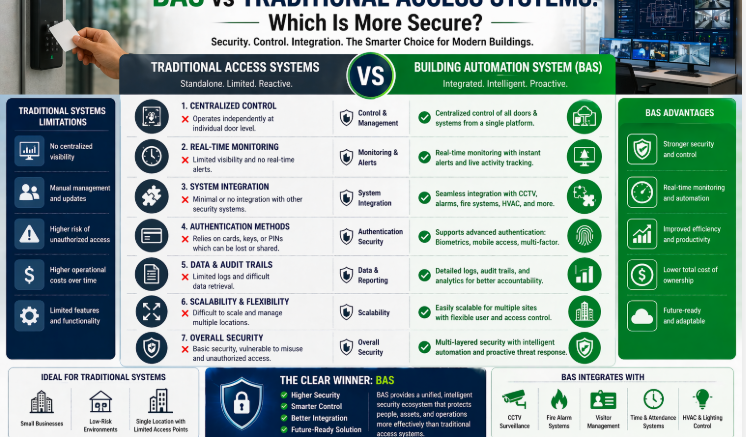
Security Comparison: BAS vs Traditional Systems
1. Centralized vs Standalone Control
Traditional Systems:
Operate independently, making it difficult to manage multiple entry points or locations.
BAS:
Provides centralized control, allowing administrators to manage all access points from a single dashboard.
✅ Winner: BAS
Centralized control reduces complexity and improves response time during security incidents.
2. Real-Time Monitoring and Alerts
Traditional Systems:
Limited visibility and delayed reporting.
BAS:
Offers real-time monitoring, instant alerts, and live activity tracking across the facility.
✅ Winner: BAS
Immediate insights enable faster response to threats and suspicious behavior.
3. Integration with Security Systems
Traditional Systems:
Minimal or no integration with other security tools.
BAS:
Seamlessly integrates with:
- CCTV systems
- Intrusion alarms
- Visitor management systems
- Fire safety systems
✅ Winner: BAS
Integration creates a unified security ecosystem, enhancing overall protection.
4. Authentication Methods
Traditional Systems:
Relies on cards, keys, or PINs, which can be lost, stolen, or shared.
BAS:
Supports advanced authentication methods such as:
- Facial recognition
- Fingerprint biometrics
- Mobile credentials
- Multi-factor authentication
✅ Winner: BAS
Advanced biometrics significantly reduce the risk of unauthorized access.
5. Data and Audit Trails
Traditional Systems:
Limited logging and difficult data retrieval.
BAS:
Provides detailed logs, analytics, and audit trails for all access activities.
✅ Winner: BAS
Comprehensive data improves accountability and compliance.
6. Scalability and Flexibility
Traditional Systems:
Difficult to scale and manage across multiple sites.
BAS:
Easily scalable, supporting multiple buildings and locations from one platform.
✅ Winner: BAS
Ideal for growing organizations with expanding infrastructure.
7. Cybersecurity Considerations
Traditional Systems:
Less exposure to cyber threats but also lack advanced protection.
BAS:
Requires strong cybersecurity measures but offers:
- Encrypted data transmission
- Secure cloud platforms
- Role-based access controls
⚖️ Tie (Depends on Implementation)
While BAS introduces cyber risks, proper security measures make it highly secure.
Advantages of BAS Over Traditional Systems
Intelligent Automation
BAS can automate responses such as locking doors during emergencies or triggering alarms when unauthorized access is detected.
Improved Operational Efficiency
Centralized management reduces administrative workload and improves coordination across departments.
Enhanced User Experience
Employees and visitors benefit from seamless, contactless access methods.
Future-Ready Technology
BAS is designed to integrate with emerging technologies such as AI, IoT, and smart building systems.
When Traditional Systems May Still Be Suitable
Despite their limitations, traditional systems may still be appropriate for:
- Small businesses with limited budgets
- Low-risk environments
- Single-location facilities with minimal access points
However, even in these cases, upgrading to a more advanced system is recommended for long-term security.
Future Trends in Access Control
AI-Driven Security
Artificial intelligence will enhance threat detection and automate decision-making.
Cloud-Based Access Management
Centralized cloud platforms will enable real-time control across multiple locations.
Mobile and Touchless Access
Smartphones and biometrics will replace physical credentials.
Full Smart Building Integration
Access control will be fully integrated into smart building ecosystems, improving efficiency and security.
Why Choose Our Integrated BAS Solutions
Our solutions combine the power of BAS with advanced access control technologies to deliver:
- Centralized and intelligent management
- Real-time monitoring and alerts
- Advanced biometric authentication
- Seamless system integration
- Secure and scalable infrastructure
We are committed to helping businesses transition from traditional systems to smarter, more secure solutions.
Conclusion: Which Is More Secure?
The answer is clear—Building Automation Systems (BAS) offer significantly higher security than traditional access systems.
While traditional systems may still serve basic needs, they lack the intelligence, integration, and real-time capabilities required in modern environments. BAS, on the other hand, provides a comprehensive, future-ready solution that enhances both security and operational efficiency.
In 2026 and beyond, businesses that invest in BAS will be better equipped to protect their assets, manage access intelligently, and stay ahead of evolving security challenges.
Upgrade your security today and embrace the future with integrated BAS solutions.
For more information of the product, please click here: https://smartouch.com.sg/bas/
Smart Touch technology pte ltd , www.smartouch.com.sg +65-63964767, sales@smartouch.com.sg , www.smartouch.com.my +607-3889903 sales@smartouch.com.my