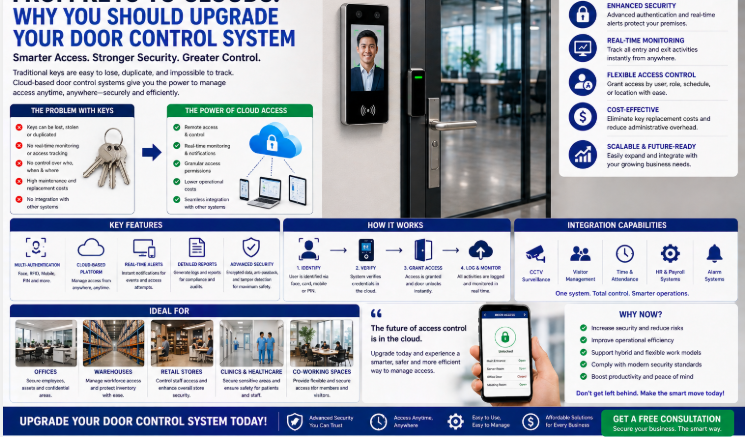
Controlling who enters a building is one of the most fundamental aspects of facility security, yet many organisations still rely on card readers that are easy to share, lose, or clone. A turnstile with face recognition Singapore solves this by verifying identity biometrically at the point of entry, combining physical access control with instant, contactless authentication.
For organisations looking to secure their premises without slowing down daily foot traffic, choosing the best turnstile with face recognition Singapore has to offer is an important decision. This guide covers how these systems work, their benefits, and what to look for when selecting a vendor.
What Is a Turnstile with Face Recognition?
A turnstile with face recognition is a physical access control barrier, such as a tripod, flap, or full-height turnstile, integrated with a facial recognition camera and software. Instead of swiping a card or entering a PIN, an approaching individual is identified by the system in real time, and the turnstile arm or barrier opens automatically once their identity is confirmed.
This approach combines the physical security of a mechanical barrier with the speed and convenience of biometric verification, making it a popular choice for offices, factories, and residential buildings across Singapore.
Why Businesses Are Choosing Face Recognition Turnstiles
Card-based access control has well-known weaknesses. Cards can be shared between employees, lost, or cloned, creating security gaps that are difficult to monitor. Manual security checks slow down entry during peak hours and require constant staffing. As organisations look for stronger, more efficient access control, face recognition turnstiles have become an increasingly popular upgrade.
Common Weaknesses of Traditional Access Control
- Cards can be shared, lost, or cloned
- Manual guard checks slow down entry during peak hours
- No reliable way to prevent tailgating between authorised users
- Limited audit trail for who actually entered the building
- Ongoing costs of replacing lost or damaged cards
How the Best Turnstile with Face Recognition Systems Work
A high-quality turnstile with face recognition typically follows this process:
Step-by-Step Process
| Step | What Happens |
|---|---|
| 1. Enrolment | Each authorised user’s facial data is captured once and securely stored in the system. |
| 2. Approach detection | As a person approaches, the camera detects a face and begins verification. |
| 3. Identity match | The system matches the face against the authorised database in under a second. |
| 4. Barrier release | Once verified, the turnstile arm opens, allowing entry, and the event is logged automatically. |
Because verification happens almost instantly, employees and residents can move through the entrance without the delays associated with manual checks or repeated card swipes.
Key Benefits of the Best Turnstile with Face Recognition
Upgrading to a face recognition turnstile delivers measurable improvements in both security and daily operations.
Key Benefits
- Stronger security: Biometric verification eliminates the risk of shared or cloned access cards.
- Faster throughput: Hands-free verification in under a second speeds up entry during peak hours.
- Tailgating prevention: Integrated sensors help detect and prevent unauthorised follow-through entry.
- Accurate audit trail: Every entry is logged automatically, supporting compliance and investigations.
- Reduced administrative costs: No need to issue, replace, or manage physical access cards.
- Hygienic, contactless entry: No shared touchpoints, supporting better workplace hygiene.
Best Practices for Choosing the Best Turnstile with Face Recognition
Selecting the right system requires evaluating more than just price. Consider these best practices when comparing vendors.
Best Practices
- Check recognition accuracy: Choose vendors with proven high accuracy rates to avoid false rejections.
- Evaluate lighting requirements: Ensure the system performs reliably under your entrance’s lighting conditions.
- Confirm backup access options: A card or PIN backup ensures continuity during system downtime.
- Review data protection compliance: Confirm biometric data is stored and processed in line with local regulations.
- Plan for integration: Ensure the turnstile can integrate with your existing security and visitor management systems.
Feature Comparison: Card Access vs Face Recognition Turnstile
| Feature | Card Access | Face Recognition Turnstile |
|---|---|---|
| Verification method | Physical card tap | Biometric facial scan |
| Fraud risk | High (sharing, cloning) | Very low (unique biometric) |
| Speed | 1-2 seconds, manual tap | Under 1 second, hands-free |
| Tailgating prevention | Limited | Enhanced with sensors |
| Ongoing costs | Card replacement fees | Minimal, no physical cards |
Who Should Use This Technology?
The best turnstile with face recognition Singapore has to offer is well suited for corporate offices, factories, residential condominiums, and data centres where strict, auditable access control is essential. Any organisation seeking to reduce fraud risk and improve entry efficiency will benefit from this upgrade.
Key Takeaways
- Face recognition turnstiles combine physical security with fast, contactless biometric verification.
- They eliminate common risks associated with card-based access, including sharing and cloning.
- Choosing the right vendor requires evaluating accuracy, lighting compatibility, and compliance support.
- Automated logging provides a reliable audit trail for security and compliance needs.
- A backup verification method ensures continuity if the biometric system is temporarily unavailable.
Frequently Asked Questions
1. Is facial recognition data at the turnstile secure?
Yes. Reputable systems encrypt facial data and store it securely, using it only for access verification in line with local data protection requirements.
2. How fast is verification at the turnstile?
Most systems verify identity in under one second, allowing smooth, continuous foot traffic even during peak hours.
3. What happens if the system fails to recognise someone?
Most turnstiles include a backup verification method, such as a card or PIN, to ensure access is never disrupted.
4. Can face recognition turnstiles integrate with existing security systems?
Yes. Most systems integrate with CCTV, visitor management, and building management platforms for a unified security setup.
5. Are these turnstiles suitable for both offices and residential buildings?
Yes. Face recognition turnstiles are used across corporate offices, factories, condominiums, and mixed-use developments.
Conclusion
Choosing the best turnstile with face recognition Singapore has to offer allows organisations to replace vulnerable card-based access with fast, secure, and auditable biometric verification. Beyond stronger security, businesses benefit from smoother foot traffic, reduced administrative overhead, and a more modern entrance experience. As access control needs continue to grow, investing in a reliable face recognition turnstile is a practical step toward a safer building.
Want to know more about this product? Click here: https://smartouch.com.sg/face-and-door-access/
Smart Touch technology pte ltd , www.smartouch.com.sg +65-63964767, sales@smartouch.com.sg , www.smartouch.com.my +607-3889903 sales@smartouch.com.my