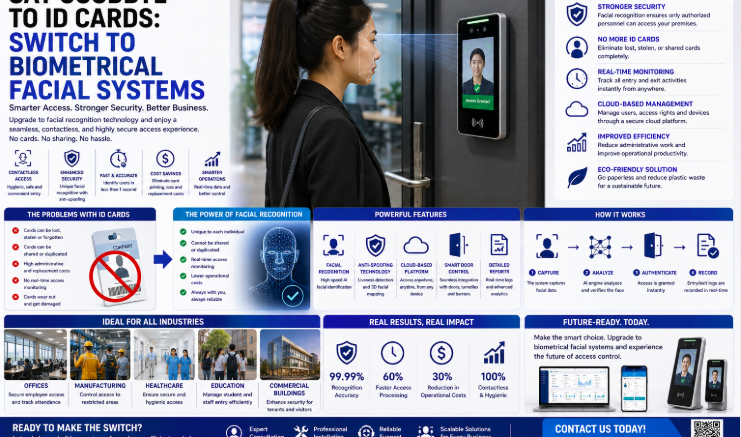
Introduction
Singapore’s commercial landscape is evolving rapidly, with businesses increasingly recognising the importance of robust security and operational efficiency. Whether you manage an office tower in the Central Business District, operate a retail shopping centre, oversee a hospitality venue, or run an industrial facility, door access control is fundamental to your daily operations.
Traditional lock-and-key systems are no longer adequate for modern commercial buildings. They present security vulnerabilities, create administrative headaches, and fail to provide the visibility and control that today’s businesses require. A smart lock door control system addresses these challenges comprehensively, offering real-time access management, detailed audit trails, and seamless integration with your building’s broader security infrastructure.
For Singapore businesses, implementing an intelligent door control system is not simply a convenience—it is a strategic investment in security, compliance, and operational excellence.
Why Door Control Matters in Singapore Commercial Buildings
Security Challenges in Modern Workplaces
Commercial buildings house valuable assets, sensitive information, and diverse occupants. Unauthorised access, theft, and security breaches represent genuine risks. Traditional locks provide minimal security and no way to track who entered a space or when.
A smart lock door control system eliminates these vulnerabilities by:
- Restricting access to authorised personnel only
- Recording every entry and exit with timestamp precision
- Enabling rapid access revocation if credentials are lost or employees leave
- Providing real-time alerts if unauthorised entry is attempted
Operational Efficiency Requirements
Singapore’s competitive business environment demands efficiency. Managing physical keys across multiple floors, departments, and tenants is labour-intensive and error-prone. Lost keys must be replaced, locks rekeyed, and access lists manually maintained. This approach does not scale well in larger commercial buildings.
Smart door control systems streamline these operations by centralising access management, eliminating the need for physical key distribution, and automating access policy enforcement.
Compliance and Accountability
Many Singapore businesses operate under regulatory frameworks that require documented access controls and audit trails. Financial institutions, healthcare providers, data centres, and regulated manufacturing facilities must demonstrate that they can control and verify who accesses sensitive areas. A smart lock system provides the documentation necessary to satisfy these requirements.
What is a Smart Lock Door Control System?
A smart lock door control system is an integrated solution that manages physical access to buildings and spaces using electronic rather than mechanical locks. Instead of relying on keys, authorised users gain entry through credentials such as access cards, mobile devices, PINs, or biometric authentication.
Core Components
A comprehensive system typically includes:
- Smart locks: Electronic locks installed on doors, capable of accepting various authentication methods
- Central management platform: Software that administrators use to grant, modify, or revoke access rights
- Credential systems: Cards, mobile apps, keypads, or biometric readers that users employ to unlock doors
- Monitoring and reporting: Real-time dashboards and audit logs that track access events
- Integration capabilities: Connections to building management systems, security infrastructure, and other business applications
Authentication Methods
Modern smart lock systems support multiple authentication approaches, allowing businesses to choose the level of security and convenience appropriate to each area:
- Proximity cards (swipe or tap)
- Mobile credential access via smartphones
- PIN codes on electronic keypads
- Biometric authentication (fingerprint or facial recognition)
- Multi-factor authentication combining two or more methods
Benefits of Smart Lock Door Control for Singapore Commercial Buildings
Enhanced Security
Smart locks significantly reduce unauthorised access. Each door is controlled independently, and access is granted only to individuals whose credentials are active in the system. If someone’s credentials are lost or stolen, access can be disabled instantly without requiring physical lock changes.
Detailed Access Audit Trails
Every access event—successful or failed—is recorded with the user’s identity and timestamp. This creates an indisputable record of who was in which spaces at any given time. For compliance purposes, incident investigations, or security audits, these logs are invaluable.
Simplified Access Management
Administrators manage access through a centralised platform rather than distributing and tracking physical keys. New employees can be granted access to appropriate spaces before their first day. When employees change departments or leave the company, their access can be adjusted or revoked immediately.
Operational Flexibility
Smart systems enable time-based access policies. You can restrict access to certain areas during specific hours, allow temporary access for contractors or visitors, and adjust permissions based on organisational changes—all without touching a lock.
Cost Reduction Over Time
While initial investment is required, smart systems reduce long-term costs associated with rekeying locks, replacing lost keys, managing physical credential storage, and administrative overhead. The system pays dividends through improved efficiency and reduced security incidents.
Scalability
Whether your commercial building has 10 doors or 100, a smart lock system scales seamlessly. Adding new doors, modifying access policies, or expanding to additional buildings is straightforward through the central management platform.
Common Challenges in Commercial Door Control
Legacy Systems and Integration
Older commercial buildings may have disparate security systems that do not communicate with each other. Integrating a modern smart lock system with existing infrastructure requires careful planning. However, flexible systems can often work alongside legacy equipment during transition periods.
User Adoption
Transitioning from keys to electronic credentials may initially face resistance from occupants accustomed to traditional methods. Clear communication, training, and user-friendly systems help ensure smooth adoption.
Reliability and Downtime
Electronic systems depend on power and network connectivity. Robust smart lock solutions include backup power (battery systems) and offline access capabilities to ensure doors remain functional even if primary systems fail.
Privacy and Data Security
Access data reveals patterns of movement and presence in your building. Protecting this information against unauthorised access or misuse is essential. Quality systems employ encryption and follow data protection best practices.
How Smart Touch Technology Singapore Addresses Door Control Requirements
Smart Touch Technology offers a door control system designed specifically for the needs of Singapore commercial buildings. The system provides centralised management of electronic locks across multiple doors and floors, enabling administrators to grant, modify, or revoke access through an intuitive platform.
Key aspects of the Smart Touch solution include:
- Comprehensive access management allowing fine-grained control over which users can access which spaces
- Detailed audit logging that records every access event for security and compliance purposes
- Support for multiple authentication methods, accommodating different security levels and user preferences
- Integration with building systems and security infrastructure to create a cohesive operational environment
- Local support and expertise relevant to Singapore’s business environment and regulatory landscape
Whether you are upgrading an existing building, implementing security improvements, or planning a new facility, Smart Touch Technology provides the foundation for reliable, scalable door access control.
Implementing Smart Lock Door Control in Your Building
Assessment and Planning
Before implementation, assess your building’s layout, current security requirements, and future growth plans. Identify which areas require access control (all public-facing doors, sensitive departments, server rooms, etc.) and determine appropriate credential methods for different user groups.
Phased Deployment
Rather than attempting to upgrade all doors simultaneously, consider a phased approach. Start with critical areas, validate the system’s performance, refine policies based on real-world usage, and then expand to additional doors. This approach minimises disruption and allows teams to become comfortable with the new system.
Integration with Existing Systems
Ensure the smart lock system integrates appropriately with your building management system, security monitoring, and other operational systems. This integration enhances visibility and enables coordinated responses to security events.
Training and Support
Your building occupants and administrative staff require adequate training. Users need to understand how to use their credentials and what to do if they lose access. Administrators need to become proficient with the management platform to handle routine access changes and troubleshoot issues.
Considerations for Singapore Compliance
Singapore businesses operate within a framework of regulations and standards relevant to security, data protection, and workplace safety. When implementing a smart lock system, consider:
- Requirements specific to your industry or sector (financial services, healthcare, etc.) regarding access control and audit trails
- Data protection principles under Singapore’s Personal Data Protection Act, particularly regarding the collection and storage of access logs
- Building and fire safety codes that may specify requirements for emergency egress and access control during emergencies
It is advisable to consult with your legal and compliance teams and review the latest guidance from relevant Singapore authorities to ensure your implementation meets all applicable requirements.
Conclusion
A smart lock door control system is no longer a luxury for Singapore commercial buildings—it is a practical necessity. It delivers superior security, operational efficiency, compliance support, and scalability that traditional lock-and-key systems simply cannot match.
The transition from mechanical to electronic access control represents an investment in your building’s future. By implementing a reliable system tailored to your specific needs, you gain the visibility, control, and flexibility required to operate a modern commercial facility securely and efficiently.
If you are considering upgrading your building’s door control infrastructure, or would like to understand how a smart lock system could benefit your specific situation, contact Smart Touch Technology to discuss your requirements and explore solutions designed for Singapore’s commercial landscape.
Smart Touch technology pte ltd , www.smartouch.com.sg +65-63964767, sales@smartouch.com.sg , www.smartouch.com.my +607-3889903 sales@smartouch.com.my