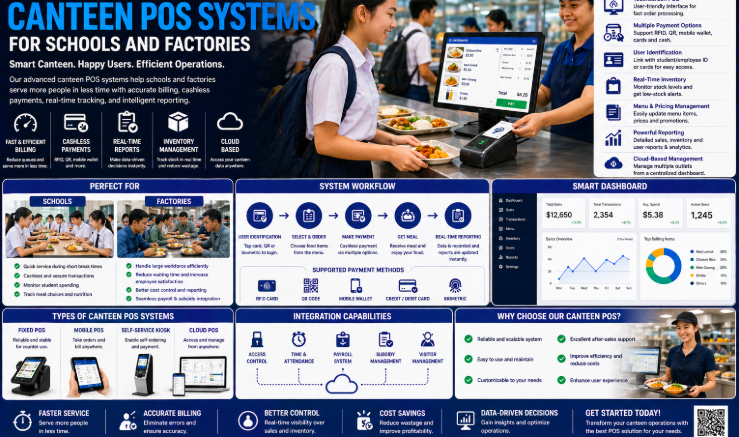
Managing a busy canteen involves juggling multiple operational challenges—from coordinating meal preparation to processing payments quickly and accurately. In Singapore’s fast-paced work and educational environments, efficiency is essential. A digital meal ordering and payment system addresses these challenges by automating the entire food ordering process, reducing queues, improving customer experience, and simplifying payment handling.
Whether you operate a corporate canteen, school cafeteria, or institutional food service, implementing a digital solution can transform how your customers order meals and how your staff manages daily operations. This article explores the benefits, key considerations, and practical advantages of adopting a digital meal ordering and payment system for your canteen in Singapore.
The Challenges of Traditional Canteen Operations
Traditional canteen operations rely heavily on manual processes that can create significant operational bottlenecks. Customers queue to order, staff members take orders verbally or from handwritten notes, and payment processing happens at separate points—often creating congestion during peak lunch hours.
Common problems include:
- Long queues during peak service times, leading to customer frustration and lost sales
- Manual order taking that increases the risk of errors and miscommunications
- Cash handling difficulties, including security concerns and reconciliation challenges
- Limited visibility into meal preferences and popular items for inventory planning
- Difficulty tracking sales data and managing revenue
- Staff time consumed by repetitive administrative tasks instead of food preparation
These challenges directly impact both customer satisfaction and operational efficiency. In Singapore’s competitive business and educational landscape, canteens that fail to modernise risk losing customers to faster, more convenient alternatives.
What is a Digital Meal Ordering and Payment System?
A digital meal ordering and payment system is a technology solution that allows customers to browse available meals, place orders, and pay electronically through a digital platform. This system typically includes touchscreen kiosks, mobile applications, or web-based interfaces that integrate with payment gateways and kitchen management systems.
The system streamlines the entire customer journey—from menu selection through payment completion—while simultaneously providing canteen operators with real-time data on orders, sales, and customer preferences.
Key Benefits of Implementing a Digital System
Reduced Queuing and Faster Service
One of the most immediate benefits is the reduction in customer wait times. By allowing multiple customers to place orders simultaneously through different kiosks or devices, digital systems eliminate the traditional single-queue bottleneck. Customers can order and pay in seconds, significantly improving the customer experience during peak lunch periods.
Improved Accuracy and Reduced Errors
Digital ordering eliminates the miscommunications that often occur with verbal orders. When customers directly input their meal preferences into the system, kitchen staff receive clear, accurate information about exactly what needs to be prepared. This reduces food waste, minimises preparation errors, and improves customer satisfaction.
Simplified Payment Processing
Digital payment systems eliminate the need for cash handling, reducing security risks and simplifying end-of-day reconciliation. Customers appreciate the convenience of contactless payments, whilst canteen operators benefit from faster, more accurate financial tracking. Payment data is automatically recorded, making accounting and reporting significantly easier.
Valuable Business Insights
Digital systems automatically capture data on which meals are ordered most frequently, at what times, and by whom. This intelligence helps canteen operators optimise their menu offerings, manage inventory more effectively, and make informed decisions about pricing and promotional strategies. Understanding customer preferences becomes straightforward rather than reliant on estimates.
Enhanced Operational Efficiency
Staff can focus on food preparation and quality rather than spending time taking orders and processing payments manually. Kitchen teams receive orders electronically, which can be displayed on screens and managed sequentially. This organisation reduces stress and allows preparation to be optimised for throughput.
Better Inventory Management
When you have accurate data on what meals are ordered, forecasting demand becomes more precise. This helps reduce food waste by preparing appropriate quantities and managing stock levels more efficiently. For canteens operating with tight margins, this improvement directly impacts profitability.
Practical Considerations for Singapore Canteens
Integration with Existing Operations
Before implementing a digital system, evaluate how it will integrate with your current kitchen operations, staffing structure, and layout. Consider whether you have adequate electrical points for kiosks, sufficient space for touchscreen stations, and trained staff to support the technology.
User Experience for Diverse Audiences
If your canteen serves a diverse audience—including older employees or less tech-savvy individuals—ensure the system has an intuitive interface and consider offering alternative ordering methods during the transition period. Staff should be trained to assist customers who need help navigating the system.
Payment Method Flexibility
Singaporeans use various payment methods including contactless cards, mobile wallets, QR code payments, and cash. A comprehensive digital system should support multiple payment options to accommodate all customer preferences and ensure no sales are lost due to payment method limitations.
Data Security and Privacy
Ensure any system you implement complies with Singapore’s data protection regulations. Customer payment information must be handled securely, and transaction data should be protected against unauthorised access. Verify that your system provider maintains appropriate security standards and certifications.
Staff Training and Support
Successful implementation requires proper staff training. Your team needs to understand how to operate the system, troubleshoot basic issues, and assist customers. Budget time for training and consider ongoing support from your system provider.
How Smart Touch Technology’s Canteen Solution Helps
Smart Touch Technology provides a comprehensive canteen solution designed specifically to address the operational challenges faced by food service operators in Singapore. The canteen product enables digital meal ordering and payment through an easy-to-use platform that integrates seamlessly with kitchen operations and point-of-sale systems.
The solution helps canteen operators:
- Implement touchscreen ordering kiosks that reduce queuing and accelerate service
- Streamline payment processing with support for multiple payment methods
- Gain real-time visibility into orders and sales data for better business management
- Optimise kitchen operations through clear, organised order management
- Improve inventory planning with data-driven insights on meal preferences
- Enhance the overall customer experience with faster, more reliable service
By implementing Smart Touch Technology’s canteen solution, operators can modernise their food service operations whilst maintaining focus on quality and customer satisfaction. The system is designed with the Singapore market in mind, supporting local payment preferences and operational requirements.
Getting Started with Digital Meal Ordering
Transitioning to a digital meal ordering and payment system does not need to be disruptive. A phased implementation approach allows your canteen to gradually introduce the new system whilst maintaining service continuity. Start with one or two ordering kiosks during off-peak hours, gather feedback, train staff, and then expand as confidence grows.
Key steps include:
- Assessing your current operations and identifying specific pain points
- Evaluating system options that match your operational needs and budget
- Planning the physical setup and ensuring adequate infrastructure
- Training staff thoroughly before go-live
- Monitoring performance and gathering customer feedback
- Making adjustments based on real-world usage patterns
To explore how a digital meal ordering and payment system could transform your canteen operations, reach out to Smart Touch Technology for a consultation tailored to your specific requirements.
Conclusion
A digital meal ordering and payment system represents a significant operational upgrade for any canteen in Singapore. By reducing queues, improving accuracy, simplifying payments, and providing valuable business insights, such a system addresses the core challenges of traditional food service operations. The benefits extend beyond convenience—they directly impact profitability, customer satisfaction, and staff efficiency.
Whether you operate a corporate cafeteria, school canteen, or hospital food service, modernising your ordering and payment processes is an investment in your business’s future. Smart Touch Technology’s canteen solution provides a practical, reliable way to implement these improvements whilst maintaining the operational focus on delivering quality meals to your customers.
Smart Touch technology pte ltd , www.smartouch.com.sg +65-63964767, sales@smartouch.com.sg , www.smartouch.com.my +607-3889903 sales@smartouch.com.my