EPSS Biometric Attendance System for Healthcare Facilities: Centralise Business Records
Healthcare facilities across Singapore face constant operational pressures. Between managing staff schedules, tracking attendance, maintaining compliance records, and ensuring accurate payroll processing, administrators often juggle multiple systems that don’t communicate with each other. This fragmentation creates inefficiencies, increases the risk of human error, and makes it difficult to access critical business information when needed.
For healthcare organisations—whether hospitals, clinics, diagnostic centres, or specialist practices—reliable attendance management is not just an administrative convenience. It directly impacts patient care quality, staff accountability, and financial accuracy. When attendance data is scattered across different platforms or relies on manual record-keeping, organisations struggle to maintain visibility over their workforce and face compliance challenges.
The solution lies in implementing a unified biometric attendance system designed specifically for healthcare environments. A modern EPSS (Electronic Personnel Scheduling System) with biometric integration can centralise all business records, streamline operations, and provide real-time insights into workforce management. This article explores how healthcare facilities in Singapore can benefit from such a system and how to choose the right solution for your organisation.
Why Attendance Management Matters in Healthcare
Healthcare is a 24/7 industry. Unlike traditional office environments with standard business hours, hospitals and medical facilities operate across multiple shifts, with doctors, nurses, support staff, and administrative personnel working around the clock. Managing attendance across this complex schedule requires more than a simple sign-in sheet or basic time clock.
Accurate attendance tracking in healthcare directly influences:
- Staff accountability – Ensuring all team members are present and accounted for during their scheduled shifts
- Patient safety – Adequate staffing levels are critical for maintaining quality patient care
- Payroll accuracy – Correct overtime calculations, shift allowances, and compensation
- Compliance – Meeting regulatory requirements and maintaining audit trails
- Operational efficiency – Identifying staffing gaps and optimising resource allocation
When attendance systems are disjointed, these critical functions suffer. Staff may be marked present when they’re not, overtime records become difficult to verify, and managers lack visibility into real-time staffing status.
Common Challenges with Traditional Attendance Systems
Many Singapore healthcare facilities still rely on outdated methods of tracking attendance. These approaches create bottlenecks and increase operational risk.
Manual Record-Keeping
Handwritten attendance sheets are prone to errors, difficult to audit, and easy to manipulate. When records are stored in multiple locations or formats, it becomes nearly impossible to generate accurate reports quickly.
Fragmented Systems
Attendance data stored in one system, payroll in another, and HR records in a third creates information silos. Staff members spend time manually transferring data between platforms, introducing errors and wasting valuable resources.
Lack of Real-Time Visibility
Traditional systems don’t provide immediate insights into who is currently present or absent. Managers must wait for reports to be compiled, making it difficult to respond quickly to staffing shortages.
Compliance and Audit Difficulties
Healthcare facilities must maintain detailed records for regulatory compliance and internal audits. Scattered data makes it challenging to demonstrate compliance during inspections or investigations.
Biometric Security Concerns
Manual sign-in processes don’t prevent proxy attendance, where one person signs in for another. This undermines accountability and creates false records.
How a Centralised EPSS Biometric System Addresses These Issues
A modern Electronic Personnel Scheduling System with integrated biometric technology solves these challenges by creating a single, unified platform for all attendance-related information.
Biometric Accuracy and Security
Biometric attendance systems use fingerprint, facial recognition, or other biometric identifiers to verify that the correct person is clocking in or out. This eliminates proxy attendance and ensures accurate records. Only the authorised individual can record their attendance, providing complete accountability.
Centralised Data Management
Instead of managing attendance, scheduling, and payroll data across multiple systems, a centralised EPSS brings all information together in one platform. This eliminates data silos, reduces manual data entry, and ensures consistency across all records.
Real-Time Reporting and Insights
Managers and administrators can access attendance information instantly through dashboards and real-time reports. This visibility enables quick decision-making, particularly important in healthcare where staffing needs can change rapidly.
Compliance and Audit Trails
Centralised systems automatically maintain comprehensive audit trails showing exactly when attendance records were created, modified, or accessed. This documentation is invaluable for compliance with Singapore employment regulations and healthcare standards.
Reduced Administrative Burden
Automated attendance tracking reduces the time staff spend on manual record-keeping and data transfer. This frees up administrative resources to focus on higher-value activities.
Key Features to Look for in a Healthcare Attendance System
Not all attendance systems are created equal. Healthcare facilities should prioritise systems that offer features specifically suited to medical environments.
Multi-Shift Support
The system should easily handle complex shift patterns, including day shifts, night shifts, rotating rosters, and on-call schedules common in healthcare.
Integration Capabilities
The attendance system should integrate with existing payroll, HR, and roster management systems to avoid data duplication and manual transfers.
Flexible Biometric Options
Different healthcare environments may require different biometric methods. A good system offers flexibility to use fingerprint, facial recognition, or card-based authentication based on facility needs.
Scalability
Whether your facility has 50 staff members or 500, the system should scale without performance degradation. As your organisation grows, the system should accommodate additional users and locations.
Mobile Access
Staff should be able to clock in and out easily using mobile devices or fixed terminals. Healthcare workers need convenient access regardless of their location within the facility.
Comprehensive Reporting
The system should provide customisable reports for different users—managers need shift-level details, payroll staff need overtime calculations, and compliance officers need audit documentation.
Benefits of Implementing an EPSS Biometric System in Healthcare
Healthcare organisations that adopt a centralised biometric attendance system experience tangible operational improvements.
Improved Accuracy
Biometric verification eliminates human error and fraudulent entries, ensuring attendance records are completely accurate.
Enhanced Compliance
Automated systems maintain compliance with Singapore employment regulations and healthcare industry standards more effectively than manual processes.
Cost Savings
Reduced administrative time, fewer payroll errors, and optimised staffing levels contribute to significant cost savings over time.
Better Staff Management
With clear visibility into attendance patterns, managers can identify issues early, address chronic lateness, and optimise scheduling.
Faster Payroll Processing
When attendance data is accurate and automatically integrated with payroll systems, salary processing becomes faster and more accurate.
Improved Patient Care
Proper staffing management ensures adequate coverage, directly supporting better patient outcomes and satisfaction.
How Smart Touch Technology Singapore Can Help
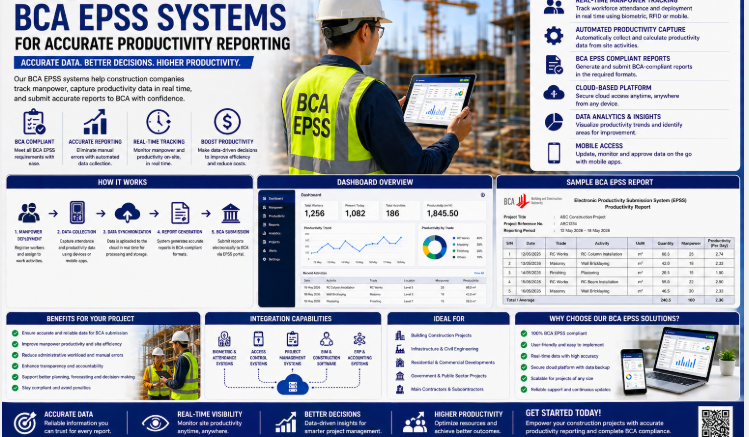
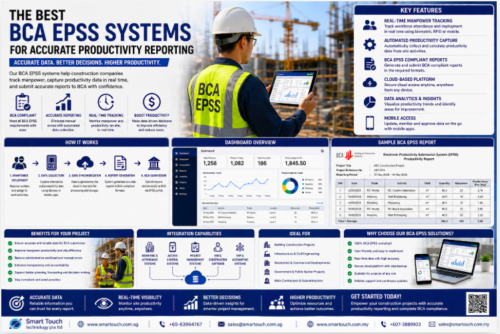
Smart Touch Technology Singapore offers the BCA EPSS solution, specifically designed to meet the complex attendance management needs of healthcare facilities and other organisations across Singapore. The BCA EPSS combines biometric attendance technology with comprehensive personnel scheduling and centralised business record management.
The system enables healthcare facilities to:
- Centralise all attendance data in a single, secure platform
- Integrate biometric verification to ensure accurate, tamper-proof records
- Generate real-time reports for managers and administrators
- Automate payroll data integration to reduce manual processing
- Maintain comprehensive audit trails for compliance purposes
- Scale efficiently as your healthcare organisation grows
By implementing BCA EPSS, healthcare facilities in Singapore can transform attendance management from a time-consuming administrative task into an efficient, accurate, and compliant process that supports better business decisions.
For a complete breakdown of features and modules, visit our product page here: https://smartouch.com.sg/bca-bas-epss-solution/
Getting Started with an EPSS Biometric System
Implementing a new attendance system requires careful planning, but the process becomes manageable when you work with an experienced provider.
Assess Your Current Needs
Evaluate your facility’s specific requirements—number of staff, shift patterns, integration needs, and compliance obligations. Understanding these needs helps you select the right system.
Choose the Right Provider
Partner with a provider experienced in healthcare environments who understands the unique demands of medical facilities.
Plan Your Implementation
Work with your provider to develop a phased implementation plan that minimises disruption to daily operations.
Train Your Team
Ensure all staff—from frontline workers to administrators—receive proper training on using the new system.
Monitor and Optimise
After implementation, continuously monitor system performance and gather feedback to optimise processes over time.
Conclusion
Centralising business records through a modern biometric attendance system is no longer optional for healthcare facilities in Singapore—it’s essential for operational efficiency, compliance, and patient care quality. The shift from fragmented, manual systems to an integrated EPSS with biometric verification delivers immediate and long-term benefits.
By implementing a comprehensive solution like the BCA EPSS from Smart Touch Technology Singapore, healthcare organisations can eliminate the inefficiencies of traditional attendance tracking, ensure accurate payroll processing, maintain regulatory compliance, and gain real-time visibility into workforce management. The result is a more efficient, accountable, and compliant healthcare operation.
Smart Touch technology pte ltd , www.smartouch.com.sg +65-63964767, sales@smartouch.com.sg , www.smartouch.com.my +607-3889903 sales@smartouch.com.my