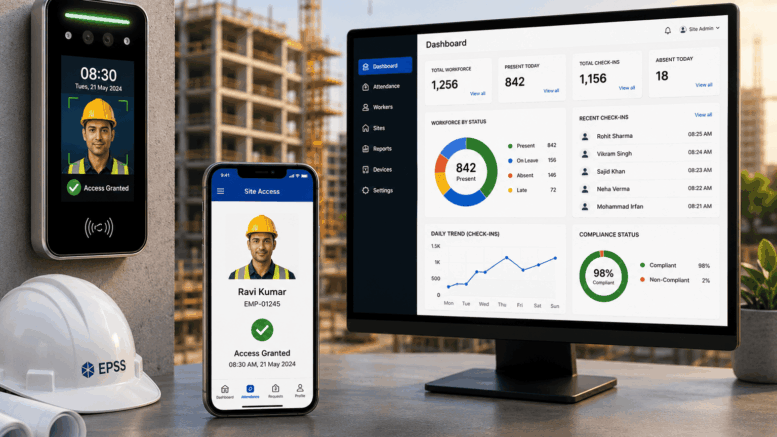
EPSS Biometric Attendance System for Co-Working Spaces: Simplify Daily Operations
Co-working spaces have transformed the way businesses operate in Singapore. From freelancers and startups to established enterprises looking for flexible office solutions, these shared environments offer cost-effective alternatives to traditional office leases. However, managing attendance and access control across multiple tenants, hot-desking arrangements, and varying occupancy levels presents a genuine operational challenge.
Manual attendance tracking, spreadsheets, and outdated sign-in systems simply do not scale efficiently in modern co-working environments. Business owners and facility managers need reliable, automated solutions that maintain security while reducing administrative burden. This is where biometric attendance systems become essential.
The BCA EPSS (Electronic Personnel Security System) biometric attendance system is specifically designed to address the unique needs of shared workspaces, providing streamlined operations, enhanced security, and accurate attendance records without the complexity of traditional systems.
Understanding the Co-Working Space Attendance Challenge
Co-working spaces operate differently from conventional offices. Members may work variable hours, use different desk locations, and share common facilities. This flexibility is attractive to tenants, but it creates operational complexity for facility management.
Common Attendance Management Issues
Without proper systems in place, co-working space operators face several recurring problems:
- Manual tracking inefficiency: Paper-based or spreadsheet attendance records are time-consuming to maintain and prone to errors.
- Security gaps: Unauthorised access, credential sharing, and unclear occupancy records compromise safety and compliance.
- Resource drain: Staff spend significant time verifying identities, processing sign-ins, and managing access requests.
- Member disputes: Unclear billing and access records can lead to misunderstandings with tenants regarding service usage.
- Compliance concerns: Co-working spaces may struggle to maintain proper occupancy records for insurance, safety, and regulatory purposes.
These challenges grow as the space scales. What works for a 10-desk operation becomes unmanageable at 50 or 100 desks.
Why Biometric Attendance Systems Matter for Co-Working Spaces
Biometric attendance technology provides a modern, reliable solution to these operational challenges. Rather than relying on manual processes or traditional ID cards that can be shared or lost, biometric systems use unique physical characteristics—such as fingerprints or facial recognition—to verify individual identity.
Key Advantages of Biometric Systems
In a co-working environment, biometric attendance offers several concrete benefits:
- Accurate identity verification: Each person is uniquely identified, eliminating proxy sign-ins or credential sharing.
- Faster access: Members move through entry points quickly without fumbling for cards or remembering passwords.
- Automated record-keeping: Attendance data is captured instantly and stored digitally, with no manual data entry required.
- Enhanced security: Clear audit trails and real-time occupancy data improve overall workspace safety and emergency response capability.
- Reduced administrative overhead: Facility staff spend less time on attendance management and more time on value-added tasks.
- Scalability: The system easily accommodates growing membership without additional complexity.
For co-working operators, these advantages translate to improved member satisfaction, better resource allocation, and reduced operational costs.
How EPSS Biometric Attendance System Supports Co-Working Operations
The BCA EPSS is a comprehensive biometric attendance and access control solution designed for modern shared workspaces. It simplifies daily operations through integrated features that address the specific needs of co-working environments.
Core Functionality for Shared Workspaces
EPSS provides straightforward biometric identification at entry points, capturing attendance data automatically as members arrive and depart. The system maintains a digital record of who is in the space at any given time, which is essential for safety, billing accuracy, and operational insights.
For co-working operators, this means:
- Reliable daily attendance records without manual intervention
- Clear visibility of workspace occupancy throughout the day
- Accurate data for billing and resource planning
- Secure access control aligned with membership status
Simplifying Multi-Tenant Operations
Co-working spaces typically serve multiple companies and independent professionals. EPSS helps manage this complexity by providing individual attendance tracking for each member while maintaining an overview of total space utilisation.
This capability supports various operational models common in Singapore co-working spaces:
- Full-time dedicated desk members
- Hot-desk and flexible workspace arrangements
- Part-time or occasional users
- After-hours and extended access requirements
Each member’s attendance is recorded individually, providing the granular data needed to manage diverse membership types fairly and transparently.
Practical Benefits for Co-Working Space Operators
Beyond core attendance tracking, implementing a biometric system like EPSS delivers tangible operational improvements for co-working businesses.
Improved Billing Accuracy
Accurate attendance records form the foundation of fair billing in co-working spaces. Whether charging by hours used, by desk occupancy, or by facility access, precise data ensures billing aligns with actual service delivery. This reduces disputes and increases member confidence in the fairness of charges.
Enhanced Safety and Compliance
In the event of an emergency, knowing exactly who is in the building at any moment is critical. EPSS provides real-time occupancy data that supports evacuation procedures and emergency response. Additionally, maintaining accurate attendance records helps co-working operators meet their duty of care and comply with workplace safety obligations.
Data-Driven Insights
Automated attendance data reveals patterns in space usage, peak occupancy times, and member behaviour. These insights inform decisions about facility expansion, resource allocation, and marketing strategies. For example, if data shows certain desks remain underutilised during specific hours, operators can adjust pricing, promote those slots, or allocate the space differently.
Reduced Administrative Work
Eliminating manual attendance tracking frees facility staff to focus on member experience, facility maintenance, and business development. This shift from administrative tasks to value-added activities improves overall service quality.
Addressing Security and Privacy Considerations
When implementing biometric systems, co-working operators must balance security benefits with member privacy concerns. This is an important consideration in Singapore, where privacy is taken seriously.
Key practices include:
- Clear communication: Inform all members about the biometric system, what data is collected, and how it is used.
- Data security: Ensure biometric data and attendance records are stored securely and accessed only by authorised personnel.
- Transparent policies: Establish clear policies regarding data retention, access, and usage that members can easily understand.
- Compliance: Ensure the system complies with relevant Singapore data protection and privacy regulations.
Members are generally supportive of biometric systems when they understand the security and convenience benefits, and when privacy safeguards are clearly communicated.
Selecting the Right Biometric System for Your Co-Working Space
Not all attendance systems are equally suited to co-working environments. When evaluating options, consider these factors:
- Scalability: Can the system grow as your membership expands? Does adding new users or devices require significant effort?
- Reliability: How consistently does the biometric recognition work? False rejections frustrate members and create delays.
- Integration: Does the system integrate with your existing tools for billing, access control, or facility management?
- User experience: Is the system intuitive and fast? Members should be able to use it without training or frustration.
- Support: Does the vendor provide reliable technical support when issues arise?
- Cost structure: Are pricing and licensing models transparent and aligned with your operational needs?
These considerations help ensure that the system you select genuinely improves operations rather than creating new challenges.
How Smart Touch Technology Singapore Can Help
Smart Touch Technology Singapore offers the BCA EPSS biometric attendance system specifically designed for organisations with complex operational needs like co-working spaces. EPSS provides reliable biometric identification, automated attendance tracking, and integration capabilities that streamline daily operations.
By implementing EPSS, co-working space operators gain:
- A professional, scalable attendance management solution
- Reliable biometric verification that reduces security risks
- Accurate data for billing, safety, and operational decision-making
- Reduced administrative burden on facility staff
For a complete breakdown of features and modules, visit our product page here: https://smartouch.com.sg/bca-bas-epss-solution/
Getting Started with Biometric Attendance in Your Co-Working Space
Implementing a new system may seem daunting, but the process is straightforward when approached systematically.
Implementation Steps
1. Assess your current process: Understand your current attendance tracking method, pain points, and operational requirements.
2. Define your needs: Determine what functionality is most important—basic attendance tracking, access control, billing integration, or reporting capabilities.
3. Evaluate solutions: Research and compare systems that meet your specific needs and budget.
4. Plan the rollout: Decide how to introduce the system to members and staff. Phased rollout often works better than immediate switchover.
5. Communicate clearly: Explain the system to members before launch, addressing privacy concerns and highlighting benefits.
6. Train your team: Ensure staff understand system administration, troubleshooting, and how to support members.
7. Monitor and optimise: Track system performance and member feedback, making adjustments as needed.
A well-planned implementation typically results in smooth adoption and rapid realisation of operational benefits.
Conclusion
Co-working spaces represent a growing segment of Singapore’s flexible workspace market. To operate efficiently and provide excellent member experience, these spaces need reliable systems that automate routine tasks while maintaining security and accuracy.
Biometric attendance systems like EPSS address the core operational challenges of co-working environments—manual tracking, security gaps, resource inefficiency, and billing accuracy. By automating attendance capture and providing real-time occupancy data, these systems free operators to focus on member satisfaction and business growth.
If your co-working space currently relies on manual attendance tracking or outdated systems, biometric technology offers a modern, scalable solution. The investment typically pays for itself through improved efficiency, reduced disputes, and better data for decision-making.
Smart Touch technology pte ltd, www.smartouch.com.sg +65-63964767, sales@smartouch.com.sg, www.smartouch.com.my +607-3889903 sales@smartouch.com.my