An access control reporting system is no longer a secondary feature in modern building security. It has become a central management tool for organizations that need more than simple door locking and unlocking. Today, businesses require clear visibility into who entered a site, when access was granted, which department accessed a restricted area, and how security policies are enforced across multiple doors and facilities. That is exactly where a powerful access control reporting system creates value.
For companies that want stronger security, better accountability, and more efficient administration, our approach to access management must go beyond basic credentials. We need a solution that combines intelligent entry control with meaningful reports, audit trails, and system-wide oversight. When integrated with a modern door access control system, reporting becomes the foundation for compliance, incident response, workforce monitoring, and decision-making.
A modern Smartouch door access control solution includes features such as credential-based authentication, biometric options, IP-based controllers, scheduling, event logs, and integrations designed for offices, factories, schools, hospitals, and high-security environments. The linked Smartouch page highlights components such as card readers, biometric readers, controllers, locks or barriers, and management software, along with solutions like Falco Web and Hikvision SmartFace ST-331.
What Is an Access Control Reporting System?
An access control reporting system is the reporting and monitoring layer within a broader access security platform. While the access control hardware manages entry permissions, the reporting system records, organizes, and presents data in a useful format. Instead of relying on assumptions, our management team can review real-time events and historical logs to understand exactly what is happening throughout the premises.
These reports may include:
- Entry and exit time records
- Unauthorized access attempts
- Door forced-open events
- Door held-open alerts
- User-specific access history
- Department or zone-based movement reports
- Visitor and contractor access tracking
- Audit records for compliance reviews
This transforms an ordinary security setup into an intelligent operational system. Rather than merely controlling entry, our organization gains the ability to measure behavior, identify weaknesses, and improve internal security standards.
Why Access Control Reporting Matters More Than Ever
Many companies install access control for convenience, but the real long-term value lies in reporting. An access control reporting system provides the data needed to make security measurable.
When a business operates without structured access reports, it becomes difficult to answer critical questions. Who entered the server room after hours? Which employee attempted repeated access to a restricted area? Was the warehouse side door left open too long? Are access privileges still aligned with current staff roles? Without reliable reports, these questions become time-consuming investigations.
With a proper reporting system, we can answer them in minutes.
This matters in nearly every industry:
Corporate Offices
In office environments, access reports help management track staff movement, protect confidential rooms, and maintain control over sensitive departments such as finance, HR, IT, and executive offices.
Manufacturing and Warehousing
Factories and warehouses often have high-value inventory, machinery, and restricted production zones. Reporting helps identify unusual movement, verify shift-based access patterns, and support internal investigations.
Healthcare Facilities
Hospitals and clinics require strict access control over medicine rooms, records departments, laboratories, and staff-only areas. Reporting helps maintain accountability and reinforces secure operations.
Educational Institutions
Schools, colleges, and training centers need controlled access for staff rooms, labs, administrative offices, and student facilities. A reporting system helps administrators manage traffic flow and improve campus security.
Multi-Site Enterprises
Organizations with multiple branches need centralized oversight. A robust reporting platform allows us to compare access patterns across locations and manage a unified security policy.
The Smartouch page specifically positions access control systems as important for offices, schools, factories, and hospitals, and describes the management software as a platform for tracking events, configuring schedules, and supporting compliance.
Core Features of a Modern Access Control Reporting System
A quality access control reporting system should do much more than display a simple log list. It should provide practical intelligence that supports everyday management and long-term planning.
Real-Time Event Monitoring
Real-time reporting allows our team to see entry activity as it happens. If there is a forced door event, repeated invalid card attempt, or abnormal after-hours entry, the system can immediately alert administrators.
Historical Audit Trails
Historical logs are essential for reviewing incidents. Whether we need to investigate a security breach or confirm attendance in a particular area, an access control reporting system stores the records needed for evidence-based decisions.
User-Based Access Reports
Our system should allow reports filtered by employee, department, contractor, visitor, or credential type. This helps security teams quickly review a specific user’s activity.
Door and Zone Reports
Not all risks come from individuals. Sometimes the concern is a specific entry point. Door-based reports help identify frequently triggered alarms, access bottlenecks, or unsecured areas.
Time and Attendance Correlation
Many businesses benefit from linking access control records with workforce management. Reports that correlate entry times with attendance data can improve payroll accuracy, shift management, and discipline procedures.
Scheduled Reporting
Automated daily, weekly, or monthly reports save administrative time. Managers can receive summaries for key areas without having to manually run searches every day.
Exception Reporting
Exception-based reporting highlights only unusual events, such as denied access attempts, unauthorized timing, or repeated door alarms. This keeps management focused on what truly needs attention.
The Connection Between Door Access Control and Reporting
An access control reporting system is only as strong as the door access control infrastructure behind it. If the hardware is outdated or isolated, reporting quality suffers. That is why businesses should choose a complete system where hardware, software, and reporting work together seamlessly.
According to the Smartouch page, a modern door access control system includes credentials, readers, controllers, locks or barriers, and management software. It also supports technologies such as card access, biometric access, turnstile integration, and IP-based control.
This integrated design is important because every access event must be accurately captured and stored. When a user taps a card, scans a fingerprint, or authenticates through facial recognition, that event should flow directly into the reporting dashboard. From there, our administrators should be able to search, export, analyze, and act on the data.
That is how security becomes strategic rather than reactive.
How Smartouch Supports Smarter Access Reporting
Businesses looking for a dependable foundation for reporting should consider a scalable and intelligent access platform. The Smartouch door access control page presents solutions designed for both small and large organizations, including IP-based systems and facial recognition terminals.
One highlighted solution is Falco Web, described as a localized IP access control system designed by Malaysian engineers for high-security environments. The page states that it supports peer-to-peer communication, up to 150,000 users, 80,000 logs, flexible authentication modes, advanced scheduling, and integration with other security components.
This matters greatly for reporting. Large user capacity and event storage mean our organization can maintain detailed historical records without losing visibility. Flexible authentication also gives us richer data. Instead of just knowing that a door opened, we can identify whether the event happened through card access, PIN entry, or biometric verification.
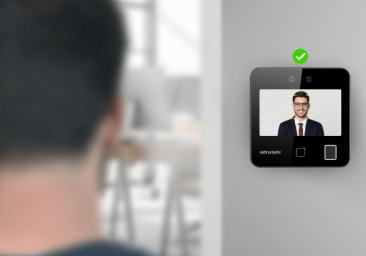
The page also features Hikvision SmartFace ST-331, a facial recognition terminal with rapid recognition, anti-spoofing capability, and integration with cloud platforms such as Hik-ProConnect and HikCentral Pro. It is presented as suitable for commercial, medical, corporate, and residential use cases.
From a reporting perspective, facial recognition access can reduce credential sharing, improve identity accuracy, and strengthen confidence in user-level reports. In environments where accountability is crucial, this can significantly enhance the reliability of access records.
Benefits of an Access Control Reporting System for Business Growth
A strong reporting system is not only about security. It also contributes to efficiency, compliance, and business credibility.
Better Security Governance
When access data is organized and searchable, our management team can enforce security policies consistently. We can verify whether permissions are appropriate and whether those permissions are being used responsibly.
Faster Investigations
If an issue occurs, time matters. A good reporting platform reduces the time needed to investigate incidents by presenting relevant access history immediately.
Improved Compliance Readiness
Many industries must maintain records for audits, safety requirements, or internal governance. Access reports support documentation and demonstrate that the organization takes security seriously.
Reduced Administrative Burden
Automated reporting reduces manual work for HR, facilities, and security teams. Instead of compiling spreadsheets and checking logs by hand, reports can be generated instantly.
Data-Driven Expansion
As businesses grow, security management becomes more complex. Reporting helps leadership understand usage patterns and decide where to expand, tighten, or redesign access policies.
What Businesses Should Look for Before Choosing a System
Not all systems offer the same depth of reporting. Before selecting a solution, our organization should assess whether the platform can support present needs and future expansion.
Key considerations include:
- User and log storage capacity
- Real-time monitoring capability
- Easy report filtering and export
- Multi-site visibility
- Integration with biometrics and attendance
- Role-based access management
- Cloud or IP-based flexibility
- Reliable fail-safe data storage
- Support for scheduled access rules
The Smartouch page emphasizes features such as advanced scheduling, fail-safe storage using Flash and EEPROM memory, compatibility with security systems, and scalable support from startups to large enterprises.
These elements are highly relevant because a reporting system must remain dependable even when operations grow more demanding.
Why This Keyword Matters: Access Control Reporting System
From an SEO perspective, access control reporting system is a valuable keyword because it captures users with stronger commercial intent. People searching this phrase are usually not looking for general security advice. They are looking for a practical solution that can record access activity, produce reports, and support operational control.
That makes this keyword ideal for attracting:
- Facility managers
- Security managers
- Operations directors
- IT administrators
- HR teams
- Compliance officers
- Building owners
- Multi-branch business operators
By aligning our content with this search intent, we position the page not only for visibility but also for qualified enquiries.
Recommended Internal Link Placement
To strengthen the article’s SEO and conversion value, we should naturally link a relevant phrase such as door access control system within the content to the Smartouch solution page. This creates stronger topic relevance between the article and the product page while guiding readers toward a direct business action.
A suitable anchor text inside the article would be:
door access control system
This anchor can be placed naturally in sections discussing system features, integrations, or Smartouch solutions.
Final Thoughts
An access control reporting system is one of the most important tools for any organization that wants stronger physical security, clearer accountability, and smarter operational oversight. It allows us to move beyond simple door permissions and into a model where every access event becomes useful business intelligence.
When paired with a modern door access control system, reporting helps our organization monitor user activity, investigate incidents, enforce access policies, improve compliance, and scale security with confidence. Smartouch’s access control solutions are presented as comprehensive systems that include software-driven monitoring, flexible authentication, IP-based infrastructure, and scalable deployment for many industries.
For businesses ready to improve security with better reporting, this is not just a technology upgrade. It is a smarter way to manage people, premises, and risk.
Smart Touch technology pte ltd , www.smartouch.com.sg +65-63964767, sales@smartouch.com.sg , www.smartouch.com.my +607-3889903 sales@smartouch.com.my