Introduction
Managing canteen subsidies in Singapore workplaces, schools, and institutions involves significant administrative complexity and financial considerations. Whether you operate a corporate cafeteria, educational institution, or large organisation with employee dining facilities, tracking subsidy allocations, ensuring fair distribution, and maintaining accurate financial records can consume considerable time and resources.
An automated canteen subsidy management system addresses these challenges by streamlining the entire process—from subsidy allocation and spending tracking to reporting and compliance. For Singapore businesses and organisations, implementing the right system can reduce administrative overhead, improve transparency, and ensure that subsidy programmes achieve their intended goals of supporting employees, students, or beneficiaries.
This article explores how automated canteen subsidy management systems work, why they matter for Singapore organisations, and how they can transform your canteen operations.
Understanding Canteen Subsidy Management
What Is a Canteen Subsidy System?
A canteen subsidy system is a structured approach to providing financial support for meals within an organisation’s dining facilities. Subsidies help reduce meal costs for employees, students, or other beneficiaries, making nutritious food more accessible and affordable.
Manual subsidy management typically involves:
- Recording subsidy allocations for individuals or groups
- Tracking spending against allocated budgets
- Processing reimbursements or adjustments
- Generating reports for financial audit and compliance purposes
- Managing exceptions and special cases
Without proper systems, these tasks create bottlenecks, increase the risk of errors, and make it difficult to maintain accurate financial records.
Why Canteen Subsidy Management Matters in Singapore
In Singapore’s competitive employment landscape, organisations use canteen subsidies as part of their employee benefits packages to improve workplace satisfaction and well-being. Schools and institutions similarly use subsidies to support students from different socioeconomic backgrounds.
However, managing subsidies effectively requires careful oversight to ensure:
- Fair and equitable distribution of subsidy benefits
- Accurate tracking of spending and budget utilisation
- Compliance with organisational policies and financial controls
- Timely and transparent reporting to stakeholders
- Prevention of fraud or misuse of subsidy funds
Manual processes struggle to meet these requirements consistently, particularly as organisations scale.
Common Challenges with Manual Canteen Subsidy Management
Administrative Burden
Manually managing subsidy allocations, tracking transactions, and updating records is labour-intensive. Staff members responsible for canteen administration spend significant time on spreadsheets, paper records, and manual reconciliation—work that could be redirected to more strategic tasks.
Data Accuracy and Consistency
Manual entry and tracking processes are inherently prone to errors. Duplicate entries, missing transactions, incorrect allocations, and calculation mistakes can accumulate, leading to inaccurate financial records and discrepancies that are difficult to identify and resolve.
Limited Visibility and Reporting
Without automated systems, generating meaningful reports on subsidy usage, spending patterns, and budget status becomes time-consuming. This lack of visibility makes it difficult for management to assess programme effectiveness or identify areas for improvement.
Difficulty Enforcing Controls
Manual systems struggle to enforce consistent policies regarding subsidy limits, eligibility criteria, and spending rules. This increases the risk of policy violations, unauthorised spending, or subsidy abuse.
Scalability Issues
As organisations grow and the number of beneficiaries increases, manual systems become increasingly unwieldy. What worked for a small group becomes impractical for a large workforce or institution.
How Automated Canteen Subsidy Management Systems Work
Core Functionality
An automated canteen subsidy management system uses digital technology to centralise and streamline all aspects of subsidy administration. Key functions typically include:
- Subsidy allocation and crediting: Automatically allocate subsidies to individuals or groups based on predefined criteria, with credits applied directly to accounts or digital wallets.
- Transaction tracking: Record every purchase and subsidy usage in real-time, creating an accurate audit trail.
- Balance monitoring: Display current subsidy balances and spending against allocated amounts for both administrators and beneficiaries.
- Budget management: Monitor overall subsidy programme spending against departmental or organisational budgets.
- Reporting and analytics: Generate detailed reports on spending patterns, programme utilisation, and financial performance.
- Integration with canteen operations: Connect directly with point-of-sale systems or payment terminals to enable seamless subsidy application at the point of purchase.
User Experience for Beneficiaries
From the perspective of employees, students, or other subsidy recipients, automated systems are straightforward. Beneficiaries can check their subsidy balance at any time, understand how much they have spent, and manage their remaining allocation. At the point of purchase, subsidies are applied automatically or with a simple transaction confirmation, making the canteen experience faster and more convenient.
Administrator and Management Functions
Administrators gain powerful tools to manage the entire programme. They can set up subsidy rules, monitor spending in real-time, generate compliance reports, and identify anomalies or potential issues. Management receives clear visibility into programme costs, participation rates, and effectiveness, enabling data-driven decision-making.
Key Benefits of Automated Canteen Subsidy Management
Improved Efficiency
Automation eliminates manual data entry and reconciliation, freeing staff to focus on strategic priorities rather than administrative tasks. Processing subsidy transactions and generating reports that once took hours can now be completed in minutes.
Enhanced Accuracy
Automated systems significantly reduce errors in record-keeping, calculations, and reporting. All transactions are captured consistently and consistently applied according to predefined rules, eliminating the discrepancies common in manual systems.
Better Financial Control
Organisations gain granular control over subsidy spending. Administrators can set spending limits, define eligibility criteria, restrict certain purchases, and ensure compliance with organisational policies. Real-time monitoring helps prevent overspending or misuse of subsidy funds.
Transparent Reporting and Compliance
Automated systems generate accurate, detailed reports that support financial audits, compliance reviews, and stakeholder reporting. The transparent record of all transactions makes it easy to verify that subsidy programmes are operating as intended.
Enhanced User Experience
Beneficiaries appreciate the convenience of automated subsidy application and the ability to check their balance anytime. The faster, smoother canteen experience improves satisfaction and reduces friction at point-of-sale.
Scalability
Automated systems handle large numbers of beneficiaries and transactions without proportional increases in administrative effort. Whether you manage subsidies for 50 people or 5,000, the system scales to support your needs.
Smart Touch Canteen Solution for Subsidy Management
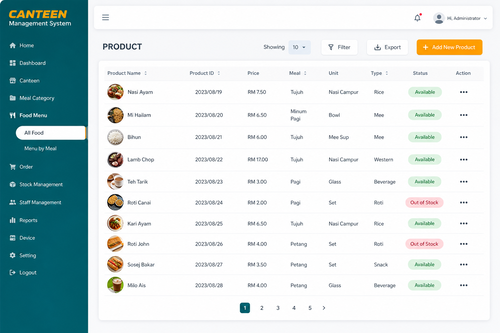
Smart Touch Technology’s canteen system provides a comprehensive platform designed to streamline canteen operations in Singapore organisations, schools, and institutions. The system integrates subsidy management with point-of-sale functionality, creating a seamless experience for both administrators and users.
How Smart Touch Supports Subsidy Management
The Smart Touch canteen solution enables organisations to:
- Automate subsidy allocation and crediting based on organisational rules
- Track subsidy usage and spending in real-time
- Enforce spending limits and policy controls automatically
- Generate detailed reports on subsidy programme performance
- Integrate with existing payment systems and point-of-sale terminals
- Provide beneficiaries with self-service access to check balances and transaction history
By centralising canteen operations and subsidy management on a single platform, organisations eliminate the need to manage multiple systems and reconcile data across different sources. This integrated approach reduces errors, improves operational visibility, and simplifies compliance.
Practical Implementation Considerations
Implementing an automated canteen subsidy system requires careful planning. Organisations should:
- Clearly define subsidy policies and allocation rules before system setup
- Ensure the system can accommodate your specific eligibility criteria and spending controls
- Plan for staff training so administrators and canteen operators understand the new system
- Establish a transition plan from manual to automated processes
- Test the system thoroughly with a pilot group before full-scale rollout
Smart Touch Technology can guide organisations through these implementation steps, ensuring a smooth transition to automated subsidy management.
Best Practices for Canteen Subsidy Management
Define Clear Policies and Criteria
Before implementing any system, establish transparent policies for subsidy allocation, eligibility, spending limits, and any restrictions. Clear policies make administration more straightforward and help beneficiaries understand how the programme works.
Regularly Monitor and Review Spending
Use the reporting and analytics capabilities of your subsidy management system to monitor spending patterns, identify trends, and assess programme effectiveness. Regular reviews help ensure the subsidy programme is achieving its intended goals.
Communicate Programme Benefits
Ensure that eligible employees, students, or beneficiaries understand how to access and use subsidy benefits. Clear communication maximises participation and satisfaction with the programme.
Maintain Transparent Records
Keep accurate, accessible records of all subsidy allocations and spending. Transparency builds trust and simplifies compliance with organisational and regulatory requirements.
Periodically Assess Programme Effectiveness
Use data from your automated system to evaluate whether the subsidy programme is delivering value—whether beneficiaries are satisfied, spending is in line with projections, and the programme aligns with organisational objectives.
Conclusion
An automated canteen subsidy management system transforms how Singapore organisations administer subsidies, moving from time-consuming manual processes to streamlined, accurate, and scalable digital operations. The benefits extend across the organisation—from reduced administrative burden and improved financial control for management, to faster transactions and transparent balance tracking for beneficiaries.
Smart Touch Technology’s canteen solution provides a practical, integrated platform for managing subsidies effectively while maintaining operational visibility and ensuring compliance. Whether you are a large corporation, educational institution, or public sector organisation in Singapore, automated subsidy management can improve efficiency, accuracy, and user satisfaction.
If you are ready to explore how automated canteen subsidy management can benefit your organisation, reach out to Smart Touch Technology to discuss your specific requirements and learn how their canteen system can support your goals.
Smart Touch technology pte ltd , www.smartouch.com.sg +65-63964767, sales@smartouch.com.sg , www.smartouch.com.my +607-3889903 sales@smartouch.com.my