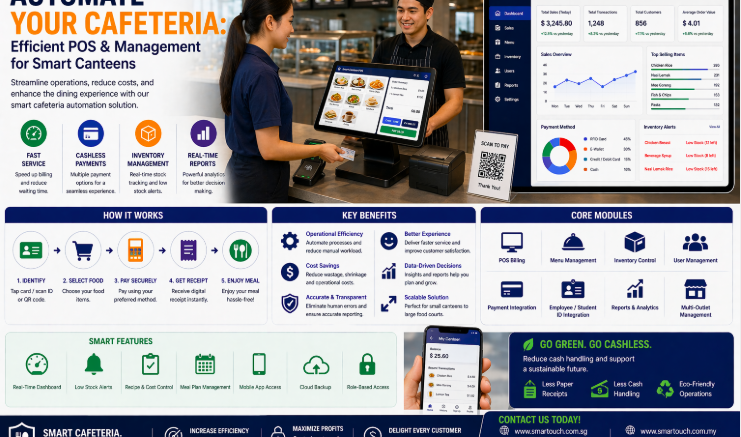
Singapore’s workplaces are constantly evolving, and with this evolution comes the need for smarter, more efficient operational systems. One area that often gets overlooked but significantly impacts daily employee experience is the canteen. From queuing times to payment delays, traditional canteen management presents numerous operational challenges that affect productivity and satisfaction. In 2026, canteen payment automation has become an essential investment for Singapore businesses, schools, hospitals, and large organisations looking to modernise their food service operations.
This article explores how canteen payment automation systems are reshaping workplace dining in Singapore, why they matter, and how organisations can benefit from implementing these solutions.
Understanding Canteen Payment Automation
Canteen payment automation refers to the implementation of digital systems that streamline the entire transaction process in workplace, institutional, or commercial food service environments. Rather than relying on cash transactions, manual accounting, or outdated point-of-sale systems, automated payment solutions enable employees, students, or customers to pay for food and beverages through convenient digital methods.
These systems typically integrate multiple payment channels, real-time transaction tracking, inventory management, and reporting capabilities into a single platform. This holistic approach transforms the canteen from a simple food counter into an efficiently managed revenue centre that enhances both customer experience and operational oversight.
Why Singapore Organisations Need Canteen Payment Automation in 2026
Increasing Demand for Contactless Transactions
Following global trends toward touchless interactions, Singapore organisations have recognised the value of minimising physical contact points. Canteen payment automation eliminates the need for cash handling and physical payment card swiping, creating a safer, more hygienic dining environment for employees and customers.
Labour Cost Management
Staff shortages and rising wages are persistent challenges in Singapore’s F&B sector. Automated payment systems reduce the administrative burden on canteen operators, allowing them to focus on food quality and service rather than manual cashiering and reconciliation. This efficiency translates directly to cost savings and better resource allocation.
Improved Customer Experience
Long queues and payment delays frustrate employees during lunch breaks. A streamlined payment process reduces waiting times significantly, allowing more people to be served during peak hours. This improved experience directly correlates with higher employee satisfaction and increased canteen usage.
Data-Driven Operations
Organisations gain valuable insights into purchasing patterns, popular menu items, peak service times, and revenue trends. This data enables better inventory planning, menu optimisation, and pricing strategies that align with customer preferences and operational capacity.
Common Challenges with Traditional Canteen Systems
Before exploring solutions, it’s important to understand the operational pain points that canteen payment automation addresses:
- Cash handling risks: Managing cash creates security concerns, requires regular reconciliation, and ties up administrative resources
- Long queues: Manual payment processing slows service, particularly during peak lunch hours
- Inventory discrepancies: Without automated tracking, businesses struggle to match food costs with sales
- Limited financial visibility: Manual systems make it difficult to generate accurate, timely financial reports
- Hygiene concerns: Cash and contact-based payments pose infection transmission risks
- Operational inefficiency: Staff spend excessive time on administrative tasks rather than customer service
Key Features of Modern Canteen Payment Systems
Multiple Payment Methods
Contemporary canteen payment automation supports various payment channels, including mobile wallets, contactless cards, QR code payments, and traditional card transactions. This flexibility accommodates different user preferences and ensures no customer is excluded from the system.
Real-Time Transaction Processing
Transactions are processed instantly, providing immediate confirmation to both the customer and the system. Real-time processing eliminates discrepancies and ensures accurate financial records from the moment a purchase is made.
Integrated Inventory Management
When a meal or item is purchased, the system automatically updates inventory levels. This prevents stockouts, reduces food wastage, and provides insights into which items are most popular.
Comprehensive Reporting and Analytics
Automated systems generate detailed reports on sales, revenue, transaction volumes, and customer behaviour. These insights enable informed decision-making regarding menu planning, staffing, and pricing strategies.
Employee or User Account Management
Systems typically include features for managing user accounts, prepaid balances, spending limits, and transaction history. Some organisations use this to offer subsidised meals or manage nutritional guidelines for employees.
How Smart Touch Technology’s Canteen Solution Addresses These Challenges
Smart Touch Technology offers a comprehensive canteen payment automation system designed specifically for Singapore organisations. The canteen solution streamlines payment processing, integrates with existing operations, and provides the visibility needed for efficient management.
By implementing Smart Touch’s canteen system, organisations can:
- Process payments faster, reducing queue times and improving customer satisfaction
- Eliminate cash handling, improving security and reducing administrative overhead
- Access real-time sales and inventory data for better operational decision-making
- Support multiple payment methods, accommodating diverse user preferences
- Generate detailed reports for financial tracking and performance analysis
The system is designed to be user-friendly for both canteen operators and end users, minimising the learning curve and ensuring smooth implementation. Integration capabilities allow the solution to work alongside existing organisational systems, making adoption straightforward.
Implementation Considerations for Singapore Organisations
Scalability Requirements
Consider the size of your organisation and expected transaction volumes. The system should handle peak-hour demand without performance degradation. A good solution scales efficiently as your organisation grows.
User Adoption
Ensure your employees or customers understand how to use the system. Organisations should plan training sessions and provide clear instructions. Most modern systems are intuitive, but change management is important for successful adoption.
Security and Data Privacy
Given Singapore’s data protection regulations, ensure your chosen system complies with relevant privacy standards. Payment data should be encrypted and protected according to industry best practices.
Vendor Support and Maintenance
Select a provider that offers reliable local support and regular system maintenance. In Singapore’s competitive market, responsive vendor support is essential for minimising downtime and resolving issues quickly.
Integration with Existing Systems
Verify that the canteen payment system can integrate with your current HR, accounting, or operational systems. Seamless integration reduces manual data entry and ensures consistency across platforms.
Expected Benefits and ROI
Organisations implementing canteen payment automation typically experience several quantifiable benefits:
- Reduced operational costs: Less time spent on manual payment processing and reconciliation
- Faster service: Transactions complete in seconds rather than minutes
- Improved accuracy: Automated systems eliminate human error in cash handling and accounting
- Better insights: Data-driven decisions optimise menu offerings and pricing
- Enhanced employee satisfaction: Smoother canteen experience contributes to overall workplace satisfaction
- Increased canteen revenue: Faster service encourages more people to use the canteen, increasing transaction volumes
The return on investment typically becomes apparent within the first year of implementation, particularly for larger organisations with significant daily transaction volumes.
Future Trends in Canteen Payment Automation
As Singapore continues its digital transformation journey, canteen payment systems are becoming more sophisticated. Integration with artificial intelligence for demand forecasting, personalised menu recommendations based on user preferences, and advanced analytics for nutritional tracking are emerging trends that organisations may consider in the coming years.
In 2026, the competitive advantage lies not just in adopting automated payment systems, but in choosing partners who continue to innovate and adapt to changing organisational needs.
Taking the Next Step
If your Singapore organisation is considering canteen payment automation, the key is to evaluate solutions that align with your specific operational requirements, budget, and growth plans. Look for providers who understand Singapore’s business environment and can offer reliable, scalable solutions with strong local support.
Smart Touch Technology specialises in canteen payment solutions tailored for Singapore organisations. Whether you operate a corporate canteen, institutional food service, or commercial dining facility, their system is designed to modernise your operations and enhance customer satisfaction. To learn more about how canteen payment automation can benefit your organisation, contact Smart Touch Technology for a consultation and demonstration.
Conclusion
Canteen payment automation is no longer a luxury but an operational necessity for forward-thinking Singapore organisations in 2026. The benefits—ranging from improved efficiency and reduced costs to enhanced employee satisfaction and data-driven insights—make a compelling business case for implementation.
By automating canteen payments, organisations demonstrate their commitment to modernising workplace operations, prioritising employee wellbeing, and adopting digital solutions that align with Singapore’s broader smart nation initiatives. As the competitive landscape evolves, organisations that invest in these systems today position themselves to deliver superior service quality tomorrow.
Smart Touch technology pte ltd, www.smartouch.com.sg +65-63964767, sales@smartouch.com.sg, www.smartouch.com.my +607-3889903 sales@smartouch.com.my