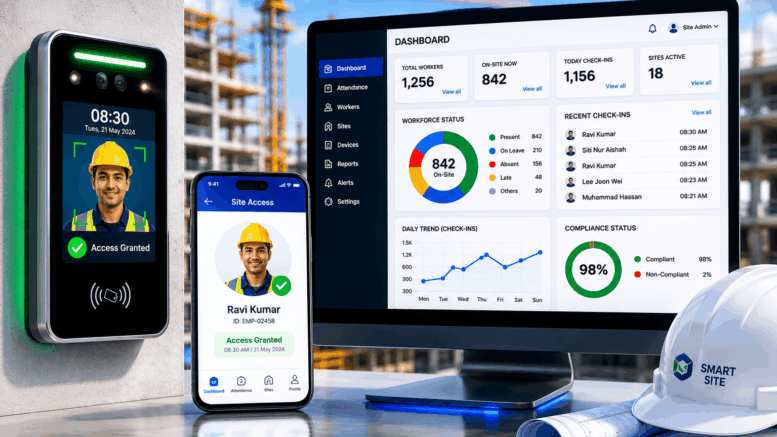
Introduction
Managing employee attendance is one of the most fundamental responsibilities of any organisation operating in Singapore. Yet despite its importance, many businesses still rely on outdated methods—manual timesheets, punch cards, or basic digital logs—that are prone to errors, buddy punching, and administrative overhead.
The challenge becomes even more significant as organisations grow. HR teams spend countless hours verifying attendance records, reconciling discrepancies, and processing payroll based on potentially inaccurate data. This not only wastes valuable time but can also lead to compliance issues and employee disputes.
A modern biometric attendance system addresses these challenges head-on. By using fingerprint recognition or other biometric identifiers, organisations can ensure accurate, tamper-proof attendance tracking that benefits both employers and employees. For Singapore businesses seeking reliable workforce management solutions, the BCA EPSS biometric attendance system offers a practical, efficient alternative to traditional methods.
Why Attendance Management Matters in Singapore Organisations
In Singapore’s fast-paced business environment, workforce management directly impacts operational efficiency and financial performance. Accurate attendance data is essential for several reasons:
- Payroll accuracy: Incorrect attendance records lead to payroll errors that frustrate employees and create administrative burdens.
- Compliance and documentation: Singapore organisations must maintain proper employment records and attendance documentation for regulatory purposes.
- Productivity tracking: Understanding actual working hours helps organisations identify patterns and optimise scheduling.
- Fraud prevention: Traditional attendance methods are vulnerable to manipulation, costing organisations money through false claims.
- Employee accountability: Clear, objective attendance records create transparency and fairness across the workforce.
Manual or semi-automated systems struggle to deliver reliable data at scale, particularly in organisations with multiple locations or shift-based operations.
Common Attendance Tracking Challenges
Manual Timesheets and Human Error
Handwritten timesheets and honour-based systems are vulnerable to mistakes. Employees may forget to clock in, supervisors may record times incorrectly, and the lack of systematic verification makes it difficult to identify discrepancies until payroll processing.
Buddy Punching and Fraud
One of the most common problems with traditional attendance systems is buddy punching—where one employee clocks in on behalf of another. This practice artificially inflates working hours, misrepresents productivity, and creates unfair compensation issues. Without objective verification, it’s nearly impossible to detect.
Administrative Overhead
Processing attendance records manually is time-consuming. HR teams must cross-reference multiple documents, handle exceptions, investigate discrepancies, and manually input data into payroll systems. This administrative burden diverts resources from more strategic HR activities.
Lack of Real-Time Visibility
Traditional methods provide little real-time insight into workforce presence. Managers cannot quickly determine who is on-site, leading to scheduling challenges and operational inefficiencies.
How Biometric Attendance Systems Work
Biometric attendance systems use unique biological identifiers—most commonly fingerprints—to verify employee identity and automatically record attendance. When an employee approaches a biometric device, they place their finger on a scanner. The system compares the fingerprint against the enrolled database and records the timestamp if there is a match.
This approach eliminates the possibility of proxy attendance. Only the registered individual can produce a matching biometric, making fraud virtually impossible. The system records attendance data automatically and stores it digitally, creating an accurate, auditable trail.
Key Benefits of Biometric Attendance Systems
Accuracy and Reliability
Biometric systems remove the guesswork from attendance tracking. Fingerprints are unique to each individual and cannot be replicated, ensuring that every attendance record is genuine and attributable to the correct person.
Fraud Prevention
By making buddy punching impossible, biometric systems protect organisational payroll budgets. Employees know they cannot clock in on behalf of colleagues, eliminating this source of time theft.
Time Savings
Automated attendance recording drastically reduces administrative work. Data is captured instantly and stored electronically, eliminating hours spent manually processing timesheets and reconciling records.
Real-Time Reporting and Analytics
Digital biometric systems generate immediate reports on workforce presence, attendance patterns, and absences. Managers gain real-time visibility into who is on-site, enabling better resource allocation and operational planning.
Improved Compliance
Organisations benefit from comprehensive attendance records that can be easily audited and verified. This supports compliance with employment documentation requirements and provides clear evidence in case of disputes.
Enhanced Employee Experience
While employees cannot manipulate attendance, fair and transparent systems build trust. Employees appreciate objective, automated systems that prevent colleagues from claiming hours they did not work, creating a more equitable workplace.
Practical Considerations for Singapore Businesses
Implementation and Integration
When adopting a biometric attendance system, integration with existing HR management and payroll platforms is essential. The system should seamlessly connect with your current workflows to minimise disruption and maximise efficiency gains.
Employee Acceptance
Introducing biometric systems requires clear communication with employees about how the technology works, what data is collected, and how it will be used. Transparency helps address concerns and encourages adoption.
Data Security and Privacy
Biometric data is sensitive information. Any system used to collect and store fingerprints must incorporate strong security measures to protect employee privacy and comply with applicable data protection requirements. It is advisable to verify that your chosen system meets recognized security standards.
Device Placement and Accessibility
For maximum effectiveness, biometric devices should be positioned at key entry points and accessible to all employees. For organisations with multiple locations or shift-based operations, device placement strategy directly impacts system effectiveness.
The BCA EPSS Biometric Attendance System Solution
The BCA EPSS biometric attendance system is designed specifically to address the attendance management challenges faced by Singapore organisations. It provides a reliable, user-friendly platform for capturing and managing attendance data through biometric verification.
Key capabilities include fingerprint-based identification, automatic attendance recording, digital data storage, and reporting functionality. By automating the attendance process, the BCA EPSS system reduces administrative overhead while delivering the accuracy and fraud prevention that modern organisations require.
The system integrates with existing HR and payroll workflows, enabling seamless data flow from attendance capture through to compensation processing. This integration eliminates manual data entry and reduces the risk of errors in payroll calculations.
For Singapore businesses operating across multiple locations or managing large workforces, the BCA EPSS system provides centralised attendance management with real-time visibility across the organisation.
Implementation Best Practices
Plan Your Deployment
Before implementing a biometric system, map out your current attendance processes, identify pain points, and determine where biometric devices should be positioned. Consider shift patterns, multiple work locations, and peak traffic times.
Communicate Clearly with Employees
Explain the purpose of the system, how it works, and what it means for employees. Address concerns about privacy and data security. Clear communication helps ensure smooth adoption and builds confidence in the system.
Enrol Employees Properly
Accurate biometric enrolment is critical to system performance. Ensure that all employees are properly enrolled with clear, high-quality fingerprint captures. Poor enrolment quality leads to false rejections and user frustration.
Monitor Initial Performance
After deployment, monitor the system closely to identify any issues with device placement, enrolment quality, or integration with HR systems. Early intervention prevents minor issues from becoming major problems.
Train Staff
Ensure that HR, payroll, and management staff understand how to use the system, interpret reports, and investigate any attendance discrepancies that may arise.
Conclusion
Attendance management is too important to leave to manual processes. For Singapore organisations seeking to improve accuracy, prevent fraud, reduce administrative burden, and gain real-time workforce visibility, a biometric attendance system represents a practical, modern solution.
The BCA EPSS biometric attendance system addresses the core challenges that traditional attendance methods cannot solve. By automating attendance capture through fingerprint verification, the system delivers the reliability, security, and efficiency that growing organisations require.
If your organisation is currently struggling with manual attendance management, experiencing buddy punching, or spending excessive time on payroll administration, it may be time to explore a biometric solution. Speak with Smart Touch Technology Singapore to learn how the BCA EPSS system can improve your attendance management processes and support your organisational goals.
Smart Touch technology pte ltd , www.smartouch.com.sg +65-63964767, sales@smartouch.com.sg , www.smartouch.com.my +607-3889903 sales@smartouch.com.my