Face Recognition Access Control Singapore for Healthcare Facilities: Reduce Manual Administration
Healthcare facilities across Singapore face mounting pressure to balance security, efficiency, and operational costs. Managing access to sensitive areas—from patient records storage to medication dispensaries—requires reliable systems that protect both patient confidentiality and staff safety. Traditional methods of access control, such as ID cards and manual logbooks, consume valuable administrative time and introduce human error into critical security processes.
For healthcare administrators in Singapore, the challenge is clear: how can facilities maintain robust security without diverting clinical and administrative staff away from their primary responsibilities? The answer lies in modern, automated solutions that streamline access management while maintaining the highest standards of accountability and compliance.
Why Healthcare Facilities in Singapore Need Better Access Control
Healthcare settings handle sensitive information and valuable assets daily. Patient records, prescription medications, diagnostic equipment, and laboratory samples all require controlled access. Beyond security concerns, healthcare facilities must comply with stringent data protection regulations and operational guidelines specific to Singapore’s healthcare environment.
Manual access control systems create several challenges:
- Administrative staff spend hours tracking access logs and managing credentials
- Paper-based records are easily lost, misplaced, or tampered with
- ID cards can be shared, borrowed, or used by unauthorised individuals
- Monitoring who accesses restricted areas becomes time-consuming and error-prone
- Emergency situations may be delayed while staff locate and verify access credentials
These inefficiencies not only increase operational costs but also create security gaps that could compromise patient safety and data integrity.
How Face Recognition Technology Improves Healthcare Operations
Eliminating Manual Administration Burden
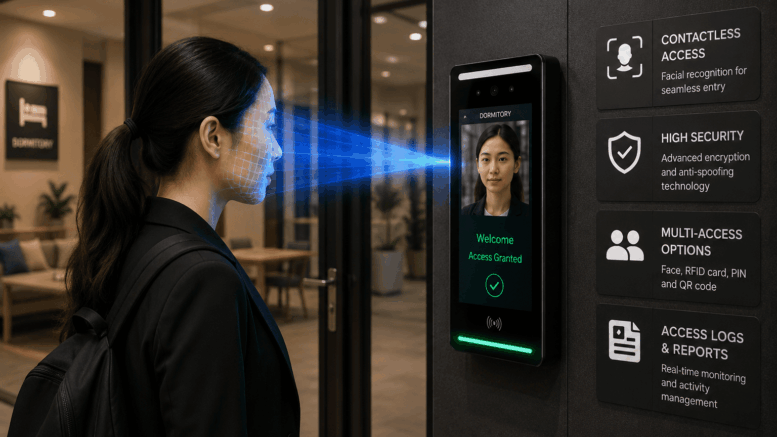
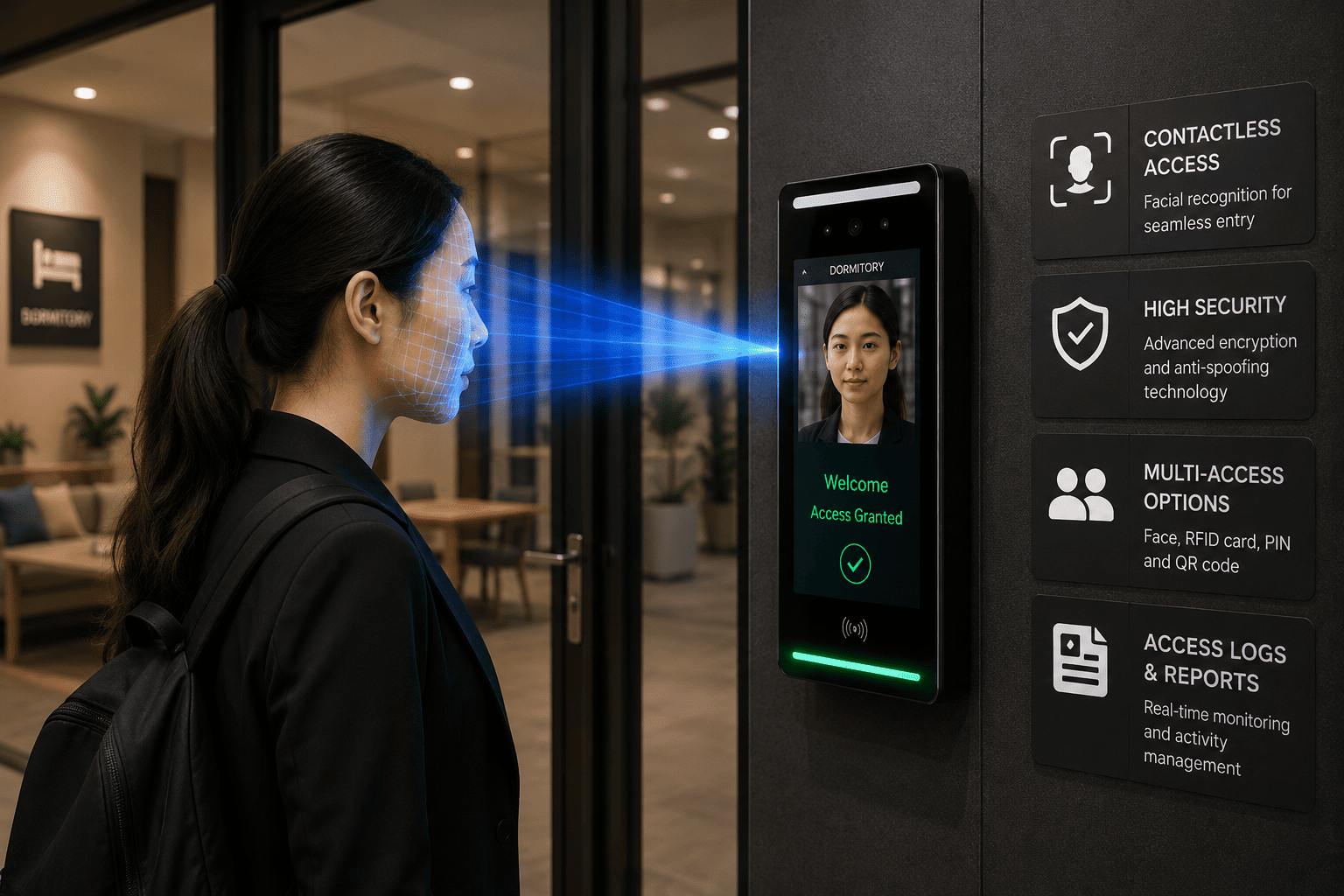
Face recognition access control systems automatically verify identity based on unique facial biometric data. Unlike physical ID cards or PIN codes, facial biometrics cannot be forgotten, lost, or shared. Healthcare staff gain seamless, hands-free access to restricted areas simply by walking past a security checkpoint.
This automation dramatically reduces the administrative workload. Facility managers no longer need to manually process access requests, issue replacement cards, or manage credential revocation. System administrators can manage access rights digitally, update permissions instantly, and generate comprehensive audit trails automatically.
Strengthening Security and Accountability
Face recognition creates an unbreakable link between individual staff members and access events. Every entry and exit is recorded with timestamp and biometric verification, creating a tamper-proof audit trail. In healthcare settings, this accountability is invaluable for compliance purposes and incident investigations.
The technology also prevents unauthorised access more effectively than traditional methods. Facial recognition systems can be configured to restrict access during specific hours, limit repeated entries, or flag unusual access patterns for review by security personnel.
Improving Emergency Response Times
During medical emergencies, every second counts. Face recognition systems eliminate the delay of locating access credentials or waiting for manual authorisation. Authorised personnel can move quickly through restricted areas without fumbling for ID cards or waiting for doors to be manually unlocked.
Key Benefits for Singapore Healthcare Facilities
Reduced Administrative Costs
By automating credential management and access logging, healthcare facilities can reallocate administrative staff to higher-value tasks. The time savings compound across multiple locations and over several years of operation.
Enhanced Compliance Documentation
Regulatory bodies and accreditation bodies expect healthcare facilities to maintain detailed records of who accessed restricted areas and when. Automated face recognition systems generate precise, searchable logs that satisfy compliance requirements and simplify audits.
Improved Infection Control
Contact-free access control—where staff simply present their face to a reader—reduces touchpoints and potential cross-contamination compared to shared ID card readers or keypads.
Scalability Across Multiple Locations
Healthcare providers operating multiple clinics or centres across Singapore can deploy consistent access control policies across all facilities. Centralised management simplifies onboarding new staff and updating access rights organisation-wide.
Better Data Protection
Restricting physical access to areas housing patient records, diagnostic equipment, and medication inventory helps healthcare facilities meet data protection obligations and safeguard sensitive information.
Common Concerns and How Modern Solutions Address Them
Privacy and Data Security
Healthcare organisations understandably have concerns about biometric data collection. Modern face recognition systems employ encryption and secure storage practices. Choosing a provider committed to data protection is essential for healthcare facilities in Singapore, where privacy considerations are paramount.
System Reliability
Healthcare facilities cannot afford access control downtime. Robust systems include backup mechanisms, redundant power supplies, and manual override options to ensure continuity of operations during technical issues or emergencies.
Integration with Existing Infrastructure
Many healthcare facilities worry about the complexity of integrating new access control with existing building systems. Modern solutions are designed to work alongside existing security infrastructure, door locks, and monitoring systems.
Practical Applications in Singapore Healthcare Settings
Hospital Pharmacy Access
Limit access to medication storage to authorised pharmacists and nurses. Automated logging ensures every access to controlled substances is documented, supporting compliance with pharmaceutical regulations.
Patient Records and Confidential Storage
Restrict physical access to areas where patient information is stored. Face recognition ensures only staff with legitimate access rights can enter these areas, reducing unauthorised data access.
Diagnostic Equipment Rooms
Medical equipment requiring calibration, maintenance, or authorised use can be protected from unauthorised access, extending equipment life and ensuring proper operation.
Staff-Only Areas
Clinics and medical centres can restrict access to break rooms, locker rooms, and administrative offices to authorised personnel, maintaining staff privacy and facility security.
How Smart Touch Technology Singapore Can Help
Smart Touch Technology’s Face & Door solution provides healthcare facilities in Singapore with reliable, automated access control designed for the demands of modern healthcare operations.
The system automates identity verification and access logging, eliminating the manual administration that consumes staff time and creates security vulnerabilities. Healthcare administrators can manage access rights digitally, generate compliance reports instantly, and maintain comprehensive audit trails that satisfy regulatory requirements.
By deploying face recognition access control, Singapore healthcare facilities can reduce operational friction, strengthen security, and free administrative resources to focus on patient care and facility excellence.
Want to know more about this product? Click here to explore how Face & Door access control can work for your healthcare facility.
Conclusion
Face recognition access control represents a significant advancement for healthcare facilities seeking to balance security, compliance, and operational efficiency. By automating access verification and audit logging, these systems reduce manual administration, strengthen accountability, and create safer, more secure healthcare environments.
For Singapore healthcare organisations managing multiple locations, handling sensitive data, and operating within strict compliance frameworks, modern access control technology is no longer a luxury—it is a practical necessity. The investment in reliable, automated systems pays dividends through reduced administrative costs, improved security posture, and enhanced staff productivity.
If your healthcare facility is ready to move beyond manual access control, the technology to streamline operations is available now.
Smart Touch technology pte ltd , www.smartouch.com.sg +65-63964767, sales@smartouch.com.sg , www.smartouch.com.my +607-3889903 sales@smartouch.com.my