Face Recognition Access Control Singapore Installation Guide for Distribution Warehouses
Distribution warehouses form the backbone of Singapore’s logistics and supply chain operations. These facilities handle high-value inventory, process thousands of transactions daily, and employ numerous staff members across multiple shifts. Managing access to sensitive areas—such as storage zones, loading docks, administrative offices, and inventory management systems—is critical for security, compliance, and operational efficiency.
Traditional access control methods, including manual key management and card-based systems, present significant challenges in warehouse environments. Keys can be lost or duplicated, cards may be forgotten or shared, and manual logging creates administrative overhead. For distribution warehouse operators in Singapore, these vulnerabilities can lead to inventory loss, unauthorised access, compliance breaches, and increased operational costs.
Face recognition access control offers a modern, reliable solution that addresses these challenges. By combining biometric authentication with intelligent access management, face recognition systems provide secure, contactless access to warehouse facilities whilst maintaining comprehensive audit trails. This guide explores how distribution warehouses in Singapore can implement face recognition access control systems effectively.
Why Face Recognition Access Control Matters for Distribution Warehouses
Distribution warehouses operate in a unique environment where security, speed, and accuracy intersect. Staff members move frequently between areas, contractors and delivery partners require temporary access, and inventory movements must be carefully tracked and authorised.
Face recognition access control systems address several key operational needs:
- Enhanced Security: Biometric authentication is far more difficult to compromise than physical keys or cards, reducing unauthorised access incidents.
- Operational Speed: Employees can gain access in seconds without fumbling for cards or keys, improving workflow efficiency.
- Accurate Audit Trails: Every access event is automatically logged with timestamp and identity verification, supporting compliance and investigation requirements.
- Scalability: Adding new employees or temporary staff is straightforward, with no physical cards or keys to manage.
- Contactless Access: Particularly important in modern warehouse environments, reducing hygiene concerns and contact points.
Understanding Face Recognition Access Control Systems
How Face Recognition Technology Works
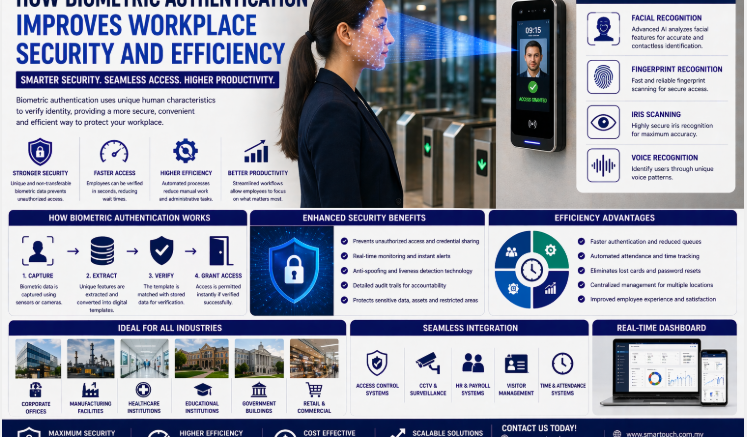
Face recognition access control systems capture facial features at entry points, convert this data into a digital template, and compare it against an enrolled database of authorised users. The system operates in real time, typically processing recognition within milliseconds.
Modern systems are designed to function reliably even in challenging warehouse environments. They can accommodate varying lighting conditions, different angles, and individuals wearing glasses or safety equipment. This practical robustness is essential for warehouse operations where entry points may not always feature ideal lighting or positioning.
Key Components of a Face Recognition System
A complete face recognition access control installation typically includes:
- Facial Recognition Cameras: Specialised devices capturing clear facial images at entry and exit points.
- Access Control Hardware: Electric locks, door operators, or barrier systems that respond to authentication signals.
- Central Management Software: A platform for enrolling users, managing access rights, generating reports, and monitoring real-time access events.
- Network Infrastructure: Secure connectivity between all system components, often integrated with existing warehouse IT systems.
- Backup Systems: Failsafe mechanisms ensuring access control continues during power outages or system issues.
Planning Your Face Recognition Installation
Assess Your Warehouse Layout and Security Needs
Begin by mapping your distribution warehouse and identifying all areas requiring access control. Most warehouses need systems at:
- Main employee entrances and exits
- Loading dock access points
- High-value storage areas
- Administrative and office sections
- Equipment rooms and secure facilities
Consider traffic flow patterns. High-volume areas may require multiple cameras or faster processing to avoid bottlenecks. Understand which staff members require access to which areas, and whether contractors or delivery partners need temporary access protocols.
Evaluate Environmental Conditions
Warehouse environments vary considerably. Some facilities feature climate control with stable lighting, whilst others include outdoor areas, loading bays with variable conditions, or cold storage sections. Your face recognition system must function reliably across all these environments.
Consider factors such as:
- Lighting conditions at each access point, including outdoor areas
- Temperature ranges, particularly for cold storage access
- Humidity levels and potential moisture exposure
- Network connectivity and electrical power availability
- Physical space constraints for mounting cameras and hardware
Determine Access Control Requirements
Different areas of your warehouse may require different access levels. A senior manager might have access to all areas, whilst a loading dock operator might access only specific zones. Plan your access hierarchy during the design phase, as this simplifies implementation and reduces errors.
Consider whether you need:
- Time-based access (staff only during certain hours)
- Role-based access (different permissions for different job roles)
- Temporary access for contractors or delivery partners
- Emergency override procedures for urgent situations
Implementation Considerations for Singapore Warehouses
Compliance and Data Protection
Singapore has clear guidelines regarding personal data collection and biometric information. The Personal Data Protection Act (PDPA) governs how organisations handle employee and visitor data. Before implementing face recognition access control, ensure you understand the consent requirements, data storage obligations, and employee notification procedures.
Organisations should inform employees and other building users that face recognition is being used, explain the purposes, and document consent appropriately. Data retention policies must comply with Singapore’s privacy regulations—retaining facial data only for as long as necessary for access control purposes.
We recommend consulting with your legal or compliance team and reviewing the latest guidance from the Personal Data Protection Commission (PDPC) to ensure your implementation meets all applicable requirements.
Employee Training and Change Management
Introducing face recognition access control requires clear communication with your workforce. Many employees may be unfamiliar with biometric systems and could have concerns about privacy or effectiveness.
Develop a training programme that covers:
- How the system works and why it’s being implemented
- The enrolment process (capturing facial data)
- Daily usage procedures
- Troubleshooting common issues (e.g., if the system doesn’t recognise someone)
- Privacy protections and data handling practices
- Backup access methods during system issues
Provide enrolment sessions well before the system goes live, allowing staff to become comfortable with the process. Assign trained support staff to assist during the transition period.
Redundancy and Business Continuity
Your warehouse cannot afford prolonged access control failures. Implement redundancy measures such as backup power systems (uninterruptible power supplies), failsafe door locks that allow emergency exit, and alternative authentication methods for staff unable to use facial recognition.
Test backup systems regularly to ensure they function when needed. Document emergency procedures and ensure all staff know how to operate alternative access methods.
Installation Best Practices
Camera Placement and Positioning
Optimal camera placement is critical for reliable recognition. Cameras should be positioned at approximately eye level (typically 1.5 to 1.7 metres from the ground) and angled to capture faces directly. Avoid placing cameras where backlighting or strong shadows create poor image quality.
For high-traffic areas, consider multiple cameras or wider-angle lenses to accommodate varying queue positions. Ensure adequate lighting at all capture points—supplementary lighting should be added where natural or existing light is insufficient.
Integration with Existing Systems
Modern warehouses typically use various systems including time and attendance tracking, visitor management, and security monitoring. Your face recognition access control should integrate smoothly with these existing platforms where possible, reducing manual data entry and improving overall operational efficiency.
Work with your IT team to plan network integration, ensuring adequate bandwidth, secure data transmission, and compatibility with your current infrastructure.
Testing and Calibration
Before full deployment, conduct comprehensive testing across all conditions your warehouse experiences. Test recognition accuracy across different times of day, weather conditions (if outdoor areas are involved), and with staff wearing various types of personal protective equipment if applicable to your operation.
Calibrate lighting and camera settings based on test results. Document any edge cases or challenges identified during testing and plan mitigations.
How Smart Touch Technology Face & Door Solutions Can Help
Smart Touch Technology Singapore offers comprehensive face recognition and access control solutions designed for Singapore business environments, including distribution warehouses and logistics facilities. The Face & Door product combines facial recognition technology with intelligent access control hardware and management software.
Smart Touch Technology solutions are built to address the specific challenges warehouse operators face—from high-volume traffic management to reliable operation in varied environmental conditions. Their systems integrate seamlessly with warehouse operations, providing the secure, efficient access control modern logistics facilities require.
Want to know more about this product? Click here to explore Smart Touch Technology’s Face & Door access control solutions and how they can be customised for your warehouse operation.
Maintaining Your Face Recognition System
After installation, ongoing maintenance ensures continued reliable operation. Regular maintenance tasks include:
- Cleaning camera lenses and sensors to maintain image quality
- Updating software and security patches promptly
- Reviewing and updating access permissions as staff join or leave
- Monitoring system performance and investigating any recognition failures
- Maintaining backup systems and testing emergency procedures
- Reviewing access logs periodically for security audit purposes
Establish a maintenance schedule and assign responsibility to specific team members. Most reputable access control providers offer maintenance packages or support plans—consider whether this investment makes sense for your operation.
Conclusion
Face recognition access control represents a significant advancement in warehouse security and operational efficiency. For Singapore distribution warehouses, implementing a well-planned facial recognition system can enhance security, streamline staff access, maintain comprehensive audit trails, and improve overall operational performance.
The key to successful implementation lies in thorough planning, understanding your specific warehouse needs, ensuring compliance with Singapore’s privacy regulations, and selecting a reliable technology partner. By following this installation guide and considering the practical aspects of your warehouse environment, you can deploy a face recognition access control system that serves your facility reliably for years to come.
Start by assessing your warehouse layout, evaluating your security requirements, and consulting with access control specialists who understand the Singapore business environment. With proper planning and implementation, face recognition access control can become a valuable asset in your warehouse’s security and operational infrastructure.
Smart Touch technology pte ltd , www.smartouch.com.sg +65-63964767, sales@smartouch.com.sg , www.smartouch.com.my +607-3889903 sales@smartouch.com.my