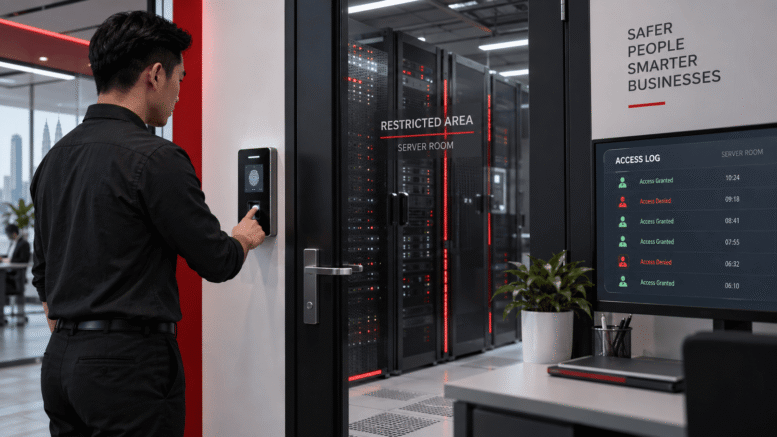
Face Recognition Access Control Singapore Solutions for Corporate Headquarters: 2026 Buyer’s Guide
Security at the corporate headquarters level requires more than traditional lock-and-key systems. As Singapore businesses grow increasingly sophisticated in their operations, the need for seamless, secure, and intelligent access control has become essential. Face recognition technology represents a significant advancement in how organisations protect their physical spaces while maintaining operational efficiency.
This guide explores face recognition access control solutions designed specifically for Singapore’s corporate environment, helping decision-makers understand the technology, its benefits, and what to consider when implementing these systems in 2026.
Understanding Face Recognition Access Control Technology
Face recognition access control is a biometric security system that identifies individuals based on their facial features. Unlike traditional access methods such as keycards or PIN codes, face recognition offers a contactless, hands-free approach to entry management.
The technology works by capturing facial data, converting it into a digital template, and comparing it against an authorised database. When an employee approaches a secured entrance, the system instantaneously verifies their identity and grants or denies access accordingly.
For corporate headquarters in Singapore, this means employees can move freely through the facility without fumbling for credentials, while the organisation maintains a precise record of who accessed which areas and when.
Why Corporate Headquarters in Singapore Need Advanced Access Control
Singapore’s business environment operates at a high standard of security and professionalism. Corporate headquarters often house sensitive information, valuable assets, and restricted operational zones that require controlled access.
Traditional access methods present several challenges:
- Lost or stolen access cards create security vulnerabilities and administrative overhead
- PIN codes can be shared or compromised, reducing accountability
- Manual verification processes slow employee movement and create bottlenecks
- Limited audit trails make it difficult to track facility access patterns
- Tailgating and unauthorised entry become more difficult to prevent
Face recognition technology directly addresses these concerns by providing a solution that is both secure and user-friendly.
Key Benefits of Face Recognition Access Control for Corporate Environments
Enhanced Security and Accountability
Face recognition systems create a biometric record that cannot be lost, stolen, or shared. Each access event is logged with the individual’s verified identity, creating an immutable audit trail. This level of accountability is particularly important in regulated industries or organisations handling sensitive information.
Improved Employee Experience
Employees appreciate the convenience of hands-free access. There are no credentials to carry, no codes to remember, and no friction in the entry process. This streamlined experience contributes to a modern, professional workplace environment.
Operational Efficiency
Entry management becomes faster and smoother. During peak traffic periods, face recognition systems process multiple individuals without creating queues or delays. This efficiency translates to improved productivity and employee satisfaction.
Comprehensive Facility Management
Face recognition systems integrate with broader access control infrastructure, allowing organisations to manage entry to multiple zones, floors, and restricted areas from a centralised platform. This unified approach simplifies administration and improves visibility across the entire facility.
Compliance and Regulatory Support
For organisations subject to regulatory requirements around facility access and data protection, face recognition systems provide detailed records and audit capabilities that support compliance efforts.
Key Considerations When Selecting a Face Recognition System
Accuracy and Reliability
Not all face recognition systems perform equally. When evaluating solutions, consider the system’s accuracy rate under various conditions, including different lighting, angles, and facial expressions. In Singapore’s tropical climate with bright sunlight and humid conditions, weather-resistant hardware and robust software are important.
Integration Capabilities
Your face recognition system should integrate seamlessly with existing door access hardware and building management systems. Consider whether the system can connect with your current IT infrastructure, visitor management processes, and security monitoring platforms.
Scalability
Corporate headquarters often expand or reconfigure spaces over time. Choose a system that can scale from a single entrance to multiple access points without requiring complete replacement or extensive reconfiguration.
Data Privacy and Security
Facial data is sensitive personal information. Ensure that any system you select complies with Singapore’s Personal Data Protection Act (PDPA) and implements robust encryption and data protection measures. Verify where facial data is stored, how it is protected, and what controls you have over that data.
User Adoption and Training
Even the most advanced technology requires proper implementation. Consider the ease of enrollment, the level of user training required, and the vendor’s support during the transition from existing access methods.
Hardware Durability
Singapore’s climate presents specific challenges for outdoor or semi-outdoor access points. Select hardware designed to withstand humidity, heat, and salt exposure, particularly for facilities near coastal areas.
Common Challenges and How to Address Them
Enrollment and Database Management
Building an accurate facial database requires careful enrollment procedures. High-quality photographs captured under consistent lighting and angles produce better recognition results. Plan sufficient time and resources for the enrollment process, particularly in large organisations.
Handling False Rejections and Acceptances
No system is perfect. Establish clear procedures for employees who experience occasional false rejections, and ensure that your system settings balance security with user convenience. Regular system calibration helps maintain optimal performance.
Change Management and Employee Concerns
Some employees may have concerns about biometric data collection and privacy. Transparent communication about how facial data is stored, protected, and used can address these concerns and ease adoption. Emphasise the security and convenience benefits.
Integration with Existing Workflows
Consider how face recognition integrates with visitor management, contractor access, and temporary guest procedures. A comprehensive solution should handle these scenarios smoothly.
How Smart Touch Technology Singapore Can Help
Smart Touch Technology Singapore offers face and door access control solutions specifically designed for corporate environments. These systems combine face recognition technology with intelligent door access management, providing the security, integration, and reliability that Singapore businesses require.
By partnering with Smart Touch Technology, organisations gain access to systems engineered for the Singapore market, supported by local expertise and technical capability. The focus on both face recognition and door control integration ensures that your access control system works as a cohesive whole rather than as disconnected components.
Whether you are implementing access control for a new headquarters or upgrading an existing facility, Smart Touch Technology Singapore provides solutions that align with your security objectives and operational requirements.
Want to know more about this product? Click here to explore Smart Touch Technology’s face and door access solutions in detail.
Planning Your Implementation in 2026
If you are considering face recognition access control for your corporate headquarters in 2026, now is the time to evaluate options and plan your implementation. Start by identifying your specific security requirements, assessing your current infrastructure, and consulting with experienced vendors who understand the Singapore business environment.
Effective implementation requires clear project planning, stakeholder communication, and realistic timelines for enrollment and testing. Building in adequate time for staff training and system familiarisation will contribute to successful adoption.
Conclusion
Face recognition access control represents a modern approach to corporate security that balances robust protection with user convenience. For Singapore’s corporate headquarters, these systems offer enhanced security, improved operational efficiency, and comprehensive audit capabilities.
By understanding the technology, evaluating your specific needs, and selecting a solution aligned with your requirements, you can implement access control that serves your organisation effectively. The key is choosing a reliable partner with expertise in both the technology and the Singapore business context.
Smart Touch technology pte ltd , www.smartouch.com.sg +65-63964767, sales@smartouch.com.sg , www.smartouch.com.my +607-3889903 sales@smartouch.com.my