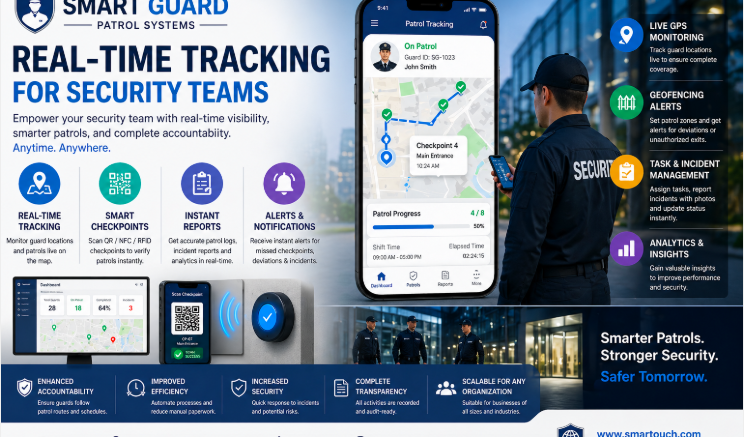
Managing security across residential estates and condominiums in Singapore requires more than good intentions and dedicated personnel. It demands a structured, efficient system that ensures consistent patrol coverage, accountability, and documented evidence of security activities. Many property managers and estate administrators struggle to maintain oversight of their guard patrol operations, leading to gaps in coverage, inconsistent service quality, and difficulty demonstrating compliance with security standards.
A guard patrol management system addresses these challenges by providing real-time visibility into patrol activities, automating routine administrative tasks, and creating verifiable records of security operations. For estates and condominiums across Singapore, implementing an effective guard patrol management system has become essential to maintaining resident safety, protecting property assets, and meeting stakeholder expectations.
Why Guard Patrol Management Matters for Singapore Properties
Singapore’s residential estates and condominiums are among the most densely populated residential areas in the world. Managing security across large, complex properties presents unique challenges that differ significantly from managing smaller residential communities.
Scale and Complexity
Large estates and condominiums often span multiple blocks, towers, or sections, requiring guards to cover extensive areas efficiently. Without a proper management system, it becomes difficult to ensure that all critical zones receive adequate attention and patrol frequency.
Resident Expectations
Residents expect visible, reliable security presence. They want assurance that patrols are happening regularly and that property management takes their safety seriously. A disorganised patrol operation undermines confidence in the estate’s overall management.
Accountability and Documentation
Property management committees, property agents, and residents increasingly expect clear documentation of security activities. This includes records of patrol routes completed, incidents observed, maintenance issues identified, and security concerns addressed. Manual systems struggle to provide reliable documentation.
Operational Efficiency
Guard staff are often stretched thin across multiple responsibilities. A well-managed patrol system helps maximise their effectiveness by eliminating confusion about routes, schedules, and priorities, allowing guards to focus on actual security work rather than administrative tasks.
Common Challenges in Guard Patrol Management
Property managers and facility coordinators regularly encounter several problems when managing guard patrols without a dedicated system:
- Inconsistent Patrol Coverage: Without structured tracking, some areas may be over-patrolled while others are neglected. Guards may skip checkpoints or complete patrols irregularly.
- Lack of Accountability: It becomes difficult to verify whether patrols actually occurred as scheduled or whether guards visited designated checkpoints.
- Poor Documentation: Incidents, observations, and security concerns may be recorded on paper or through ad-hoc notes, making it hard to maintain reliable records or identify patterns.
- Miscommunication: Without a central system, important security information may not reach all relevant personnel or may be delayed.
- Difficulty Identifying Issues: Property managers cannot easily identify trends—such as repeated break-in attempts in specific locations or recurring maintenance problems—because data is scattered and unanalysed.
- Compliance Concerns: When incidents occur, property managers may struggle to demonstrate that appropriate patrol procedures were in place.
Key Features of an Effective Guard Patrol Management System
A modern guard patrol management system should provide several core capabilities to address the challenges mentioned above:
Checkpoint-Based Patrol Tracking
The system should allow guards to check in at predetermined patrol checkpoints throughout the estate or condominium. This creates an auditable record of where guards have been and when they were there.
Real-Time Monitoring and Visibility
Property managers should be able to view patrol progress in real-time or near-real-time, allowing them to identify gaps or issues immediately rather than discovering them after the fact.
Incident and Observation Logging
Guards should be able to record incidents, maintenance issues, security concerns, or unusual observations directly within the system. This ensures information is captured consistently and remains searchable for future reference.
Schedule and Route Management
The system should support flexible scheduling of patrols, allowing managers to adjust patrol routes, frequencies, and timings based on operational needs or seasonal variations.
Reporting and Analytics
Managers should be able to generate reports showing patrol completion rates, incident trends, areas of concern, and guard performance metrics. This data supports decision-making and resource allocation.
Alert and Escalation Capabilities
The system should notify managers when patrols are missed, when unusual incidents are recorded, or when other predefined conditions occur.
How a Guard Patrol Management System Addresses Key Problems
Ensuring Consistent Coverage
By assigning specific patrol routes and checkpoints, a patrol management system ensures that guards understand exactly which areas need to be covered and in what order. Guards can confirm their presence at each checkpoint, creating an objective record. If a guard misses a checkpoint, managers are alerted and can investigate or reassign coverage immediately.
Creating Accountability
A digital record of patrol activities is far more reliable than memory or casual note-taking. Managers can verify that patrols occurred as scheduled and that guards visited intended locations. This protects both the property management company and the guards themselves by documenting that security procedures are being followed.
Improving Incident Response
When guards can quickly log incidents or concerns within a centralised system, information reaches relevant personnel faster. Property managers can categorise incidents, prioritise responses, and track follow-up actions more effectively.
Supporting Compliance and Evidence
In the event of a security breach or resident complaint, a well-maintained patrol management system provides clear evidence of the security measures that were in place. This documentation can be invaluable for insurance claims, incident investigations, or responding to resident enquiries.
Identifying Patterns and Trends
Accumulated data from the patrol system can reveal patterns—such as specific times or locations where security incidents tend to occur—allowing managers to adjust patrol strategies accordingly. For example, if break-in attempts cluster around a particular carpark entrance during late evening hours, patrol frequency in that area can be increased.
How Smart Touch Technology Guard Patrol System Can Help
Smart Touch Technology offers a guard patrol management system specifically designed for estates and condominiums in Singapore. The system provides property managers with the tools needed to oversee patrol operations efficiently, ensure consistent coverage, and maintain reliable documentation of security activities.
By implementing Smart Touch Technology’s guard patrol system, property managers gain:
- A structured approach to patrol management with checkpoint-based tracking
- Real-time visibility into patrol activities and coverage
- The ability to log incidents and observations systematically
- Automated alerts for missed or delayed patrols
- Digital records that support compliance and incident investigation
- Reporting capabilities that help identify trends and optimise patrol strategies
The system is tailored to the Singapore context, understanding the specific needs and scale of local residential properties. Smart Touch Technology works with property managers to configure patrol routes, checkpoints, and reporting structures that align with individual estate or condominium requirements.
Implementation Considerations for Estates and Condominiums
When introducing a guard patrol management system to an estate or condominium, several factors should be considered to ensure smooth adoption and maximum benefit:
Guard Training
Guards need to understand how to use the new system, where checkpoints are located, and how to log incidents or observations. Adequate training and clear documentation support successful adoption.
Checkpoint Placement
Checkpoints should be strategically located to cover all critical areas—carparks, main entrances, common areas, perimeter routes—while remaining practical for guards to visit within reasonable timeframes.
Patrol Frequency
Determine appropriate patrol frequencies based on property size, resident density, historical incidents, and available resources. A system allows flexibility to adjust frequencies as conditions change.
Integration with Existing Processes
The patrol system should integrate with other property management operations—such as maintenance request handling or resident complaint processes—to create a cohesive security and management framework.
Management Review and Adjustment
Regularly review patrol data and incident reports to identify any adjustments needed in routes, frequencies, or procedures. A system that provides good reporting supports ongoing improvement.
Building Resident Confidence Through Visible Security
One often-overlooked benefit of a structured guard patrol management system is the confidence it builds among residents. When residents see regular, visible patrols and know that security activities are being monitored and documented, they feel safer and have greater confidence in property management.
Property managers can also communicate patrol activities to residents and management committees more transparently. Regular reports showing patrol completion rates, incident trends, and security improvements demonstrate that security is being actively managed rather than assumed.
Conclusion
Guard patrol management is a critical function for estates and condominiums across Singapore. Without a structured system, patrol operations become inconsistent, accountability becomes unclear, and property managers lack the documentation needed to ensure security effectiveness or respond to incidents.
A guard patrol management system addresses these challenges by creating structure, visibility, and accountability in security operations. It ensures consistent coverage of critical areas, enables efficient incident recording and response, and provides managers with the data needed to identify trends and optimise patrol strategies.
For property managers, facility coordinators, and estate administrators in Singapore, implementing a guard patrol management system is a practical investment in security effectiveness, operational efficiency, and resident confidence. Smart Touch Technology’s guard patrol system is designed specifically for Singapore’s residential properties, providing the tools and flexibility needed to manage security operations effectively.
If you are seeking to improve guard patrol management at your estate or condominium, Smart Touch Technology can help you implement a system tailored to your property’s specific needs and scale.
Smart Touch technology pte ltd , www.smartouch.com.sg +65-63964767, sales@smartouch.com.sg , www.smartouch.com.my +607-3889903 sales@smartouch.com.my