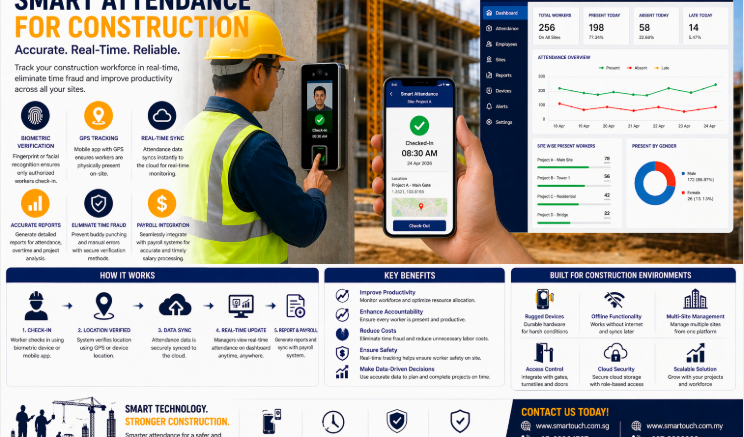
How Construction Biometric Authentication System Helps Industrial Sites Lower Operational Costs
Introduction
Industrial sites and construction projects in Singapore face mounting pressure to improve efficiency, enhance security, and reduce operational expenses. Every day, site managers grapple with challenges such as time theft, unauthorised access, equipment misuse, and administrative overhead. These issues compound quickly, affecting profitability and project timelines.
One solution gaining traction across Singapore’s industrial sector is biometric authentication technology. By implementing a robust Biometric Authentication System (BAS), construction companies and industrial facilities can streamline access control, automate attendance tracking, and minimise costly operational inefficiencies.
This article explores how biometric authentication systems work on industrial sites, the cost-saving benefits they deliver, and how Singapore-based organisations can implement this technology effectively.
The Current Cost Challenges in Industrial Operations
Why Traditional Access and Attendance Methods Cost More
Many industrial sites across Singapore still rely on manual attendance registers, ID cards, or PIN-based systems. While these methods seem straightforward, they introduce hidden costs and operational risks.
Time theft and buddy punching remain significant problems. When employees can clock in for colleagues or manually record attendance, companies lose productive hours without realising it. Studies consistently show that time-related fraud accounts for substantial payroll expenses annually.
Administrative burden is another cost driver. Managing paper records, reconciling attendance discrepancies, and processing manual timesheets require dedicated personnel. This administrative overhead diverts resources from higher-value activities.
Security vulnerabilities create additional expenses. Lost or stolen ID cards must be replaced, and unauthorised access can lead to theft, safety incidents, or damage to equipment and materials. Investigating and remediating these incidents costs time and money.
Equipment inefficiency occurs when sites lack proper access controls. Unauthorised personnel may operate machinery, leading to accidents, damage, or increased maintenance costs.
How Biometric Authentication Systems Work
Technology Overview
A Biometric Authentication System uses unique physical or behavioural characteristics—such as fingerprints, facial recognition, or iris scanning—to verify identity. Unlike ID cards or passwords, biometric data cannot be lost, forgotten, or shared.
On industrial sites, biometric systems typically function as entry points and access control hubs. When an employee or authorised personnel approaches a secured area, they authenticate themselves using their biometric identifier. The system verifies their identity instantly, logs the access, and grants or denies entry accordingly.
Integration with Site Operations
Modern biometric systems integrate with site management software, creating a unified record of who accessed what area and when. This data flows directly into payroll, security, and compliance systems, eliminating manual data entry and reducing errors.
For construction sites with multiple zones, equipment areas, or hazardous sections, biometric authentication ensures only trained and authorised personnel enter restricted areas. This real-time control significantly improves safety compliance and reduces incident-related costs.
Key Cost-Saving Benefits for Industrial Sites
Reducing Time and Attendance Fraud
The most immediate cost saving comes from eliminating buddy punching and attendance manipulation. When biometric verification is required at entry and exit points, every attendance record is genuine and timestamped automatically. This accuracy ensures employees are paid only for hours actually worked.
For large industrial sites employing hundreds of workers, even a 2–3% reduction in time fraud can translate to significant annual savings in payroll expenses.
Lowering Administrative Costs
Biometric systems automate attendance tracking entirely. There is no manual timekeeping, no paper records to file, and no time spent reconciling discrepancies. Payroll departments receive clean, accurate data automatically, reducing processing errors and the need for overtime corrections.
This automation frees up administrative staff to focus on strategic tasks, improving overall organisational productivity.
Minimising Security Incidents and Losses
Unauthorised access is a common but often overlooked cost driver. Equipment theft, material loss, or damage from untrained personnel operating machinery can be expensive. Biometric authentication prevents unauthorised entry and creates an auditable record of who accessed each area.
If an incident occurs, site managers have precise data showing exactly who was present and when. This accountability deters theft and helps investigations proceed more efficiently.
Improving Health and Safety Compliance
Industrial sites must maintain strict health and safety standards. Biometric systems help ensure only trained and certified personnel access hazardous areas. This compliance reduces accident rates, injuries, and associated costs such as workers’ compensation claims, medical expenses, and potential regulatory fines.
Increasing Equipment Utilisation and Reducing Damage
When machinery access is controlled biometrically, only authorised operators can use specific equipment. This reduces accidental damage, improves maintenance scheduling, and extends asset lifespan. Site managers also gain visibility into equipment usage patterns, optimising resource allocation and preventing overuse.
Practical Implementation Considerations for Singapore Sites
Choosing the Right Biometric Technology
Different biometric methods suit different environments. Fingerprint systems are cost-effective and widely adopted. Facial recognition offers faster processing and works well where hygiene is a concern. Iris scanning provides high accuracy for highly secure areas.
For construction sites with dusty or wet environments, fingerprint readers may require more frequent maintenance. In such cases, facial recognition or iris scanning might prove more reliable, though they typically carry higher upfront costs.
Integration with Existing Systems
Industrial sites often operate multiple systems—payroll software, project management platforms, and security systems. A biometric solution should integrate seamlessly with these existing tools, ensuring data flows smoothly and reducing implementation complexity.
When evaluating biometric systems, confirm compatibility with your current software stack and ensure the vendor provides proper technical support for integration.
Employee Acceptance and Training
Introducing biometric systems requires clear communication with staff. Employees may have concerns about privacy or data security. Transparent policies explaining how biometric data is stored, protected, and used help build trust and encourage adoption.
Comprehensive training ensures employees understand how to use the system correctly, reducing frustration and support requests during rollout.
How Smart Touch Technology Singapore Can Help
Smart Touch Technology Singapore offers a comprehensive Biometric Authentication System (BAS) designed specifically for industrial and construction environments. This solution automates access control, attendance tracking, and security monitoring—directly addressing the cost challenges outlined above.
The BAS integrates easily with existing site management and payroll systems, ensuring seamless data flow and minimising implementation disruption. By eliminating manual processes and preventing unauthorised access, the system delivers measurable cost savings while improving operational security and compliance.
Learn more about this product—click here: https://smartouch.com.sg/bas/
Conclusion
Construction and industrial sites in Singapore face real pressure to reduce operational costs without compromising safety or security. Biometric Authentication Systems offer a practical, technology-driven solution to this challenge.
By eliminating time fraud, automating administrative processes, preventing unauthorised access, and improving health and safety compliance, a well-implemented biometric system pays for itself through cost savings within months. The result is leaner operations, stronger security, and improved profitability.
For Singapore-based industrial organisations considering this investment, the time to act is now. Biometric authentication is becoming industry standard, and early adopters gain a competitive advantage in an increasingly efficient and safety-conscious market.
Smart Touch technology pte ltd , www.smartouch.com.sg +65-63964767, sales@smartouch.com.sg , www.smartouch.com.my +607-3889903 sales@smartouch.com.my