Introduction
Managing workforce attendance on construction sites, manufacturing facilities, and other operational locations presents unique challenges for Singapore businesses. Traditional paper-based or manual attendance systems are prone to errors, time theft, and administrative inefficiency. For organisations operating multiple sites or managing large teams, maintaining accurate attendance records becomes increasingly complex.
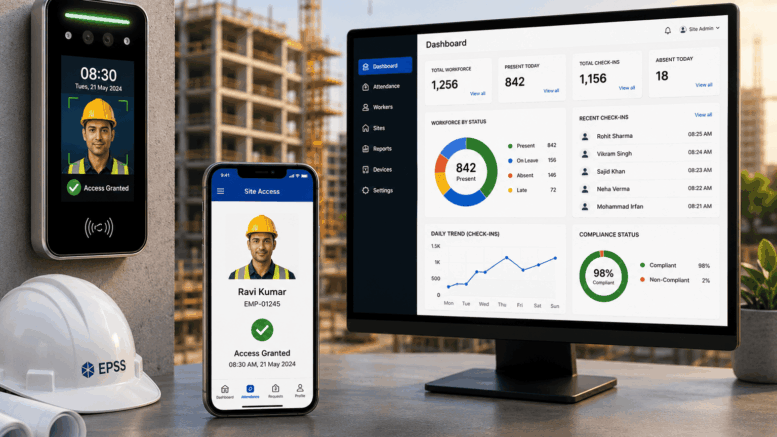
An Electronic Personal Surveillance System (EPSS) with biometric capability offers a modern solution to these challenges. By combining biometric technology with electronic attendance tracking, businesses can ensure accurate records, improve operational efficiency, and maintain compliance with employment regulations.
This article explores how a reliable EPSS biometric attendance system can transform site workforce management and why it matters for Singapore organisations.
Understanding EPSS Biometric Attendance Systems
What Is an EPSS Biometric Attendance System?
An EPSS biometric attendance system is an electronic platform that uses biometric data—typically fingerprints, facial recognition, or other biological identifiers—to automatically record employee attendance. Unlike traditional sign-in sheets or card-based systems, biometric EPSS solutions eliminate the possibility of proxy attendance or buddy clocking.
For site-based operations, these systems provide real-time attendance data that can be accessed remotely by management, ensuring visibility across multiple locations simultaneously.
How Biometric Technology Enhances Attendance Tracking
Biometric systems use unique physical characteristics to verify individual identity. This makes them far more reliable than card swipes or PIN codes, which can be lost, shared, or forgotten. On busy construction or manufacturing sites, biometric attendance systems streamline the check-in process while maintaining absolute accuracy.
The system captures attendance data automatically, eliminating manual data entry errors and the time spent managing paper records.
Why Reliable Attendance Systems Matter for Singapore Sites
Operational Efficiency
Sites with dozens or hundreds of workers benefit significantly from automated attendance tracking. A reliable system reduces congestion at sign-in points, speeds up shift changes, and minimises administrative overhead. Managers gain instant visibility into who is present, enabling better resource allocation and safety management.
Compliance and Record-Keeping
Singapore employment regulations require employers to maintain accurate attendance and working hours records. A reliable EPSS biometric system creates a permanent, tamper-proof record of attendance that satisfies regulatory requirements and protects both employer and employee in case of disputes.
For organisations subject to audits or compliance checks, having electronic attendance records simplifies the process and demonstrates a professional approach to workforce management.
Cost Control and Payroll Accuracy
Accurate attendance data directly impacts payroll processing. When attendance is recorded electronically and automatically, payroll teams can generate accurate salary calculations with confidence. This reduces payroll disputes and administrative costs associated with manual verification.
Safety and Site Security
On construction and manufacturing sites, knowing who is present is a fundamental safety requirement. A biometric attendance system maintains an accurate real-time record of site occupancy, which is critical for evacuation procedures and emergency response.
Common Challenges with Manual or Outdated Attendance Systems
Time Theft and Buddy Clocking
Without biometric verification, employees can clock in for colleagues who haven’t arrived, inflating hours paid and creating inaccurate records. This practice, known as buddy clocking, is difficult to detect with traditional systems and can result in significant payroll waste.
Administrative Burden
Manual attendance tracking requires staff to collect, verify, and process attendance data regularly. For large sites or multi-site operations, this becomes a significant administrative expense that could be reduced through automation.
Data Accuracy Issues
Paper records can be damaged, lost, or deliberately altered. Manual data entry introduces transcription errors. Electronic systems eliminate these risks through automated, immutable records.
Visibility and Reporting Challenges
With manual systems, obtaining attendance summaries or identifying patterns (such as frequent absences) requires time-consuming manual analysis. Modern biometric systems provide instant reports and analytics.
Key Features of a Reliable EPSS Biometric Attendance System
Real-Time Data Capture
Biometric systems record attendance the moment an employee interacts with the device. This real-time data is immediately available to management, eliminating delays in processing and reporting.
Multi-Site Management
For organisations operating several sites across Singapore, a centralised EPSS platform allows managers to monitor attendance across all locations from a single dashboard. This centralised view supports better decision-making and resource management.
Integration with HR and Payroll Systems
A well-designed EPSS can integrate with existing HR and payroll software, ensuring attendance data flows seamlessly into salary calculations and employee records without manual intervention.
Audit Trail and Compliance Reports
Reliable systems maintain a complete audit trail of all attendance transactions. This transparency supports compliance with employment regulations and provides evidence in case of disputes or investigations.
User-Friendly Interface
Even with advanced technology, the system should be simple for employees to use. Quick biometric capture ensures minimal queue times at site entrances and reduces frustration.
How BCA EPSS Addresses Site Attendance Challenges
Smart Touch Technology Singapore’s BCA EPSS is designed specifically to meet the attendance tracking needs of site-based organisations. The system combines biometric accuracy with reliable performance in challenging site environments.
BCA EPSS enables organisations to record attendance efficiently across one or multiple sites, capturing accurate data that supports both operational management and compliance requirements. The system’s reliability ensures that site managers have dependable information for workforce scheduling, safety management, and administrative purposes.
By implementing BCA EPSS, Singapore organisations can reduce administrative workload, improve data accuracy, and maintain the attendance records necessary for regulatory compliance. The system is built to handle the demands of busy operational sites while maintaining the integrity of attendance data.
Best Practices for Implementing an EPSS Biometric System
Clear Communication with Staff
Before implementation, explain the system’s purpose and how it works to all employees. Address concerns about privacy and security. Transparent communication helps ensure smooth adoption and reduces resistance to the new process.
Proper Training and Support
Ensure site managers and supervisors understand how to use the system and interpret reports. Provide employees with brief training on the biometric capture process to ensure accurate readings.
Regular System Maintenance
Biometric devices require regular cleaning and maintenance to function reliably, especially in dusty or wet site environments. Schedule maintenance checks and have backup devices available in case of equipment failure.
Data Security Measures
Protect attendance data with appropriate access controls. Limit who can view individual employee records and ensure data is stored securely and backed up regularly.
Monitor and Optimise
After implementation, review attendance reports regularly to identify patterns and ensure the system is working as intended. Use the data to optimise site scheduling and resource allocation.
Compliance Considerations for Singapore Organisations
Singapore’s Ministry of Manpower (MOM) requires employers to keep accurate records of employees’ working hours. An EPSS biometric system supports this obligation by creating reliable, auditable records that demonstrate compliance.
Additionally, the Personal Data Protection Act (PDPA) governs the collection and use of biometric data. When implementing a biometric attendance system, ensure that:
- Employees are informed about biometric data collection and its purpose
- Data is collected only for legitimate business purposes (attendance and payroll)
- Biometric data is stored securely with restricted access
- Data retention policies comply with legal requirements
For the most current guidance on employment record-keeping and data protection requirements, organisations should consult the latest information from the Ministry of Manpower and the Personal Data Protection Commission.
Conclusion
A reliable EPSS biometric attendance system transforms how Singapore organisations manage site-based workforce attendance. By eliminating manual processes, preventing time theft, and creating accurate compliance records, these systems deliver significant operational and financial benefits.
For construction companies, manufacturing facilities, and other site-based operations, implementing a dependable biometric attendance solution is an investment in efficiency, accuracy, and compliance. BCA EPSS is specifically designed to meet these needs, providing reliable biometric attendance tracking that supports both day-to-day site management and broader organisational objectives.
If your organisation operates sites across Singapore and needs to improve attendance accuracy and management efficiency, exploring a dedicated EPSS biometric solution is a practical next step toward streamlined operations.
Smart Touch technology pte ltd , www.smartouch.com.sg +65-63964767, sales@smartouch.com.sg , www.smartouch.com.my +607-3889903 sales@smartouch.com.my