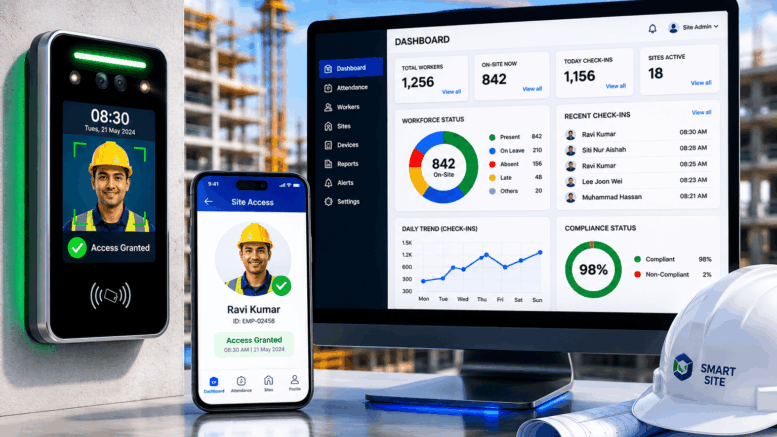
Upgrade Secure Data Centres with EPSS Biometric Attendance System: Simpler Compliance
Data centres are critical infrastructure for Singapore’s digital economy. They house sensitive information, support essential services, and require stringent security protocols to protect both physical assets and digital systems. One often-overlooked aspect of data centre security is access control and attendance tracking—yet this area directly impacts compliance, security posture, and operational efficiency.
Traditional attendance systems, such as manual sign-in sheets or basic card readers, introduce vulnerabilities. They lack the precision needed to meet modern security and regulatory requirements, create administrative overhead, and provide limited audit trails. For secure data centres in Singapore, where compliance standards are rigorous and security expectations are high, a more robust solution is essential.
The BCA EPSS (Biometric Attendance System) from Smart Touch Technology offers a modern alternative designed specifically to address the attendance and access control challenges faced by data centre operators. This article explores how upgrading to a biometric attendance system can simplify compliance, strengthen security, and improve operational management for Singapore’s secure data centres.
Why Attendance Tracking Matters in Secure Data Centres
Attendance systems are more than just timekeeping tools—they form a critical part of physical security infrastructure in data centres. Here’s why they matter:
- Compliance requirements: Singapore’s regulations and industry standards (such as BCA guidelines) require robust access control and personnel tracking in secure facilities.
- Audit trails: Data centres must maintain clear records of who accessed restricted areas and when, enabling investigations and demonstrating accountability.
- Security assurance: Accurate attendance records help identify unauthorised access attempts and suspicious patterns.
- Operational efficiency: Modern attendance systems reduce manual paperwork, minimise errors, and free staff to focus on core responsibilities.
- Risk management: Reliable data helps organisations identify and mitigate potential security threats proactively.
Without a dependable attendance system, data centre operators face gaps in their security framework that could have serious consequences.
Common Challenges with Traditional Attendance Methods
Manual and Card-Based Systems Fall Short
Many data centres still rely on manual sign-in sheets, magnetic card readers, or PIN codes. While these methods have served businesses for years, they present significant limitations in a modern security context:
Security vulnerabilities: Cards can be shared, lost, or forged. PIN codes can be guessed or disclosed. Manual records are prone to errors and falsification.
Compliance gaps: Regulatory bodies expect evidence of genuine, verifiable attendance. Manual systems struggle to provide the level of documentation required by Singapore’s compliance standards.
Administrative burden: Managing physical cards, resetting access codes, and manually reviewing attendance logs consumes significant staff time and resources.
Audit trail weaknesses: Traditional systems don’t capture detailed information about access timing, patterns, or anomalies, making forensic analysis difficult.
Scalability issues: As data centres expand or add secure zones, managing multiple systems becomes increasingly complex and costly.
The Need for Biometric Solutions
Biometric authentication—using fingerprints, facial recognition, or other unique biological identifiers—addresses these limitations directly. Because biometric data is unique to each individual and cannot be easily transferred or forged, it provides a significantly higher level of security and compliance assurance.
How Biometric Attendance Systems Improve Data Centre Operations
Enhanced Security and Access Control
Biometric systems ensure that only authorised individuals can enter restricted areas. Since biometric data is tied directly to a specific person, there is no risk of credential sharing or unauthorised access through lost or compromised cards.
For data centres handling sensitive client information or critical infrastructure, this level of certainty is invaluable. Every access event is recorded with precise timestamps and biometric verification, creating an unambiguous audit trail.
Simplified Compliance and Regulatory Reporting
Singapore’s regulatory framework for secure facilities—including guidance from the Building and Construction Authority (BCA)—emphasises the importance of reliable access control and personnel accountability. Biometric attendance systems make compliance straightforward because they automatically generate detailed, tamper-proof records.
When auditors or regulators request evidence of who accessed particular areas or during what time periods, organisations with biometric systems can provide comprehensive, verifiable documentation immediately. This simplifies compliance demonstrations and reduces the risk of regulatory findings.
Reduced Administrative Overhead
Automated biometric attendance eliminates the need for manual record-keeping, card management, and access code resets. Staff can focus on security monitoring and incident response rather than administrative tasks. System administrators gain more time to address genuine security priorities.
Rapid Incident Investigation
Should a security incident occur, biometric records provide rapid, accurate information about who was present, when they entered and exited, and their movements through different zones. This accelerates investigation timelines and helps organisations respond to threats more effectively.
Scalability and Flexibility
As data centres grow or reconfigure secure zones, biometric systems scale without proportional increases in management complexity. New areas can be added to the system, new personnel can be enrolled quickly, and access policies can be updated centrally rather than across multiple systems.
Key Features of Modern Biometric Attendance Systems
An effective biometric attendance system for secure data centres should include:
- Multiple biometric modalities (such as fingerprint recognition) for accuracy and flexibility
- Real-time processing to minimise entry delays and maintain workflow efficiency
- Comprehensive reporting and analytics capabilities
- Integration with existing security and HR systems
- Detailed audit logs with timestamp precision
- User-friendly enrollment and management interfaces
- Reliability and uptime performance suitable for 24/7 operations
These features work together to create a system that is both secure and practical for daily operations.
Addressing Singapore’s Compliance Standards
Singapore’s regulatory environment places strong emphasis on facility security, personnel management, and accountability. The BCA provides guidance on secure facilities and access control requirements. Organisations managing data centres must demonstrate that they have implemented appropriate measures to control access and track personnel movements.
Biometric attendance systems help organisations meet these standards by providing:
- Objective, real-time verification of personnel identity
- Automated, centralised record-keeping that cannot be easily manipulated
- Rapid reporting capabilities for regulatory inquiries
- Clear documentation of access policies and their enforcement
When compliance audits occur, organisations with biometric systems are better positioned to demonstrate diligent security practices and regulatory adherence.
How the BCA EPSS Biometric Attendance System Can Help
The BCA EPSS from Smart Touch Technology is specifically designed to address the attendance and access control needs of secure facilities in Singapore. This system combines biometric authentication with comprehensive management features to deliver both security and operational simplicity.
The BCA EPSS enables data centres to:
- Deploy reliable, accurate biometric attendance tracking across multiple secure zones
- Maintain comprehensive audit trails that satisfy regulatory requirements
- Reduce manual administrative work through automated record-keeping and reporting
- Integrate attendance data with existing security and HR systems
- Respond quickly to security incidents with detailed access records
- Scale the system as the data centre grows or evolves
By implementing the BCA EPSS, Singapore data centre operators can simplify their compliance obligations, strengthen their security posture, and improve overall operational efficiency. The system is built with Singapore’s regulatory environment in mind, making it a practical choice for facilities that need to meet local compliance standards.
For a complete breakdown of features and modules, visit our product page here: https://smartouch.com.sg/bca-bas-epss-solution/
Conclusion
Secure data centres in Singapore face increasing pressure to demonstrate robust security practices and regulatory compliance. Attendance and access control systems are fundamental to this requirement, yet many organisations still rely on outdated methods that create security gaps and administrative burdens.
Upgrading to a modern biometric attendance system like the BCA EPSS addresses these challenges directly. By providing reliable biometric verification, automated record-keeping, and comprehensive audit capabilities, these systems simplify compliance, enhance security, and reduce operational overhead.
For Singapore data centre operators seeking to strengthen their security framework and meet regulatory expectations, investing in a professional biometric attendance system is a practical and effective step forward.
Smart Touch technology pte ltd , www.smartouch.com.sg +65-63964767, sales@smartouch.com.sg , www.smartouch.com.my +607-3889903 sales@smartouch.com.my