Why Education Campuses Choose Visitor Check-In Kiosk Singapore for Reliable Identity Verification
Educational institutions across Singapore face a unique challenge: balancing the need for campus security with the requirement to welcome visitors, parents, contractors, and guest speakers efficiently. In an era where safety concerns are paramount, education campuses must implement robust systems that verify visitor identities without creating unnecessary delays or administrative burdens.
The rise of self-service technology has transformed how organisations manage visitor access. A visitor check-in kiosk system offers education campuses a practical solution that combines security, convenience, and compliance in a single platform. This article explores why education campuses throughout Singapore are increasingly adopting visitor check-in kiosk systems to enhance identity verification processes and protect their campus communities.
The Challenge of Visitor Management in Educational Institutions
Educational campuses receive a constant flow of external visitors. Parents attending meetings, delivery personnel, contractors conducting maintenance work, external speakers, and prospective students all need access to campus facilities. Managing this flow manually creates several operational challenges.
Security Concerns Without Proper Verification
Without a systematic approach to visitor verification, campuses face security risks. Manual check-in processes at reception desks are time-consuming and prone to human error. Visitor information may be recorded inconsistently, making it difficult to track who is on campus at any given time. This lack of visibility creates potential safety vulnerabilities, particularly in an environment where the wellbeing of students and staff is the highest priority.
Administrative Burden on Staff
Reception and administrative staff spend considerable time managing visitor arrivals manually. Each visitor requires individual attention, information collection, and badge issuance. During busy periods, this process becomes bottlenecked, leading to longer wait times and reducing efficiency. The manual approach also increases the likelihood of incomplete or illegible visitor records.
Compliance and Record Keeping
Educational institutions must maintain accurate visitor logs for compliance, emergency management, and post-incident investigations. Manual records are difficult to search, retrieve, and audit. In the event of an emergency evacuation, having instant access to visitor numbers and identities is crucial for ensuring everyone’s safety.
Understanding Visitor Check-In Kiosk Systems
A visitor check-in kiosk is a self-service technology platform that allows visitors to complete their registration process independently. Rather than queuing at a reception desk, visitors interact with a digital interface to provide their details, verify their identity, and receive access credentials.
How Visitor Check-In Kiosks Work
The typical workflow is straightforward. When a visitor arrives at campus, they approach the kiosk and enter basic information such as their name, company affiliation, purpose of visit, and host department. The system can verify identity through various methods, depending on the institution’s requirements and security level. Once registration is complete, the kiosk may print a visitor badge or send a notification to the host department, alerting them of the visitor’s arrival.
Modern visitor check-in kiosks are designed with user-friendly interfaces that accommodate visitors of varying technical abilities. Clear instructions, multilingual support options, and intuitive navigation ensure that most visitors can complete the process without assistance.
Why Education Campuses Require Reliable Identity Verification
Identity verification is not simply a security feature—it is a fundamental responsibility of educational institutions. Several reasons explain why education campuses prioritise reliable identity verification systems.
Safeguarding Students and Staff
The primary concern for any education campus is the safety of students and staff members. Reliable identity verification ensures that only authorised individuals access campus facilities. By confirming who is on campus, institutions can respond more effectively to security incidents and protect the campus community from unauthorised access.
Meeting Insurance and Regulatory Expectations
Educational institutions operate under various governance frameworks and insurance requirements. Many policies require institutions to maintain visitor access logs and demonstrate reasonable security measures. Automated verification systems provide evidence of due diligence and help institutions meet these obligations.
Emergency Response and Evacuation
In emergency situations, accurate visitor records are invaluable. Emergency services and campus management need to know how many visitors are on campus and their identities. This information is critical for accounting for all individuals during evacuations and coordinating emergency response efforts effectively.
Maintaining Campus Reputation
Parents, students, and staff expect educational institutions to maintain safe, secure environments. By implementing visible security measures such as visitor check-in systems, campuses demonstrate their commitment to safety. This builds confidence and trust within the campus community.
Key Benefits of Visitor Check-In Kiosks for Education Campuses
Enhanced Security Through Digital Verification
Self-service kiosks reduce the risk of security lapses associated with manual processes. The system captures visitor information consistently and securely. Digital records can include timestamps, photos, and identification verification, creating a comprehensive audit trail. This makes it much more difficult for unauthorised individuals to gain access undetected.
Improved Operational Efficiency
By moving the check-in process from reception staff to the visitor, education campuses free up administrative resources. Staff can focus on more strategic tasks rather than repetitive data entry. The kiosk operates continuously, accommodating visitor arrivals during peak periods without bottlenecks.
Better Visitor Experience
Visitors appreciate quick, straightforward check-in processes. Modern kiosks are designed to be intuitive and require minimal time investment. This creates a positive first impression and reflects well on the institution.
Accurate and Searchable Records
Digital visitor logs are far superior to paper-based systems. Information is standardised, searchable, and easily retrievable. In emergencies or investigations, campus management can quickly access visitor information and movement patterns.
Scalability for Campus Growth
As campuses expand or experience increased visitor volume, kiosk systems scale efficiently. Additional units can be deployed to different entrance points without significant operational disruption.
How Smart Touch Technology Singapore Addresses Campus Security Needs
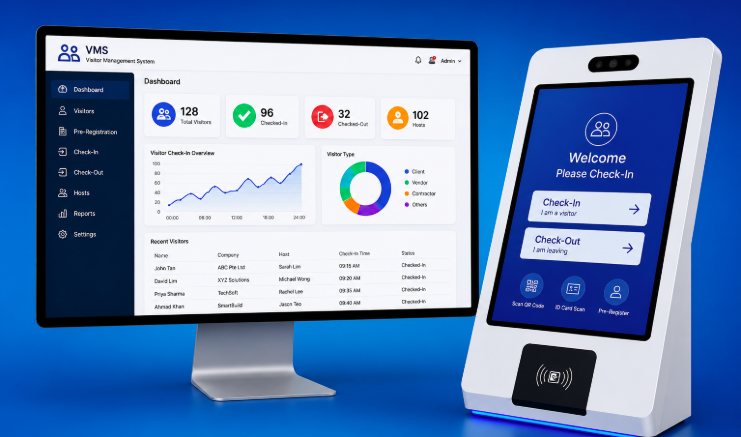
Smart Touch Technology offers a comprehensive VMS (Visitor Management System) kiosk application designed specifically for the needs of educational institutions and other organisations requiring robust visitor management solutions.
Comprehensive Visitor Check-In Solution
The VMS kiosk application provides educational campuses with a reliable platform for managing visitor arrivals, departures, and access. The system captures essential visitor information and creates digital records that support both day-to-day operations and compliance requirements.
Designed for Educational Environments
Smart Touch Technology understands the specific requirements of education campuses. The VMS kiosk application is built to support the high-volume visitor traffic that characterises educational institutions whilst maintaining the security standards expected by parents, regulators, and the community.
User-Friendly Interface
The kiosk application features an intuitive interface that requires minimal training for visitors. This reduces friction in the check-in process and ensures higher compliance rates with the visitor registration system.
Reliable Identity Verification
The system supports educational campuses in implementing consistent, reliable identity verification procedures. By standardising the verification process across all visitor arrivals, campuses can maintain uniform security standards regardless of who is manning the check-in point.
Digital Record Management
Unlike manual systems, the VMS kiosk application maintains comprehensive digital records of all visitor activity. These records support emergency management, security investigations, and compliance audits. Campus management can quickly retrieve visitor information when needed.
Practical Implementation Considerations for Education Campuses
Placement and Accessibility
The success of a visitor check-in kiosk system depends partly on its placement. Campuses should position kiosks at main entrances where visitors naturally arrive. The kiosk should be accessible to all visitors, including those with mobility challenges, ensuring inclusive design principles are observed.
Integration with Campus Systems
The most effective visitor management systems integrate with other campus systems. Integration with email or notification systems can alert host departments of visitor arrivals. Some campuses may require integration with their security or access control systems.
Staff Training and Support
While the kiosk is designed for visitor self-service, staff should understand how the system works to assist visitors who encounter difficulties. Reception and security personnel should be trained on using the system’s backend, retrieving visitor records, and troubleshooting common issues.
Clear Communication with Visitors
Educational campuses should communicate to regular visitors (parents, contractors, speakers) that visitor check-in kiosks are in place. Clear signage at entrances and information on the institution’s website prepare visitors for the system and reduce confusion on arrival.
Addressing Common Concerns About Kiosk Systems
What if Visitors Are Unfamiliar with Technology?
Modern visitor check-in kiosks are designed with accessibility and simplicity as priorities. The interface uses clear language, visual prompts, and step-by-step guidance. For visitors who require assistance, staff members are available to provide support without undermining the system’s efficiency benefits.
Data Security and Privacy
Education campuses collect and store visitor personal data. A reputable VMS kiosk system incorporates security features to protect this information. Campuses should ensure that any system they implement complies with Singapore’s Personal Data Protection Act (PDPA) and other relevant privacy regulations. It is advisable to review the system’s data handling procedures and security measures before implementation.
System Downtime or Technical Failures
A well-designed visitor management system includes contingency procedures for technical failures. Campuses should establish backup processes (such as manual check-in procedures) that can be activated if the kiosk system becomes unavailable.
The Broader Impact on Campus Safety Culture
Implementing a visitor check-in kiosk system sends a clear message to the campus community: security is taken seriously. This visible commitment to controlled access and visitor verification reinforces a culture of safety. Students, staff, and parents all benefit from the enhanced sense of security that comes with knowing visitor access is systematically managed.
Additionally, the data collected through the kiosk system provides valuable insights into campus visitor patterns. Over time, this information can inform security strategies and resource allocation decisions, making campus management even more proactive and responsive to security needs.
Next Steps for Education Campuses
If your education campus is considering implementing a visitor check-in kiosk system, the process typically involves several steps. First, assess your campus’s specific needs, including visitor volume, security requirements, and integration needs. Next, evaluate available solutions and vendors. Finally, plan for implementation, including staff training, visitor communication, and system configuration.
To explore how a dedicated visitor management solution can enhance your campus’s security and operational efficiency, explore full product details by clicking here: https://smartouch.com.sg/vms-visitor-management-system/
Conclusion
Education campuses across Singapore face the ongoing challenge of managing visitor access whilst maintaining robust security standards. Visitor check-in kiosk systems offer a practical, efficient solution that addresses this challenge head-on. By automating the visitor registration process, these systems enhance identity verification, improve operational efficiency, maintain accurate records, and contribute to overall campus safety.
Smart Touch Technology’s VMS kiosk application provides educational institutions with a reliable platform designed to support their specific visitor management needs. Whether your campus is looking to improve security procedures, reduce administrative burden, or enhance the visitor experience, a well-implemented visitor check-in system can deliver meaningful benefits.
The decision to implement a visitor management system is an investment in campus safety and operational excellence. Education campuses that prioritise reliable identity verification and systematic visitor management are better positioned to protect their communities and maintain the secure, welcoming environment that students, staff, and families expect.
Smart Touch technology pte ltd , www.smartouch.com.sg +65-63964767, sales@smartouch.com.sg , www.smartouch.com.my +607-3889903 sales@smartouch.com.my