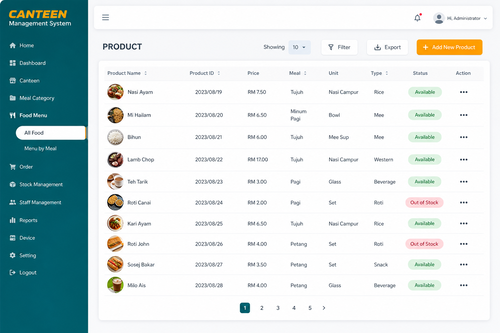
Long queues, cash handling, manual meal verification, and slow reconciliation can create unnecessary challenges for businesses operating staff canteens in Singapore. For factories, worker dormitories, construction sites, and large office campuses, managing hundreds or thousands of meal transactions every day requires a system that is fast, accurate, and easy to manage.
A smart canteen ordering system with facial recognition combines digital ordering, biometric identification, payment or subsidy management, and automated reporting into one streamlined solution. Instead of relying on cash, meal coupons, or shared cards, employees can use facial recognition to verify their identity, select their meals, and complete transactions with minimal physical contact.
For organisations looking to modernise their canteen operations, facial recognition can help improve queue management, reduce manual administration, strengthen subsidy control, and provide clearer visibility into daily meal transactions.
What Is a Smart Canteen Ordering System?
A smart canteen ordering system is a digital platform designed to automate the meal ordering and transaction process.
Depending on the configuration, the system can combine:
- Self-service ordering kiosks
- Digital menus
- Facial recognition terminals
- Employee identification
- Meal entitlement management
- Subsidy management
- Cashless payment
- Payroll or account deduction
- Kitchen order management
- Transaction reporting
Instead of waiting at a traditional cashier counter, an employee can identify themselves through facial recognition, select an available meal, confirm the transaction, and complete the order.
The transaction is then recorded digitally, allowing canteen operators and management teams to monitor meal usage without relying on manual records.
Why Use Facial Recognition for Canteen Ordering?
Traditional canteen systems often depend on cash, cards, coupons, or other physical credentials. These methods can create additional administration and introduce opportunities for errors or misuse.
Facial recognition provides another approach by linking the transaction directly to the enrolled employee.
Once an employee has been registered, their facial profile can be associated with the relevant employee account, meal entitlement, subsidy arrangement, or payment balance.
At the canteen, the system verifies the employee before processing the transaction.
This can reduce the need for employees to carry cards or remember PINs while giving management a clearer record of who received each meal.
Key Benefits of a Facial Recognition Canteen Ordering System
1. Faster Canteen Queues
Meal periods can create significant congestion, particularly in factories, dormitories, construction sites, and large workplaces.
Traditional transactions may require employees to wait for a cashier, present a card, handle cash, or provide other information before receiving their meals.
Facial recognition simplifies the identification process.
Employees can approach the terminal, complete facial verification, select or confirm their meal, and proceed with the transaction.
With a properly configured system, transaction processing can be significantly faster than conventional manual processes.
Shorter queues mean employees spend less of their break waiting for food and can return to work more efficiently.
2. Contactless Ordering and Payment
A facial recognition system reduces the need to handle physical payment methods.
Employees do not necessarily need to:
- Carry cash
- Present a meal card
- Handle coupons
- Touch shared payment devices
- Remember a PIN
This creates a more convenient and contactless experience, particularly during busy meal periods.
For facility managers, reducing physical payment handling can also simplify daily canteen operations.
3. Accurate Meal and Subsidy Tracking
Managing subsidised meals manually can be challenging.
For example, a company may provide one subsidised meal per employee per shift. If the process relies on cards, coupons, or manual records, staff may need to check whether an employee has already used their entitlement.
A facial recognition canteen system can associate each transaction with the employee’s registered profile.
The system can then apply configured meal entitlement or subsidy rules when the transaction is processed.
This provides a clearer record of:
- Who received the meal
- When the meal was received
- Which meal was selected
- Whether a subsidy was applied
- How many meals were consumed
This can make reconciliation and reporting easier for HR, finance, and canteen management teams.
4. Reduced Risk of Card Sharing and Misuse
Physical meal cards can potentially be shared between employees.
If a card represents a meal entitlement, another person may be able to use it unless additional verification is applied.
Facial recognition links the transaction to the registered individual rather than simply checking whether someone possesses a card.
This provides stronger identity verification and can reduce the risk of meal entitlement sharing.
For businesses managing large employee populations, this can help improve control over subsidised meal programmes.
5. Real-Time Transaction Reporting
A digital canteen system can automatically record transactions as they happen.
Management can use the available reporting tools to review information such as:
- Total meals served
- Meal usage by employee
- Meal usage by location
- Subsidy usage
- Transaction history
- Popular meal selections
- Canteen activity during different periods
This gives management better visibility into daily canteen operations and reduces dependence on manually prepared records.
How a Smart Facial Recognition Canteen System Works
A typical implementation follows several stages.
Step 1: Employee Enrolment
Employees are registered in the system and their facial profile is associated with their employee information.
Depending on the company’s configuration, the profile may also be linked to a subsidy entitlement, prepaid balance, payroll arrangement, or other meal rules.
Step 2: Menu and Meal Configuration
The canteen administrator configures available meals and pricing.
Different employee groups can also be assigned different meal entitlements or subsidy rules where required.
Step 3: Facial Verification
When an employee approaches the ordering or payment terminal, the camera captures their face and compares it with the enrolled profile.
Once the identity is successfully verified, the system retrieves the employee’s relevant account and entitlement information.
Step 4: Order Confirmation
The employee selects or confirms their meal through the ordering interface.
The system checks the applicable meal or subsidy rules before completing the transaction.
Step 5: Automatic Deduction
Depending on the implementation, the applicable amount can be deducted from the employee’s linked account, prepaid balance, subsidy entitlement, or supported payroll arrangement.
Step 6: Transaction Recording
The completed transaction is recorded automatically.
Management can then use the system’s reporting functions to review meal consumption, subsidy usage, and transaction activity.
Step 7: Kitchen Processing
Where kitchen integration is available, confirmed orders can be sent to the kitchen display or relevant preparation workflow, helping canteen staff manage orders more efficiently.
Smart Canteen Ordering for Large Workforces
The benefits become particularly noticeable when a canteen serves a large workforce.
Factories, worker dormitories, construction sites, and large corporate campuses may experience concentrated meal demand during relatively short break periods.
A manual system can struggle during these peaks because every transaction requires staff intervention.
A digital facial recognition system can automate the identification and transaction process, helping the canteen handle higher volumes without increasing administrative workload at the same rate.
For large organisations, the system can also provide centralised information across multiple counters or canteen locations, depending on the deployment.
Traditional Canteen vs Facial Recognition Canteen System
| Feature | Traditional Canteen | Facial Recognition System |
|---|---|---|
| Employee verification | Card, coupon, cash, or manual checking | Facial recognition |
| Payment | Cash or physical card | Linked digital account or configured payment method |
| Meal entitlement | Manual checking or card-based | System-based verification |
| Subsidy tracking | Manual reconciliation | Automated transaction records |
| Identity verification | Credential-based | Identity-based |
| Transaction records | May require manual processing | Digital and searchable |
| Reporting | Manual compilation | Automated reporting |
| Contactless experience | Limited | Yes |
Best Practices for Implementing a Facial Recognition Canteen System
Technology alone does not guarantee a successful deployment. Businesses should also plan the implementation carefully.
Communicate With Employees
Employees should understand why facial recognition is being introduced, how the system works, and how their information is handled.
Clear communication can improve employee confidence and make enrolment smoother.
Start With a Pilot
For larger organisations, consider testing the system at one canteen counter or location before expanding across the entire organisation.
A pilot can help identify practical issues involving:
- Queue flow
- Camera positioning
- Lighting
- Ordering workflow
- Employee enrolment
- Kitchen operations
- Backup procedures
Provide a Backup Verification Method
Even with a well-configured facial recognition system, businesses should consider how to handle situations where an employee cannot be recognised or the system experiences temporary downtime.
A suitable backup method can prevent legitimate employees from being unable to receive their meals.
Train Canteen Staff
Canteen operators should understand how to handle new employees, failed recognition attempts, account issues, and other exceptions.
Training helps ensure that the new technology improves operations instead of creating additional confusion.
Review Transaction Data Regularly
Management should periodically review transaction reports to identify unusual patterns, account issues, or discrepancies in meal usage.
This also allows organisations to use actual consumption data when planning future canteen operations.
What to Look for When Choosing a Smart Canteen System
Businesses should evaluate more than facial recognition alone.
Important considerations include:
Recognition Performance
The system should provide reliable verification under the actual lighting and environmental conditions of the canteen.
Employee Management
Administrators should be able to add new employees, update employee information, and remove users when they leave the organisation.
Subsidy and Entitlement Rules
The platform should support the organisation’s actual meal policies, including different entitlements for different employee groups where required.
Reporting
Look for clear transaction and subsidy reports that can help HR, finance, and facilities teams manage the canteen.
Multi-Counter Support
Large canteens may require multiple ordering or payment points operating simultaneously.
Integration
If the organisation already uses HR, payroll, attendance, access control, or other workforce systems, integration capabilities should be evaluated before deployment.
Security and Data Protection
Because facial recognition involves biometric information, businesses should understand how facial data is collected, stored, protected, accessed, and retained.
Smart Touch Technology’s Canteen Management System
Smart Touch Technology provides a canteen management system designed to help organisations digitise employee meal management.
The solution can combine facial recognition with canteen management functions such as employee identification, meal entitlement management, transaction recording, and reporting.
It can be suitable for environments where large numbers of employees need to access meals efficiently, including:
- Construction sites
- Factories
- Worker dormitories
- Corporate workplaces
- Large campuses
- Industrial facilities
By connecting employee identification with meal transactions, organisations can gain better visibility over canteen usage while reducing reliance on manual processes.
For businesses managing subsidised meals, the system can also help provide a more structured way to monitor employee meal entitlements and transaction history.
Frequently Asked Questions
1. How does facial recognition work in a canteen?
Employees are first enrolled in the system with their facial profile. When they use the canteen terminal, the system verifies their identity and retrieves the relevant meal or account information before processing the transaction.
2. Can the system manage subsidised meals?
Yes. Meal entitlement and subsidy rules can be configured according to the organisation’s requirements, with transactions recorded against the relevant employee profile.
3. Can employees use the system without carrying a card?
Yes. Facial recognition can allow enrolled employees to identify themselves without presenting a physical meal card.
4. What happens if an employee is not recognised?
A suitable backup verification method can be provided so that legitimate employees can still access the canteen if facial verification is temporarily unsuccessful.
5. Can the system support multiple canteen counters?
Yes. Depending on the system configuration, multiple terminals or counters can operate within the same canteen environment.
6. How long does employee enrolment take?
Facial enrolment is generally designed to be quick and can be incorporated into the employee onboarding process. The actual time depends on the hardware and system configuration.
7. Is facial recognition suitable for large employee populations?
Yes. A properly configured system can be used in environments with large numbers of employees, making it suitable for factories, construction sites, worker dormitories, and large corporate facilities.
Conclusion
A smart canteen ordering system with facial recognition in Singapore can transform the way organisations manage employee meals.
By combining facial verification, digital ordering, meal entitlement management, automated transaction records, and reporting, businesses can reduce queues, minimise manual reconciliation, improve subsidy control, and provide employees with a more convenient dining experience.
For large workplaces where hundreds or thousands of employees use the canteen every day, replacing traditional cash, coupons, or card-based processes with a smart digital system can make canteen operations significantly easier to manage.
Smart Touch Technology’s canteen management solution provides an option for organisations looking to modernise employee meal management and connect canteen operations with their wider workforce technology environment.
Click here for more product information:
https://smartouch.com.sg/canteen-system/
Smart Touch Technology Pte Ltd
Singapore
www.smartouch.com.sg
+65-63964767
sales@smartouch.com.sg
Malaysia
www.smartouch.com.my
+607-3889903
sales@smartouch.com.my