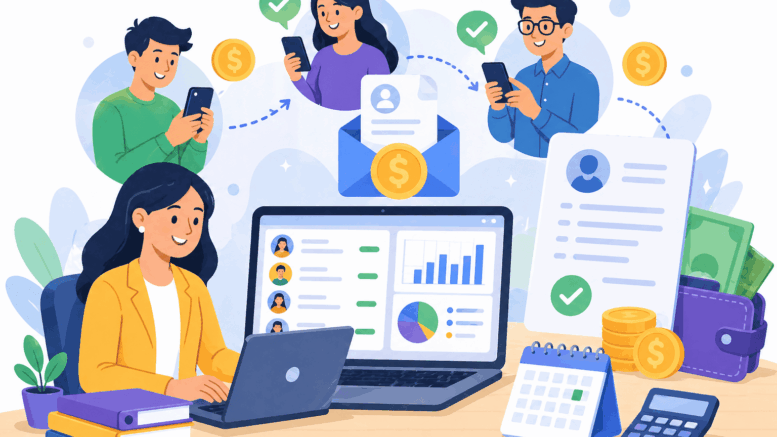
Payroll data is some of the most sensitive information an organisation manages. Employee salary details, personal information, attendance records, leave records, and payroll-related documents all need to be handled carefully throughout every payroll cycle.
For HR teams still relying on spreadsheets, disconnected files, or manual payroll processes, controlling who can access and update sensitive information can become increasingly difficult as the organisation grows.
SmartHR payroll software provides a centralised platform for payroll and workforce management, helping businesses organise employee information, attendance, leave, overtime, and payroll processing in one system. SmartHR is part of Smart Touch Technology’s broader HR and workforce management ecosystem for businesses in Singapore. (Smartouch)
This article explains why payroll data security matters and how a modern HRMS such as SmartHR can help organisations improve control over employee information while reducing manual payroll administration.
Why Payroll Data Security Matters
Payroll is not simply a financial process. It involves information that employees and organisations expect to be handled responsibly.
A typical payroll operation may involve:
- Employee personal information
- Salary and allowance details
- Overtime records
- Attendance information
- Leave records
- Payroll reports
- Digital payslips
- Employment information
When this information is spread across spreadsheets, email attachments, shared folders, and separate attendance systems, HR teams may have to manually move data between different sources.
This creates additional opportunities for:
- Accidental file sharing
- Unauthorised access
- Duplicate records
- Incorrect data entry
- Outdated employee information
- Payroll calculation errors
- Difficulty tracking changes
A centralised HR system can reduce these risks by keeping workforce information within a structured platform instead of relying on multiple disconnected files.
Common Payroll Data Problems With Manual Processes
Shared Spreadsheets
Spreadsheets are convenient for small-scale administration, but managing sensitive payroll information through multiple files can become difficult.
Different versions may be stored on different computers, while HR staff may need to email or manually transfer files between departments.
This makes maintaining one accurate source of payroll information more challenging.
Manual Data Entry
When attendance, overtime, leave, and employee information are entered manually into payroll calculations, errors can occur.
For example, HR staff may need to:
- Collect attendance records.
- Check overtime.
- Verify leave.
- Calculate working hours.
- Update payroll information.
- Review the final calculations.
An integrated system can reduce repetitive data entry by connecting attendance and HR information with payroll processing. SmartHR supports attendance integration and payroll preparation as part of its workforce management platform. (Smartouch)
Disconnected HR Systems
When payroll, attendance, leave, and employee records are maintained separately, HR teams may need to reconcile information from several sources.
This increases administrative workload and makes it harder to identify where a discrepancy originated.
A centralised HRMS provides a more organised approach by bringing key employee information and HR processes into one platform.
How SmartHR Supports Secure Payroll Management
SmartHR is a cloud-based HRMS and payroll platform that combines employee management, payroll, attendance, leave management, employee self-service, and HR reporting. (Smartouch)
Instead of treating payroll as an isolated process, SmartHR connects payroll preparation with the workforce information that supports it.
Centralised Employee Records
SmartHR allows organisations to maintain employee information in one central system.
This can include:
- Personal information
- Employment details
- Department information
- Work schedules
- Attendance history
- Leave information
- Payroll-related records
Centralising these records makes it easier for authorised HR personnel to manage employee information without maintaining multiple disconnected files. (Smartouch)
Attendance and Payroll Integration
Accurate payroll begins with accurate attendance information.
SmartHR can work with different attendance methods, including:
- Facial recognition
- Fingerprint verification
- RFID
- Mobile attendance
- GPS attendance
Attendance information can then support payroll processing, reducing the need for HR teams to manually re-enter working hours and attendance information. (Smartouch)
This is particularly useful for organisations managing shift workers, multiple branches, construction workers, field employees, or other distributed teams.
Automated Payroll Processing
Manual salary calculations can become increasingly time-consuming as an organisation grows.
SmartHR supports payroll processing and can help organise salary-related information such as overtime, allowances, bonuses, variable salary components, and digital payslips. (Smartouch)
By connecting payroll with attendance and HR records, organisations can reduce repetitive calculations and improve consistency throughout the payroll process.
Digital Leave Management
Leave information can directly affect payroll calculations.
If leave records are maintained separately from payroll, HR staff may need to manually verify employee leave before processing salaries.
SmartHR provides digital leave management, allowing employees to submit leave applications and managers to review and approve them online. Leave balances can also be maintained within the system. (Smartouch)
This creates a more structured flow between employee leave, attendance, and payroll administration.
Overtime Tracking
Overtime is another important component of payroll.
SmartHR helps organisations track overtime records and compare attendance against working schedules, making it easier for HR teams to review overtime information before payroll processing. (Smartouch)
This can help reduce manual checking and improve visibility into overtime-related payroll costs.
Employee Self-Service Reduces Unnecessary Data Handling
Employee self-service is another important part of modern HR management.
Rather than requiring HR staff to handle every routine request, employees can access selected HR functions themselves.
SmartHR and the SmartGoGo mobile application support functions such as:
- Viewing payslips
- Applying for leave
- Checking leave balances
- Viewing attendance
- Accessing HR information
This reduces the amount of routine information that needs to pass through HR staff manually and gives employees greater visibility into their own records. (Smartouch)
For HR departments managing a large workforce, reducing repetitive requests can make payroll and HR administration more efficient.
Payroll Security Is More Than Software
Using payroll software is only one part of protecting employee information.
HR teams should also establish clear internal procedures for managing access to payroll information.
Important practices include:
Review User Access Regularly
Only employees who need payroll information for their role should have access to relevant HR functions.
Access permissions should also be reviewed when employees change roles.
Remove Access When Employees Leave
When an HR administrator or manager leaves the organisation, their system access should be reviewed and removed promptly where appropriate.
Avoid Unnecessary File Sharing
Sensitive payroll information should not be distributed through unnecessary email attachments or unsecured shared folders when it can be managed within the HR platform.
Keep Employee Information Updated
Incorrect or outdated employee records can lead to payroll mistakes.
HR teams should update employee information when there are changes to roles, departments, salary components, work schedules, or employment status.
Maintain Clear Approval Processes
Payroll should be reviewed before final processing. Organisations should establish appropriate internal approval procedures so that payroll changes are checked by authorised personnel.
SmartHR Payroll vs Spreadsheet-Based Payroll
| Factor | Spreadsheet / Manual Payroll | SmartHR Payroll Software |
|---|---|---|
| Employee records | Multiple files may be used | Centralised HR database |
| Attendance data | Manual transfer often required | Integrated attendance options |
| Leave management | Separate tracking may be required | Digital leave management |
| Overtime | Manual checking | Integrated workforce information |
| Payroll calculation | More manual processing | Automated payroll workflows |
| Payslips | Manual preparation/distribution | Digital payslip support |
| Reporting | Manual compilation | Centralised HR reporting |
| Multi-branch management | Difficult to consolidate | Centralised cloud platform |
How SmartHR Fits Into the Payroll Cycle
A modern payroll workflow can connect several HR processes together.
1. Employee Information
Employee information is maintained within the central HR platform.
2. Attendance Capture
Attendance can be collected through supported biometric devices or mobile attendance solutions.
3. Leave and Overtime
Approved leave and overtime information is recorded within the HR system.
4. Payroll Preparation
The relevant workforce information is brought together for payroll processing.
5. Review and Approval
HR and authorised personnel review payroll information before final processing according to the organisation’s internal procedures.
6. Payslip Distribution
Digital payslips can then be provided to employees through supported HR services.
This integrated approach reduces the need to repeatedly transfer information between separate systems.
Supporting Singapore Payroll and HR Requirements
Payroll software should also help organisations manage the administrative requirements associated with Singapore employment and payroll processes.
SmartHR is designed for Singapore businesses and supports workforce management functions including payroll, attendance, leave management, and HR reporting. (Smartouch)
However, organisations should always confirm the current statutory requirements and ensure their payroll configuration is appropriate for their specific workforce and business circumstances.
Software automation can reduce administrative effort, but organisations remain responsible for reviewing their payroll processes and ensuring the information submitted is accurate.
SmartHR for Multi-Branch Businesses
Businesses with multiple offices, branches, or project locations can face additional challenges when managing employee information.
Attendance may be captured at different locations, while HR teams may need to consolidate the information before payroll processing.
A cloud-based HR platform allows authorised users to manage workforce information through a centralised system.
SmartHR supports multi-branch workforce management and consolidated reporting, helping organisations maintain greater consistency across different locations. (Smartouch)
This can be particularly useful for businesses in:
- Manufacturing
- Construction
- Logistics
- Retail
- Hospitality
- Healthcare
- Corporate services
- Field-based operations
SmartHR and SmartGoGo Integration
For employees who work outside a fixed office, mobile HR services can complement the main SmartHR platform.
SmartGoGo provides mobile functions such as clocking in and out, leave applications, payslip access, and attendance information. (Smartouch)
This gives businesses another option for managing employees who work across project sites, customer locations, or multiple branches.
Attendance information can then support the wider HR and payroll workflow.
Best Practices for Protecting Payroll Information
Even with a modern HR platform, good internal practices remain important.
Organisations should:
- Give system access according to job responsibilities.
- Review access permissions regularly.
- Remove access promptly when staff leave or change roles.
- Keep employee records accurate and updated.
- Establish clear payroll approval procedures.
- Train HR personnel on responsible handling of employee information.
- Avoid unnecessary downloads or sharing of payroll files.
- Review payroll reports before final processing.
- Keep software and systems properly maintained.
- Understand how employee information is stored and managed by the selected solution.
Technology provides the foundation, but good HR governance completes the security process.
What to Look for in Secure Payroll Software
When evaluating payroll software, businesses should look beyond salary calculation alone.
Consider whether the platform provides:
Centralised Employee Management
Employee information should be organised within a structured HR database.
Attendance Integration
The system should be able to connect payroll with reliable attendance information.
Leave and Overtime Management
Leave and overtime should be incorporated into the wider payroll workflow rather than maintained through separate spreadsheets.
Employee Self-Service
Employees should be able to access appropriate HR information without requiring HR staff to manually handle every request.
Reporting
HR teams should have access to attendance, payroll, leave, and workforce reports.
Multi-Branch Support
Businesses with multiple locations should be able to manage workforce information centrally.
Cloud Accessibility
For organisations with distributed teams, cloud-based access can provide authorised users with greater flexibility when managing HR operations.
Why SmartHR Can Help Modernise Payroll
SmartHR is designed as an integrated HRMS rather than a payroll calculator alone.
The platform combines:
- Payroll management
- Employee management
- Attendance tracking
- Leave management
- Overtime tracking
- Employee self-service
- HR reporting
- Mobile workforce support
This integrated approach allows businesses to connect the information that HR teams use throughout the employee lifecycle. (Smartouch)
For businesses moving away from spreadsheets and disconnected HR processes, bringing these functions together can reduce repetitive administration and improve workforce visibility.
Frequently Asked Questions
1. How does SmartHR help protect employee information?
SmartHR provides a centralised HR platform for managing employee and payroll information. Organisations should also configure appropriate user permissions and internal access policies to ensure sensitive information is only available to authorised personnel.
2. Can SmartHR integrate attendance with payroll?
Yes. SmartHR supports integration with biometric and mobile attendance solutions, allowing attendance information to support payroll processing. (Smartouch)
3. Does SmartHR support overtime management?
Yes. SmartHR supports overtime tracking and can use attendance and schedule information to improve payroll preparation. (Smartouch)
4. Can employees access their payslips themselves?
Yes. Employee self-service functionality allows employees to view payslips and access other HR services through supported platforms. (Smartouch)
5. Is SmartHR suitable for companies with multiple branches?
Yes. The cloud-based platform supports centralised workforce management and reporting across multiple branches and locations. (Smartouch)
6. Can SmartHR support mobile employees?
Yes. SmartHR can work with SmartGoGo mobile attendance, making it suitable for employees who work across different locations or outside a fixed office. (Smartouch)
7. Is payroll software enough to guarantee data security?
No. Secure software is only one part of payroll data protection. Organisations should also implement appropriate access controls, approval procedures, staff training, and employee data management practices.
Key Takeaways
- Payroll contains sensitive employee and financial information that requires careful management.
- Spreadsheet-based processes can create unnecessary risks through manual data handling and multiple file versions.
- SmartHR centralises employee, attendance, leave, overtime, and payroll-related information.
- Attendance integration helps reduce manual payroll data entry.
- Employee self-service reduces repetitive HR administration.
- Multi-branch and cloud-based management provides greater visibility for distributed organisations.
- Strong internal access and data-management policies should complement the HR software.
Conclusion
Secure employee data with SmartHR payroll software by moving away from fragmented spreadsheets and disconnected HR processes toward a centralised workforce management platform.
SmartHR brings payroll, employee records, attendance, leave, overtime, reporting, and employee self-service together, helping businesses reduce repetitive administration while improving visibility across their workforce. (Smartouch)
For Singapore businesses, this integrated approach can make payroll operations more organised and scalable, particularly when managing multiple branches, shift workers, or mobile employees.
If your organisation is still managing payroll through spreadsheets or separate attendance and HR systems, SmartHR provides a practical path toward a more connected payroll workflow.
Want to know more about SmartHR? Click here:
Smart Touch Technology Singapore
Smart Touch Technology Pte Ltd
Singapore
www.smartouch.com.sg
+65-63964767
sales@smartouch.com.sg
Malaysia
www.smartouch.com.my
+607-3889903
sales@smartouch.com.my