Compare Door Access Control System Singapore Options for Facility Management Teams in Singapore
Facility management teams across Singapore face a critical challenge: how to secure their premises effectively while maintaining smooth operations and compliance with local regulations. As businesses, educational institutions, healthcare facilities, and government organisations continue to prioritise security and operational efficiency, the choice of door access control system becomes increasingly important.
The right access control solution can streamline entry management, reduce security risks, improve audit trails, and enhance overall facility operations. However, with various options available in the Singapore market, facility managers must carefully evaluate their choices to find a system that aligns with their specific needs, budget, and operational requirements.
This article explores the key considerations when comparing door access control systems in Singapore, helping facility management teams make informed decisions that strengthen security while supporting their day-to-day operations.
Why Door Access Control Systems Matter for Singapore Facilities
Whether you manage an office building, retail space, industrial facility, or educational institution, controlling who enters your premises and when is fundamental to security and compliance. A robust door access control system provides far more than basic security—it offers operational insights, flexibility, and accountability.
In Singapore’s competitive business environment, facility managers must balance multiple priorities: protecting assets and personnel, maintaining operational efficiency, ensuring regulatory compliance, and managing costs. An effective door access control system addresses all of these concerns simultaneously.
Beyond basic security, modern access control systems help facility managers:
- Track employee and visitor movements for audit and compliance purposes
- Respond quickly to security incidents with detailed entry and exit records
- Manage access permissions remotely without requiring physical key changes
- Integrate with other facility management systems for comprehensive oversight
- Support flexible working arrangements with time-based and location-specific access
For Singapore organisations, reliable access control is not just about security—it’s about operational confidence and regulatory peace of mind.
Key Considerations When Comparing Door Access Control Systems
1. Technology and Functionality
Different door access control systems use different technologies. Understanding these options helps facility managers select a solution that matches their requirements and existing infrastructure.
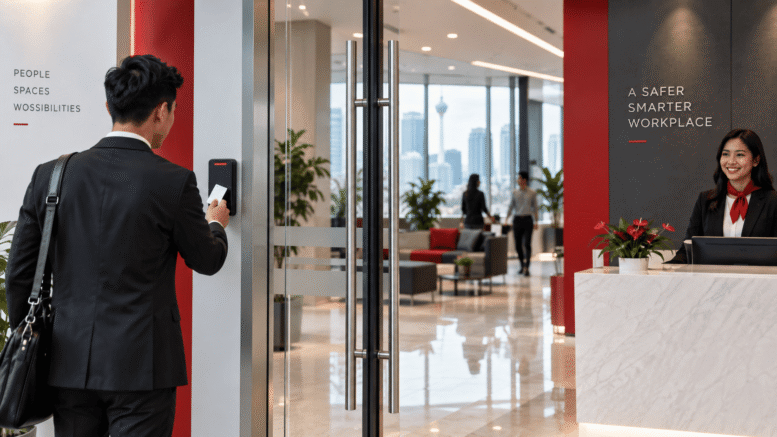
Card-Based Systems: Traditional proximity card readers remain popular for their reliability and ease of use. Employees simply present a card to an access point, making these systems intuitive and quick to operate.
Biometric Systems: Fingerprint, facial recognition, or iris scanning technologies offer enhanced security by eliminating the risk of unauthorised card sharing. However, biometric systems typically require more careful implementation and user training.
Mobile and Credential-Free Access: Newer systems allow employees to use smartphones or wearable devices instead of physical credentials. These solutions offer convenience and reduce the need to issue and manage physical cards.
Hybrid Approaches: Many modern systems combine multiple technologies, allowing flexibility. For example, a facility might use card access for routine entry, with biometric verification for sensitive areas.
2. Scalability and Integration
Your facility may expand, or your operational needs may change. A scalable access control system can grow with your organisation without requiring complete replacement.
Consider whether the system can accommodate:
- Additional doors and entry points as your facility expands
- Integration with visitor management systems
- Connection to time and attendance tracking
- Links to existing security systems like CCTV
- Compatibility with other facility management software
Integration capabilities are particularly valuable for facility managers who already use multiple systems. A connected ecosystem reduces manual data entry, improves accuracy, and provides a more complete operational picture.
3. User Experience and Ease of Management
A sophisticated access control system is only effective if employees use it correctly and facility managers can operate it efficiently. Consider the user experience for both ends.
For employees, this means fast, reliable access with minimal frustration. For facility managers, this means intuitive administration, straightforward permission changes, and clear reporting.
Systems should offer:
- Simple interfaces that don’t require extensive training
- Quick response times at access points
- Easy credential issuance and management processes
- Clear, accessible reporting for compliance and troubleshooting
- Responsive technical support
4. Compliance and Local Requirements
Singapore organisations must comply with various regulations and standards. While specific access control requirements vary by industry, general security and data protection obligations apply broadly. Facility managers should ensure their chosen system supports compliance documentation and audit trails.
Additionally, systems should protect personal data in accordance with Singapore’s Personal Data Protection Act (PDPA) and other relevant regulations. Many modern systems include built-in privacy features and data retention controls to support compliance.
It is advisable to check with the relevant regulatory authorities or industry bodies in your sector for specific guidance on access control requirements and best practices.
5. Reliability and Support
An access control system that fails creates immediate operational disruption and security concerns. Reliability is non-negotiable.
Evaluate potential systems based on:
- Uptime records and system redundancy features
- Local technical support availability in Singapore
- Maintenance and system update procedures
- Backup systems and failover capabilities
- Response time for technical issues
For mission-critical facilities, systems with offline capabilities or local processing (in addition to cloud features) can ensure access control continues even during connectivity issues.
6. Cost Considerations
Budget constraints are real for most facility managers. Compare not just initial purchase costs but total cost of ownership, including:
- Hardware costs (readers, controllers, credentials)
- Software licensing fees
- Installation and configuration
- Ongoing maintenance and support
- Credential replacement and management
- System upgrades and expansion costs
Less expensive systems may present higher long-term costs if they’re difficult to manage, require frequent repairs, or cannot scale with your organisation. Conversely, premium solutions may offer better value through reduced operational overhead and improved security outcomes.
Common Challenges in Selecting Door Access Control Systems
Facility managers often face specific challenges when evaluating access control options:
Diverse User Populations: Managing access for permanent employees, contractors, visitors, and delivery personnel requires flexibility. The system must handle different access levels, time-based permissions, and credential types.
Multiple Building Locations: Organisations with several facilities need centralised management while supporting local autonomy. Cloud-based systems can help, but integration with existing infrastructure must be seamless.
Legacy System Integration: Older facilities may have existing security systems, CCTV, or building management systems. A new access control system must work alongside these, not replace them entirely or create isolated silos of information.
Rapid Changes in Work Arrangements: Post-pandemic hybrid working, shift changes, and project-based team structures mean access permissions need frequent updates. Manual, slow systems create backlogs and security risks.
User Adoption: Even excellent systems fail if employees don’t use them correctly or resist the technology. Clear communication, proper training, and user-friendly interfaces are essential.
How Smart Touch Technology Door Control System Singapore Can Help
Smart Touch Technology offers door access control solutions designed for Singapore facilities. Their door control system addresses the key considerations facility managers face when securing and managing their premises.
By choosing a comprehensive door control system from Smart Touch Technology, facility managers in Singapore can:
- Implement reliable, scalable access control that grows with their organisation
- Manage access permissions efficiently through intuitive administration tools
- Support compliance requirements with detailed audit trails and reporting
- Integrate access control with other facility systems for cohesive operations
- Benefit from local technical support and expertise in the Singapore market
To explore how a door access control system can strengthen security and improve operations at your facility, visit https://smartouch.com.sg/door-access-control-system/ to learn more about Smart Touch Technology’s solutions tailored for Singapore facilities.
Making Your Comparison Decision
When comparing door access control systems for your facility, approach the evaluation systematically:
Define Your Requirements: List your specific needs—number of entry points, types of users, integration priorities, compliance requirements, and budget constraints. Use this as your evaluation baseline.
Request Demonstrations: Ask vendors to demonstrate their systems in action. Test the employee experience, administrative interface, and reporting capabilities.
Check References: Ask for references from similar Singapore facilities using the system. Their real-world experiences will reveal strengths and limitations.
Evaluate Support Structure: Speak with the vendor’s support team. Confirm they offer local support in Singapore and understand your facility type.
Consider Future Needs: Don’t just think about your current requirements. Will the system support your facility as it evolves over the next three to five years?
Review Security and Compliance Features: Ensure the system includes robust security, data protection, and compliance documentation features appropriate for your industry.
Conclusion
Selecting the right door access control system is a significant decision for facility management teams in Singapore. The system you choose will impact security, operational efficiency, employee experience, and compliance for years to come.
By carefully comparing options based on technology, scalability, user experience, compliance support, reliability, and cost, facility managers can identify a solution that truly meets their needs. Modern access control systems offer powerful capabilities—the key is finding one that aligns with your organisation’s priorities and operational context.
Whether your facility is a corporate office, retail space, healthcare institution, or industrial site, a well-chosen door access control system becomes a cornerstone of secure, efficient operations. Take time to evaluate your options thoroughly, and don’t hesitate to seek local expertise and support to ensure successful implementation.
Smart Touch technology pte ltd , www.smartouch.com.sg +65-63964767, sales@smartouch.com.sg , www.smartouch.com.my +607-3889903 sales@smartouch.com.my