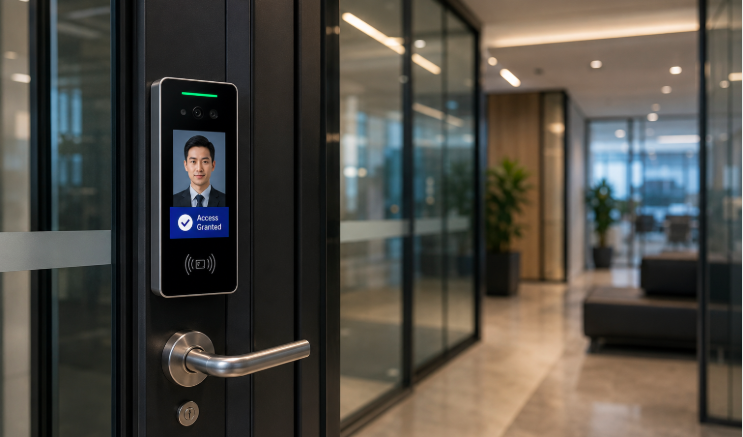
Face Recognition Access Control Singapore: Cost and Features for Medical Facilities
Introduction
Healthcare facilities in Singapore face unique security and operational challenges. Medical institutions must protect sensitive patient data, manage staff access to restricted areas, and maintain compliance with regulatory requirements—all while ensuring smooth operations and patient safety.
Traditional access control systems using key cards, PIN codes, or manual sign-in logs are increasingly proving inadequate for modern medical environments. These methods are vulnerable to unauthorised access, can be time-consuming to manage, and don’t provide reliable audit trails. Medical facilities need a more sophisticated, secure, and efficient solution.
Face recognition access control technology has emerged as a practical solution for healthcare organisations across Singapore. This article explores how this technology works, its benefits for medical facilities, and the considerations medical administrators should evaluate when implementing such systems.
Why Access Control Matters in Medical Facilities
Security and Patient Safety
Medical facilities store valuable equipment, medications, and confidential patient information. Unauthorised access to these areas poses serious risks, including theft, tampering with medical records, and potential harm to patients. Robust access control systems ensure that only authorised personnel can enter sensitive areas such as pharmacy rooms, operating theatres, ICU units, and records storage areas.
Regulatory Compliance
Singapore’s healthcare sector operates under strict regulations designed to protect patient privacy and ensure facility safety. Medical facilities must maintain detailed access logs, demonstrate control over restricted areas, and be able to quickly identify who accessed what areas and when. Traditional systems often fall short in providing reliable documentation and traceability.
Operational Efficiency
In a busy medical facility, staff members need quick access to different areas throughout their shifts. Fumbling with key cards, remembering PIN codes, or waiting for manual verification slows down operations. A streamlined access control system reduces delays and allows medical staff to focus on patient care.
How Face Recognition Access Control Works
Face recognition technology captures and analyses facial features to verify identity. In a medical facility setting, the system works through a straightforward process:
- An authorised staff member approaches the access point (door or entry area)
- The system captures their facial image
- The image is compared against a database of enrolled staff members
- If there is a match and the person has authorisation for that area, access is granted
- The system logs the access event with a timestamp
This entire process typically takes just seconds, allowing staff to move seamlessly through the facility without fumbling for credentials or waiting for manual verification.
Key Features of Face Recognition Access Control for Medical Facilities
Contactless Verification
In a healthcare environment where infection control is paramount, contactless access control is a significant advantage. Staff members do not need to touch shared surfaces such as card readers or keypads, reducing the potential transmission of germs and pathogens.
Real-Time Access Logging
Every access event is automatically recorded with precise timestamps and personnel identification. This creates a comprehensive audit trail that medical facilities can review to demonstrate compliance with regulatory requirements and investigate any security incidents.
Flexible Authorisation Levels
Different staff members require access to different areas. Face recognition systems can be configured to grant specific individuals access to particular zones based on their role—for example, pharmacists can access the pharmacy, surgeons can access theatres, and administrative staff can access records rooms. This granular control minimises the risk of unauthorised access.
Integration with Facility Systems
Modern access control solutions can be integrated with other facility management systems, allowing administrators to manage access permissions from a centralised platform and correlate access data with other operational information.
Benefits for Medical Facilities in Singapore
Enhanced Security
Face recognition is difficult to circumvent compared to traditional methods. You cannot lend your face to a colleague, lose it, or have it copied. This makes it a more secure form of identification for protecting sensitive medical areas and resources.
Improved Compliance
Medical facilities can more easily demonstrate compliance with access control requirements by maintaining detailed, automatically generated logs. When auditors or regulators require evidence of who accessed restricted areas, the system provides objective, timestamped data.
Reduced Administrative Burden
Managing access cards—issuing them, replacing lost ones, deactivating them when staff leave—creates administrative overhead. Face recognition eliminates this burden. When an employee leaves the organisation, their access is simply removed from the system without any physical items to retrieve or destroy.
Faster Staff Movement
Medical staff are often pressed for time. Eliminating the need to search for access cards or remember PIN codes helps them move more efficiently through the facility, allowing them to dedicate more time to patient care.
Professional and Modern Appearance
Implementing modern access control technology demonstrates to staff, patients, and visitors that the facility invests in contemporary security measures and operates to high standards.
Cost Considerations for Medical Facilities
Medical administrators evaluating face recognition access control should consider several cost factors:
Initial Hardware Investment
The cost of face recognition cameras, door controllers, and related hardware varies depending on the number of access points, the size of the facility, and the specific features required. A small clinic with a few access points will have different requirements—and costs—compared to a large hospital with multiple wings and dozens of restricted areas.
Software and Licensing
Access control systems typically involve software licensing fees. Some providers charge per door or per user, whilst others may use a flat-rate model. Understanding the pricing structure and how costs scale as your facility grows is important for budget planning.
Installation and Integration
Professional installation, configuration, and integration with existing facility systems are important investments. Proper installation ensures the system functions reliably and integrates seamlessly with other operational systems.
Ongoing Support and Maintenance
Like any technology system, face recognition access control requires ongoing maintenance, updates, and technical support. Factor these recurring costs into your budget when evaluating solutions.
Return on Investment
Whilst the upfront costs are real, many facilities find that the long-term benefits—reduced card replacement costs, fewer security incidents, improved efficiency, and lower administrative overhead—justify the investment. The specific return on investment depends on your facility’s size, current security challenges, and operational priorities.
Practical Considerations When Implementing Face Recognition Access Control
Staff Training
Staff members need to understand how to use the new system. Training should cover how to approach access points, what happens if the system does not recognise them, and how to report technical issues. Well-trained staff will use the system correctly and feel confident with the new process.
Enrolment Process
Before staff members can use face recognition access control, their facial data must be enrolled in the system. This is typically a simple process involving a photo or brief scan, but it does require coordination and time. Planning the enrolment process carefully—perhaps doing it during staff inductions or scheduled sessions—helps ensure smooth implementation.
Backup Procedures
No technology system is infallible. Medical facilities should establish backup access procedures in case the system experiences technical issues. This might involve temporary access cards, manual override procedures, or alternative routes to critical areas, ensuring that patient care is never compromised by a system failure.
Data Privacy and Protection
Facial recognition data is sensitive personal information. Medical facilities must ensure that the system complies with relevant data protection regulations and that facial data is stored securely. Any provider you work with should be able to explain how they protect this data and what safeguards are in place.
How Smart Touch Technology Singapore Can Help
Smart Touch Technology Singapore offers face recognition access control solutions designed specifically for the needs of modern facilities, including healthcare organisations. The Face & Door access control product provides medical facilities with a comprehensive solution for managing secure access to restricted areas.
With Smart Touch’s face recognition technology, Singapore medical facilities can implement contactless, reliable access control that enhances security, improves operational efficiency, and maintains detailed audit trails for compliance purposes. The system is designed to integrate with existing facility infrastructure and can be customised to meet the specific access requirements of different departments and restricted areas.
Smart Touch Technology understands the unique requirements of healthcare facilities and provides systems that balance security with the operational fluidity that medical environments demand.
Want to know more about this product? Click here to learn more about how Smart Touch’s Face & Door access control can benefit your medical facility.
Conclusion
Face recognition access control represents a modern, secure, and efficient approach to managing access in medical facilities across Singapore. By eliminating reliance on traditional key cards and PIN codes, healthcare organisations can enhance security, improve compliance, reduce administrative burden, and support faster, more efficient staff movement—all of which ultimately contribute to better patient care.
Whilst implementing such technology involves cost considerations and requires careful planning, the long-term benefits often justify the investment. Medical facility administrators evaluating access control solutions should consider how face recognition technology aligns with their security needs, operational priorities, and budget constraints.
If your medical facility is considering upgrading its access control system, Smart Touch Technology Singapore is available to discuss your specific requirements and explore how face recognition access control can work for your organisation.
Smart Touch technology pte ltd , www.smartouch.com.sg +65-63964767, sales@smartouch.com.sg , www.smartouch.com.my +607-3889903 sales@smartouch.com.my