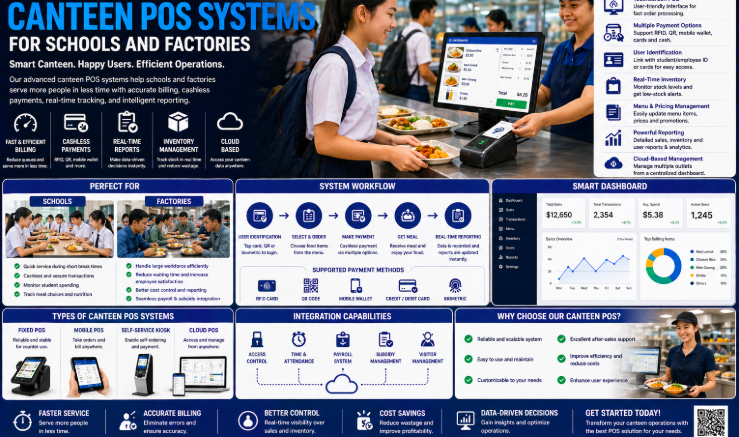
Corporate and institutional canteens face a persistent, costly problem: food waste. Over-preparation, inaccurate headcount forecasting, and manual meal tracking all contribute to wasted ingredients and inflated catering budgets. Canteen management with face recognition technology tackles this problem at its root — by giving kitchen and facilities teams accurate, real-time data on exactly who is eating, when, and how many meals to prepare.
Why Canteens Struggle With Food Waste
Without accurate data on meal attendance, most canteens over-prepare “just in case,” leading to significant waste at the end of each service. Common causes include:
- No reliable way to forecast daily headcount before meal preparation begins.
- Manual meal coupon or sign-in systems that are easy to misuse or lose track of.
- Lack of historical data to identify consumption patterns by day, department, or shift.
- Difficulty tracking subsidised meal entitlements accurately across large workforces.
How Face Recognition Canteen Systems Work
A camera-based terminal installed at the canteen entrance or serving counter verifies each diner’s identity using facial recognition as they arrive for a meal. The system instantly logs the meal transaction, deducts any applicable meal credit or subsidy, and feeds this data into a central dashboard — all without the diner needing to carry a card or enter a PIN.
Real-Time Headcount Forecasting
Because check-ins happen the moment diners arrive, kitchen staff can see live attendance trends and adjust preparation for later meal sittings accordingly, reducing last-minute over-cooking.
Historical Consumption Analytics
Over time, the system builds a data history showing attendance patterns by day of week, department, or shift — allowing catering teams to forecast portions more accurately and cut waste at the source.
Automated Subsidy and Entitlement Tracking
For organisations offering subsidised meals, the system automatically tracks entitlement usage per employee, removing the need for manual coupon books or spreadsheets.
Key Benefits of Face Recognition Canteen Management
- Reduced food waste: Accurate, real-time headcount data allows kitchens to prepare closer to actual demand.
- Faster service: Contactless check-in eliminates queues caused by manual card taps or coupon collection.
- Fraud prevention: Facial recognition ensures meal entitlements cannot be shared or misused by others.
- Data-driven planning: Historical analytics support smarter procurement and menu planning decisions.
- Hygiene: A fully contactless process supports cleaner, more hygienic canteen operations.
Feature Comparison: Traditional vs. Face Recognition Canteen Systems
| Factor | Manual Coupon / Card System | Face Recognition System |
|---|---|---|
| Headcount accuracy | Estimated, often inaccurate | Real-time and precise |
| Fraud risk | Cards or coupons can be shared | Tied to unique biometric identity |
| Service speed | Slower, manual verification | Instant, contactless |
| Waste reduction insight | Limited historical data | Detailed consumption analytics |
Step-by-Step: Implementing a Face Recognition Canteen System
- Enrol staff with a quick facial scan linked to their employee or meal entitlement profile.
- Install terminals at canteen entry points or serving counters for smooth check-in flow.
- Configure meal rules, such as subsidy limits, meal timing windows, and department allocations.
- Monitor real-time dashboards during service to adjust preparation as needed.
- Review analytics regularly to refine future procurement and portion planning.
Best Practices for Reducing Canteen Food Waste
- Use historical attendance data to set daily preparation targets rather than fixed estimates.
- Communicate meal cut-off times clearly so kitchen staff can adjust batches for late sittings.
- Review waste and consumption reports weekly to spot trends early.
- Combine face recognition data with menu popularity tracking to fine-tune future offerings.
Key Takeaways
- Face recognition canteen systems provide accurate, real-time headcount data that reduces over-preparation and waste.
- Automated entitlement tracking removes manual coupon management and reduces fraud.
- Historical analytics support smarter, data-driven catering decisions over time.
- Contactless check-in improves both hygiene and service speed.
Conclusion
Food waste in corporate canteens is rarely a preparation problem — it is a data problem. By replacing guesswork with accurate, real-time attendance data, canteen management face recognition systems help facilities and catering teams prepare exactly what is needed, when it is needed. The result is less waste, lower costs, and a faster, more hygienic dining experience for everyone.
Frequently Asked Questions
How does face recognition reduce food waste in canteens?
By providing real-time, accurate headcount data as diners check in, kitchens can adjust preparation to match actual demand instead of over-preparing based on estimates.
Can the system track subsidised meal entitlements?
Yes, the system automatically tracks and deducts meal entitlements per employee, removing the need for manual coupon books.
Is facial recognition data used in canteens secure?
Reputable systems store biometric templates in encrypted form with strict access controls to protect employee privacy.
Does a face recognition canteen system speed up service?
Yes, contactless check-in removes the need for manual card taps or coupon verification, reducing queues during peak meal times.
Can canteen data help with long-term menu planning?
Yes, historical consumption analytics reveal attendance and preference trends that support smarter procurement and menu decisions over time.
Click here for more product information: https://smartouch.com.sg/canteen-system/
Smart Touch technology pte ltd , www.smartouch.com.sg +65-63964767, sales@smartouch.com.sg , www.smartouch.com.my +607-3889903 sales@smartouch.com.my