Visitor Management System Singapore Installation Guide for Transport Operators
Introduction
Transport operators across Singapore face unique operational challenges when managing visitor access, contractor movements, and personnel flow across multiple facilities. Whether you operate bus terminals, logistics hubs, maintenance depots, or transport service centres, controlling who enters your premises—and when—is critical for security, safety compliance, and operational efficiency.
A visitor management system transforms how transport operators handle access control and visitor tracking. Instead of relying on manual sign-in sheets and paper-based records, a modern digital solution provides real-time visibility into site occupancy, streamlines check-in processes, and creates audit trails that satisfy regulatory requirements.
This guide walks you through understanding, implementing, and optimising a visitor management system specifically tailored to the needs of Singapore’s transport sector.
Why Transport Operators Need Visitor Management Systems
Security and Access Control
Transport facilities attract regular visits from contractors, maintenance personnel, regulatory inspectors, delivery agents, and occasionally the public. Without proper visitor management, you risk unauthorised access to restricted areas such as fuel storage, vehicle maintenance bays, or operational control rooms.
A structured visitor management system ensures that every person on site is accounted for, verified, and directed to appropriate areas based on their purpose and clearance level.
Regulatory Compliance
Singapore’s transport industry operates under various safety and security regulations. Facilities must maintain proper records of who has accessed the premises and when. Transport operators may also need to comply with requirements from the Land Transport Authority (LTA), Ministry of Manpower (MOM) guidelines, and internal safety protocols.
A digital visitor management system automatically maintains compliance-ready records that can be retrieved quickly during audits or investigations.
Operational Efficiency
Manual visitor check-in processes consume staff time and create bottlenecks, especially during peak hours. A web-based visitor management system accelerates the check-in process, reduces administrative burden, and allows your reception or security team to focus on higher-value tasks.
Safety and Emergency Response
In emergencies, knowing exactly who is on site and where they are located is crucial. A visitor management system provides an accurate, up-to-date record of all personnel, enabling faster and more effective emergency response and evacuation procedures.
Understanding Your Installation Needs
Assessing Your Facility Type
Transport operators manage different types of facilities, each with distinct visitor management requirements:
- Bus Terminals: High volume of public users, scheduled vehicle inspections, regular contractor access for maintenance and repairs
- Logistics and Warehouse Facilities: Frequent deliveries, driver check-ins, third-party logistics partners, equipment vendors
- Vehicle Maintenance Depots: Contracted mechanics, parts suppliers, safety inspectors, regulatory auditors
- Administrative Offices: Staff management, client meetings, regulatory visits, sales representatives
Each facility type benefits from visitor management, but the configuration and access rules will differ. Before installation, document the typical visitor types, frequency of visits, and areas where access should be restricted.
Determining Your Requirements
Consider these practical questions when evaluating a visitor management system:
- How many visitors do you receive daily across all facilities?
- Do you need to track visitors at multiple locations or a single site?
- Which areas require restricted access or visitor escorts?
- How long do you need to retain visitor records for compliance purposes?
- Do you need integration with your existing access control or security systems?
- What level of automation can your staff manage and maintain?
Answering these questions helps ensure the system you select aligns with your actual operational needs rather than being either over-engineered or under-capable.
Key Features to Look For
Web-Based Access
A web-based visitor management system allows your team to manage visitor check-ins and access permissions from any device with internet connectivity. This flexibility is especially valuable for transport operators managing multiple sites or requiring remote oversight.
Quick Check-In Process
The system should enable fast, intuitive visitor check-in—ideally requiring only a few details such as name, purpose, and host department. Complex processes create queues and frustration, particularly at busy transport facilities.
Customisable Access Rules
Different visitor types and departments have different access requirements. A flexible system allows you to define who can visit which areas, require escorts for certain zones, and enforce time-based restrictions.
Real-Time Occupancy Tracking
Know exactly who is on site and where they are at any moment. This capability is invaluable during emergencies and helps prevent unauthorised movement through restricted areas.
Audit Trail and Reporting
Comprehensive records of all visitor movements, check-ins, and check-outs provide documentation for compliance, investigations, and continuous improvement. Reports should be exportable in standard formats for sharing with management or regulators.
Mobile-Friendly Design
Whether your staff use smartphones, tablets, or desktop computers, the system should function smoothly across all devices. This ensures consistent usability regardless of how visitors are registered.
Installation and Setup Considerations
Planning Your Deployment
Before installing a visitor management system, map out your facility layout and identify key entry and exit points. Determine where check-in stations should be located and which areas require access controls. For multi-site operators, plan a phased rollout rather than attempting simultaneous deployment across all locations.
Hardware and Infrastructure
A web-based visitor management system requires reliable internet connectivity, check-in stations (which could be tablets, kiosks, or traditional computers), and sometimes barcode or ID card readers depending on your security level. Assess your current IT infrastructure and budget for any upgrades needed to support the system.
Staff Training
Your reception, security, and facility management staff will operate the system daily. Plan sufficient training time to ensure they understand the check-in process, how to handle exceptions, and how to generate required reports. Clear, simple training reduces implementation friction and speeds adoption.
Integration with Existing Systems
If you currently use access control systems, security cameras, or building management software, consider whether the visitor management system can integrate with these tools. Integration improves data accuracy and reduces manual work.
Common Implementation Challenges and Solutions
Resistance to Change
Challenge: Staff accustomed to manual processes may resist switching to a digital system.
Solution: Highlight time savings and reduced administrative burden in staff meetings. Demonstrate the system during a pilot phase and gather feedback for refinement before full rollout.
Data Accuracy
Challenge: Visitors may provide incomplete or incorrect information, or staff may skip fields during busy periods.
Solution: Make essential fields mandatory in the system. Keep the check-in form concise, requiring only truly necessary information. Provide clear on-screen instructions.
System Downtime
Challenge: Internet outages or system maintenance could disrupt visitor access.
Solution: Choose a system with offline capability that queues visitor data during outages and syncs when connectivity returns. Maintain a manual backup process for critical situations.
Visitor Compliance
Challenge: Visitors may not follow required check-in procedures or access rules.
Solution: Post clear signage explaining the check-in requirement. Train staff to enforce procedures consistently and courteously. Use the system’s reporting features to identify patterns and refine your process.
How Smart Touch Technology Singapore Can Help
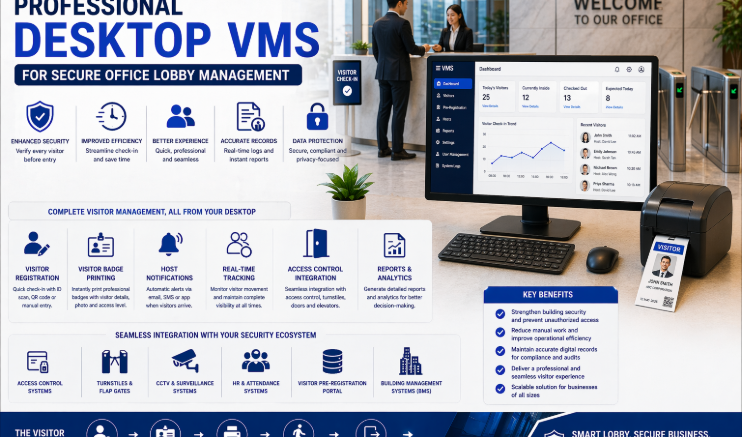
Smart Touch Technology Singapore offers a web visitor management system specifically designed for organisations that need reliable, scalable visitor access control. The system provides the key capabilities transport operators require:
- Web-based platform accessible from multiple locations and devices, eliminating dependency on a single physical check-in station
- Streamlined check-in workflows that reduce queue times and improve the visitor experience
- Flexible access rules allowing you to define customised permissions based on visitor type, department, and area
- Real-time visibility into who is on site and where they are located
- Comprehensive audit trails and reporting capabilities that support compliance documentation and investigation
- Scalability to grow with your operation, whether you manage one facility or multiple transport hubs across Singapore
The system is designed to integrate into your existing security and operational infrastructure without requiring extensive technical reconfiguration. Installation is straightforward, and the user interface is intuitive enough that your team can begin using it productively with minimal training.
Explore full product details by clicking here: https://smartouch.com.sg/vms-visitor-management-system/
Best Practices for Ongoing Optimisation
Regular Review of Access Policies
Use system reports to review visitor patterns quarterly. Identify areas with high visitor volume, frequent bottlenecks, or access rule violations. Adjust policies and procedures based on these insights.
Continuous Staff Training
New staff members should receive visitor management system training as part of their onboarding. Periodic refresher sessions keep everyone aligned on procedures and best practices.
Feedback Loop with Visitors
If visitors frequently complain about the check-in process, gather specific feedback. Simple improvements—such as clearer instructions or slightly adjusted requirements—can significantly improve acceptance.
Security Audits
Periodically review access logs to identify anomalies or unauthorised access attempts. Use these audits to strengthen security procedures and identify staff who may need additional training.
Conclusion
Implementing a visitor management system is a practical investment for Singapore transport operators seeking to enhance security, improve compliance, and streamline operations. A well-configured system eliminates manual administrative work, creates reliable audit trails, and provides real-time visibility into facility occupancy—all critical in today’s security-conscious environment.
The key to successful implementation is choosing a solution aligned with your specific operational needs, planning your deployment carefully, and ensuring thorough staff training. By addressing common challenges proactively and following best practices for ongoing optimisation, you can maximise the return on your investment.
Smart Touch Technology Singapore’s web visitor management system is purpose-built to meet the access control and security requirements of transport operators across the island. Whether you operate a single facility or manage multiple transport hubs, the system scales to your needs and integrates smoothly into your existing operations.
Take the next step toward more secure, efficient visitor management by exploring the full product details and understanding how the system can be configured for your specific transport operation.
Smart Touch technology pte ltd , www.smartouch.com.sg +65-63964767, sales@smartouch.com.sg , www.smartouch.com.my +607-3889903 sales@smartouch.com.my